
Sürücü, Özge
Loading...
Profile URL
Name Variants
Bayrakll Ö.
O., Surucu
Bayrakli O.
Bayrakli, Ozge
O.,Surucu
Surucu, Ozge
Ö.,Sürücü
Ozge, Surucu
Sürücü, Özge
Ö., Sürücü
Bayraklı Sürücü Ö.
Özge, Sürücü
Sürücü,Ö.
Surucu, O. Bayrakli
Bayrakli Sürücü O.
Bayraklı Ö.
Surucu,O.
Bayrakli Surucu O.
Bayrakli Ö.
Sürücü Ö.
S.,Ozge
Bayrakli, O.
S., Özge
S., Ozge
S.,Özge
Bayrakli Surucu, Ozge
Surucu O.
Surucu, O.
Bayrakli Sürücü Ö.
O., Surucu
Bayrakli O.
Bayrakli, Ozge
O.,Surucu
Surucu, Ozge
Ö.,Sürücü
Ozge, Surucu
Sürücü, Özge
Ö., Sürücü
Bayraklı Sürücü Ö.
Özge, Sürücü
Sürücü,Ö.
Surucu, O. Bayrakli
Bayrakli Sürücü O.
Bayraklı Ö.
Surucu,O.
Bayrakli Surucu O.
Bayrakli Ö.
Sürücü Ö.
S.,Ozge
Bayrakli, O.
S., Özge
S., Ozge
S.,Özge
Bayrakli Surucu, Ozge
Surucu O.
Surucu, O.
Bayrakli Sürücü Ö.
Job Title
Doçent Doktor
Email Address
ozge.surucu@atilim.edu.tr
Main Affiliation
Electrical-Electronics Engineering
Status
Website
ORCID ID
Scopus Author ID
Turkish CoHE Profile ID
Google Scholar ID
WoS Researcher ID
Sustainable Development Goals
14
LIFE BELOW WATER

0
Research Products
2
ZERO HUNGER

0
Research Products
11
SUSTAINABLE CITIES AND COMMUNITIES

0
Research Products
1
NO POVERTY

0
Research Products
12
RESPONSIBLE CONSUMPTION AND PRODUCTION

0
Research Products
7
AFFORDABLE AND CLEAN ENERGY

13
Research Products
5
GENDER EQUALITY

0
Research Products
3
GOOD HEALTH AND WELL-BEING

0
Research Products
9
INDUSTRY, INNOVATION AND INFRASTRUCTURE

0
Research Products
13
CLIMATE ACTION

0
Research Products
6
CLEAN WATER AND SANITATION

0
Research Products
10
REDUCED INEQUALITIES

0
Research Products
4
QUALITY EDUCATION

0
Research Products
15
LIFE ON LAND

0
Research Products
16
PEACE, JUSTICE AND STRONG INSTITUTIONS

0
Research Products
17
PARTNERSHIPS FOR THE GOALS

0
Research Products
8
DECENT WORK AND ECONOMIC GROWTH

0
Research Products

This researcher does not have a Scopus ID.

Documents
55
Citations
822

Scholarly Output
44
Articles
41
Views / Downloads
14/0
Supervised MSc Theses
1
Supervised PhD Theses
0
WoS Citation Count
605
Scopus Citation Count
613
WoS h-index
15
Scopus h-index
15
Patents
0
Projects
0
WoS Citations per Publication
13.75
Scopus Citations per Publication
13.93
Open Access Source
5
Supervised Theses
1
Google Analytics Visitor Traffic
| Journal | Count |
|---|---|
| Journal of Materials Science: Materials in Electronics | 7 |
| Applied Physics A | 4 |
| Materials Letters | 3 |
| Materials Science in Semiconductor Processing | 3 |
| Physica Scripta | 3 |
Current Page: 1 / 5
Scopus Quartile Distribution
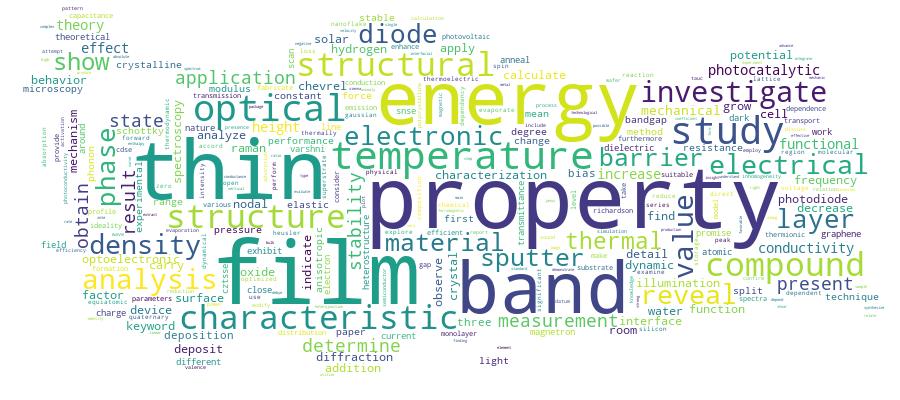
Competency Cloud
9 results
Scholarly Output Search Results
Now showing 1 - 9 of 9
Article Citation - WoS: 20Citation - Scopus: 21A Study on the Dark and Illuminated Operation of Al/Si3< Schottky Photodiodes: Optoelectronic Insights(Springer Heidelberg, 2024) Surucu, Ozge; Yildiz, Dilber Esra; Yildirim, MuratThis work extensively investigates the operation of an Al/ Si3N4/p-Si Schottky-type photodiode under dark and varying illumination intensities. The photodiode is fabricated by employing the metal-organic chemical vapor deposition (MOCVD) method. A thorough electrical characterization is performed at room temperature, encompassing measurements of current-voltage (I-V), current-time (I-t), capacitance-time (C-t), and conductance time (G-t). The photodiode's rectification factor and reverse bias area increased under illumination. The relationship between light power density, barrier height, and diode ideality factor is found. The study also found a strong correlation between light intensity and applied voltage on series resistance (R-s) and shunt resistance (R-sh). R-s values are calculated using Cheung's functions, revealing the diode's resistance behavior. The study also examines the photodiode's photoconductivity and photoconductance, finding a non-linear relationship between photocurrent and illumination intensity, suggesting bimolecular recombination. Calculated photosensitivity (K), responsivity (R), and detectivity (D*) values show the device's light response effectiveness, but efficiency decreases at higher illumination intensities. Transient experiments indicate stable and reproducible photocurrent characteristics, revealing photogenerated charge temporal evolution. This study provides a complete understanding of the Al/Si3N4/p-Si Schottky photodiode's behavior under different illumination intensities. The findings advance optoelectronic device knowledge and enable their use in advanced technologies.Article Citation - Scopus: 1Determining the Hydrogen Production Potential of Conmo6se8 Chevrel Phases(Institute of Physics, 2025) Gencer, A.; Surucu, O.; Sahin, M.; Ozel, F.; Surucu, G.In this study, the ConMo6Se8 (n = 1, 2, 3, and 4) Chevrel phases are investigated by using Density Functional Theory (DFT) to reveal their potential for photocatalytic hydrogen production. The stability conditions of these phases reveal that CoMo6Se8, Co2Mo6Se8, and Co3Mo6Se8 satisfy the thermodynamic and mechanic stability properties, while Co4Mo6Se8 does not satisfy any of these properties. Furthermore, the formation enthalpy of these phases shows that CoMo6Se8, Co2Mo6Se8, and Co3Mo6Se8 can be synthesized experimentally due to having negative formation enthalpy values. Furthermore, the thermal stabilities of the machine-learning (ML) force fields are investigated by ab-initio molecular dynamics (AIMD) calculations. The electronic properties of these phases are also investigated in detail, and it is found that Co3Mo6Se8 has a suitable band gap for photocatalytic water splitting. Concerning the investigation of the valence band and conduction band levels, it is shown that Co3Mo6Se8 has a conduction band minimum level suitable for producing hydrogen. This study is the first attempt to reveal the hydrogen production performance of the ConMo6Se8 (n = 1, 2, 3, and 4) Chevrel phases as far as the literature is concerned, paving the ground for future investigations in this field. © 2024 IOP Publishing Ltd. All rights, including for text and data mining, AI training, and similar technologies, are reserved.Article Citation - WoS: 2Citation - Scopus: 2Investigation of Tungsten-Based Seleno-Chevrel Compounds With Different Compositions for Efficient Water Splitting(Wiley-v C H verlag Gmbh, 2023) Dag, Tugce Sevinc; Surucu, Gokhan; Gencer, Aysenur; Surucu, Ozge; Ozel, Faruk; Ciftci, YaseminThis study investigates the photocatalytic water splitting performance for NixW6Se8(x=1,2,3,4)${\mathrm{N}}{{\mathrm{i}}_{\mathrm{x}}}{{\mathrm{W}}_6}{\mathrm{S}}{{\mathrm{e}}_8}\;( {x = 1, 2, 3, 4} )$ Chevrel phases with the chemical formula M(x)Mo(6)Ch(8), where M is a metal and Ch is a chalcogen, with x being 0, 1, 2, 3, or 4. Density Functional Theory (DFT) is used to study the NixW6Se8(x=1,2,3,4)${\mathrm{N}}{{\mathrm{i}}_{\mathrm{x}}}{{\mathrm{W}}_6}{\mathrm{S}}{{\mathrm{e}}_8}{\mathrm{\;}}( {x = 1, 2, 3, 4} )$ Chevrel phases, which includes earth-abundant elements for this specific study as an essential consideration for photocatalytic water splitting. The electronic properties are calculated for the NiW6Se8 and Ni2W6Se8 compounds with thermodynamical, mechanical, and dynamic stabilities. For photocatalytic water splitting, the band gaps below 1.23 eV are excluded, and the conduction and valence band levels are determined to examine the reduction and oxidation potentials for efficient photocatalytic water-splitting materials. An examination of the selected band gaps, along with the conduction and valence band levels, reveals that NiW6Se8 is suitable for both reduction and oxidation reactions; whereas, Ni2W6Se8 is a convenient material only for the reduction reaction. This is the first attempt, as far as the literature reveals, to study Chevrel phases in detail and to identify a suitable compound for photocatalytic water splitting.Article Citation - WoS: 4Citation - Scopus: 4Exploring the Thermal Stability of Sb2se3 for Potential Applications Through Advanced Thermal Analysis Methods(Amer Chemical Soc, 2025) Altuntas, Gozde; Isik, Mehmet; Surucu, Gokhan; Parlak, Mehmet; Surucu, OzgeAntimony selenide (Sb2Se3) is a promising material for energy applications, including photovoltaics, thermoelectrics, and photodetectors, due to its favorable electronic properties, availability, and low toxicity. However, its thermal stability, crucial for device efficiency and reliability, has been less explored, leaving a gap in understanding its high-temperature suitability. This study evaluates the thermal stability of Sb2Se3 using thermogravimetric analysis (TGA), differential thermal analysis (DTA), and differential scanning calorimetry (DSC). The results show that Sb2Se3 remains stable up to 500 degrees C, with two significant weight loss stages: 1.75% between 500 and 610 degrees C, and 3.50% between 610 and 775 degrees C, indicating decomposition processes. Activation energies for the decomposition phases were determined as 121.8 and 57.2 kJ/mol using the Coats-Redfern method. Additionally, an endothermic phase transition was observed between 599 and 630.6 degrees C via DSC analysis. These findings demonstrate Sb2Se3's potential for high-temperature energy applications, providing essential insights for optimizing its use in solar cells, thermoelectric devices, and other technologies.Article Citation - WoS: 9Citation - Scopus: 9Dft Insights Into Noble Gold-Based Compound Li5aup2: Effect of Pressure on Physical Properties(Amer Chemical Soc, 2023) Surucu, Gokhan; Gencer, Aysenur; Surucu, Ozge; Ali, Md. AshrafIn this study, the Li5AuP2 compound is investigated in detail due to the unique chemical properties of gold that are different from other metals. Pressure is applied to the compound from 0 to 25 GPa to reveal its structural, mechanical, electronic, and dynamical properties using density functional theory (DFT). Within this pressure range, the compound is optimized with a tetragonal crystal structure, making it mechanically and dynam-ically stable above 18 GPa and resulting in an increment of bulk, shear, and Young's moduli of Li5AuP2. Pressure application, furthermore, changes the brittle or ductile nature of the compound. The anisotropic elastic and sound wave velocities are visualized in three dimensions. The thermal properties of the Li5AuP2 compound are obtained, including enthalpy, free energy, entropy x T, heat capacity, and Debye temperature. The electronic properties of the Li5AuP2 compound are studied using the Perdew-Burke-Ernzerhof (PBE) and Heyd-Scuseria-Ernzerhof (HSE) functionals. The pressure increment is found to result in higher band gap values. The Mulliken and bond overlap populations are also determined to reveal the chemical nature of this compound. The optical properties, such as dielectric functions, refractive index, and energy loss function of the Li5AuP2 compound, are established in detail. To our knowledge, this is the first attempt to study this compound in such detail, thus, making the results obtained here beneficial for future studies related to the chemistry of gold.Article Citation - WoS: 5Citation - Scopus: 5Performance Analysis of Cusbse2 Thin-Film Solar Cells With Cd-Free Window Layers(Elsevier, 2024) Surucu, Gokhan; Bal, Ersin; Gencer, Aysenur; Parlak, Mehmet; Surucu, OzgeThis study investigates novel thin-film solar cells featuring CuSbSe2 (CASe) with ZnSnO and ZnMgO windows in the layer superstrate structure. For glass/ITO/ZnMgO/CASe/Cu + Au, the J-V measurements reveal a shortcircuit current density (Jsc) of 19.4 mA/cm2, an open-circuit voltage (Voc) of 0.28 Volts, a fill factor (FF) of 39.14 %, and a power conversion efficiency (eta) of 2.13 %. Similarly, glass/ITO/ZnSnO/CASe/Cu + Au exhibits Jsc around 19.6 mA/cm2, Voc around 0.31 Volts, FF around 40 %, and eta of 2.43 %. This paper is a pioneering contribution, introducing novel thin-film solar cells with a distinctive superstrate structure utilizing CASe in conjunction with ZnSnO and ZnMgO windows. The comprehensive study presents the first-ever characterization and performance evaluation of these innovative configurations, shedding light on their unique potential in advancing sustainable solar energy technology.Article Citation - WoS: 3Citation - Scopus: 2Establishing the nimo6se8< Chevrel Phase as a Promising Material Using Dft(Wiley-v C H verlag Gmbh, 2024) Surucu, Gokhan; Surucu, Ozge; Usanmaz, Demet; Oezel, Faruk; Gencer, AysenurIn this study, the NiMo6Se8 Chevrel phase is analyzed using Density Functional Theory (DFT) and the Vienna Ab-initio Simulation Package (VASP). The analysis focuses on the phase's structural, electrical, and mechanical characteristics to fill gaps in the current literature. The presence of a rhombohedral crystal structure confirms its thermodynamic stability, as indicated by a negative formation enthalpy, which suggests that it can be synthesized under favorable conditions. The electronic properties of the phase are analyzed, indicating that it exhibits semiconductor characteristics with a bandgap of 1.07 eV. This makes it appropriate for various technological applications. The estimated elastic constants provide an indication of mechanical strength and flexibility, with a noticeable presence of anisotropic elasticity. The confirmation of dynamical stability is achieved by analyzing the phonon dispersion curve, which reveals the absence of any negative frequencies. Furthermore, the material has a low thermal conductivity, increasing its suitability for thermoelectric applications. The analysis emphasizes the versatile capabilities of the NiMo6Se8 Chevrel phase, especially in thermoelectric and energy storage applications, showcasing its promising potential for future technological implementation.Article Cu Doping of Sb2Se3 Thin Films Via Thermal Evaporation: Tailoring Structural and Optical Properties for Enhanced Photovoltaic Performance(Elsevier, 2025) Isik, M.; Surucu, O.; Bektas, T.; Parlak, M.In this study, Cu-doped Sb2Se3 thin films were successfully grown using the thermal evaporation method, and their structural and optical properties were systematically investigated. Three different samples with thickness of similar to 400 nm were analyzed: undoped, 1 %, and 2 % Cu-doped Sb2Se3. X-ray diffraction (XRD) analysis revealed well-defined peaks, confirming the orthorhombic crystalline nature of the films. Scanning electron microscopy (SEM) images showed a uniform surface morphology without any significant defects. The optical properties were examined through transmission measurements. The band gap energy determined by Tauc analysis decreased from 1.27 to 1.21 eV as the Cu doping increased from 0 % to 2 %, indicating that Cu incorporation modifies the electronic structure of Sb2Se3. Similarly, Urbach energy increased from 0.148 to 0.168 eV depending on Cu content, suggesting a rise in localized states due to increased structural disorder. These findings demonstrate that Cu doping influences the electronic structure and defect states of Sb2Se3, which is crucial for optimizing its performance in photovoltaic and optoelectronic applications.Article Citation - WoS: 2Integrating Theoretical and Experimental Approaches To Unveil the Mechanical Properties of Cusbse2 Thin Films(Iop Publishing Ltd, 2024) Surucu, Ozge; Gencer, Aysenur; Usanmaz, Demet; Parlak, Mehmet; Surucu, GokhanAn exhaustive investigation of the mechanical characteristics of CuSbSe2 thin films is conducted in this study by combining experimental nanoindentation methods with theoretical simulations. The Ab-initio Molecular Dynamics (AIMD) calculations are performed with the machine learning (ML) force fields. By employing the Vienna Ab-initio Simulation Package (VASP) based on Density Functional Theory (DFT), theoretical inquiries are carried out to identify crucial parameters, such as bonding characteristics, elastic constants, hardness, bulk modulus, shear modulus, Young's modulus, and Poisson's ratio. Experimental validation is conducted using nanoindentation to investigate load-dependent hardness and Young's modulus in a manner that closely matches the theorized predictions. The anomalies between experimental and theoretical outcomes are ascribed to anisotropic behavior and grain boundaries. Furthermore, an investigation is conducted into the directional dependence of sound wave velocities in the CuSbSe2 films, leading to the revelation of intricate elastic property details. By employing an integrated theoretical-experimental approach, the present attempt not only increases the knowledge concerning CuSbSe2 films but also fortifies the relationship between theory and experiment, thereby bolstering the dependability of our results. The insights provided as a result of this paper facilitate the development of CuSbSe2 film applications in a variety of technological fields in the future.