
Qasrawı, Atef Fayez Hasan
Loading...

Profile URL
Name Variants
Qasrawi, Atef Fayez
Atef Fayez Hasan, Qasrawı
Qasrawı,A.F.H.
Qasrawi,A.F.H.
Q., Atef Fayez Hasan
Q.,Atef Fayez Hasan
Atef Fayez Hasan, Qasrawi
Qasrawi, Atef Fayez Hasan
A.F.H.Qasrawı
A.F.H.Qasrawi
A., Qasrawi
A.,Qasrawı
Qasrawı, Atef Fayez Hasan
Qasrawi, A. F.
Qasrawi,A.F.
Qasrawi, AF
Qasrawi, Atef F.
Qasrawi, Atef A.
Qasrawi, Atef Fayez
Qasrawi, Atef F.
Qasrawi, Atef A.
Qasrawi, Atef
Atef Fayez Hasan, Qasrawı
Qasrawı,A.F.H.
Qasrawi,A.F.H.
Q., Atef Fayez Hasan
Q.,Atef Fayez Hasan
Atef Fayez Hasan, Qasrawi
Qasrawi, Atef Fayez Hasan
A.F.H.Qasrawı
A.F.H.Qasrawi
A., Qasrawi
A.,Qasrawı
Qasrawı, Atef Fayez Hasan
Qasrawi, A. F.
Qasrawi,A.F.
Qasrawi, AF
Qasrawi, Atef F.
Qasrawi, Atef A.
Qasrawi, Atef Fayez
Qasrawi, Atef F.
Qasrawi, Atef A.
Qasrawi, Atef
Job Title
Doçent Doktor
Email Address
atef.qasrawi@atilim.edu.tr
Main Affiliation
Department of Electrical & Electronics Engineering
Status
Former Staff
Website
ORCID ID
Scopus Author ID
Turkish CoHE Profile ID
Google Scholar ID
WoS Researcher ID
Sustainable Development Goals
 1
1NO POVERTY
0
Research Products
 2
2ZERO HUNGER
0
Research Products
 3
3GOOD HEALTH AND WELL-BEING
0
Research Products
 4
4QUALITY EDUCATION
0
Research Products
 5
5GENDER EQUALITY
0
Research Products
 6
6CLEAN WATER AND SANITATION
0
Research Products
 7
7AFFORDABLE AND CLEAN ENERGY
17
Research Products
 8
8DECENT WORK AND ECONOMIC GROWTH
0
Research Products
 9
9INDUSTRY, INNOVATION AND INFRASTRUCTURE
0
Research Products
 10
10REDUCED INEQUALITIES
0
Research Products
 11
11SUSTAINABLE CITIES AND COMMUNITIES
0
Research Products
 12
12RESPONSIBLE CONSUMPTION AND PRODUCTION
0
Research Products
 13
13CLIMATE ACTION
0
Research Products
 14
14LIFE BELOW WATER
0
Research Products
 15
15LIFE ON LAND
0
Research Products
 16
16PEACE, JUSTICE AND STRONG INSTITUTIONS
1
Research Products
 17
17PARTNERSHIPS FOR THE GOALS
0
Research Products

This researcher does not have a Scopus ID.

This researcher does not have a WoS ID.

Scholarly Output
226
Articles
222
Views / Downloads
84/0
Supervised MSc Theses
0
Supervised PhD Theses
0
WoS Citation Count
1984
Scopus Citation Count
2000
Patents
0
Projects
0
WoS Citations per Publication
8.78
Scopus Citations per Publication
8.85
Open Access Source
17
Supervised Theses
0
| Journal | Count |
|---|---|
| Crystal Research and Technology | 16 |
| Journal of Electronic Materials | 15 |
| physica status solidi (a) | 12 |
| Materials Science in Semiconductor Processing | 11 |
| Journal of Alloys and Compounds | 11 |
Current Page: 1 / 11
Scopus Quartile Distribution
Competency Cloud
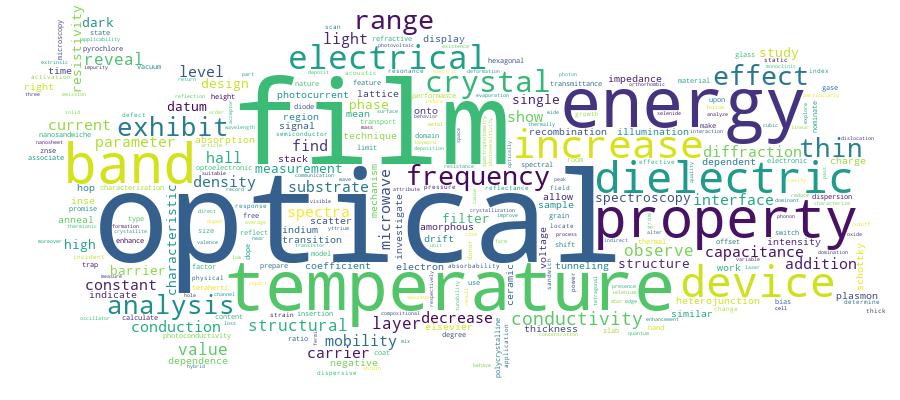
222 results
Scholarly Output Search Results
Now showing 1 - 10 of 222
Article Citation - WoS: 5Citation - Scopus: 5Structural and Dielectric Performance of the Ba(zn1/3< Perovskite Ceramics(Iop Publishing Ltd, 2019) Qasrawi, A. F.; Sahin, Ethem Ilhan; Emek, Mehriban; Kartal, Mesut; Kargin, SerdarIn this work, we have explored the antimony doping effects on the structural and dielectric properties of Ba(Zn1/3Nb2/3)O-3 ceramics (BZN). The ceramics displayed perovskite structures with a lattice constant that decreases with increasing Sb content. The antimony solubility limit of the BZN ceramics is x < 0.50. Belowthis limit and in the range of 0.30 <= x <= 0.40, the microstrain, the dislocation density and the stacking faults decreased and the crystallite size increases with increasing Sb content in the composition of BZN. When the limit is exceeded minor phases are predicted by software analysis and confirmed by the experimental techniques. The presence of these phases is also verified by the scanning electron microscopy and energy dispersive x-ray spectroscopy techniques. Increasing the Sb content is observed to decrease the value of the dielectric constant. The Sb doped BZN ceramics exhibits high dielectric quality factors that nominate it for applications in electronics as radio waves resonators.Article Citation - WoS: 7Citation - Scopus: 7In situ monitoring of the permanent crystallization, phase transformations and the associated optical and electrical enhancements upon heating of Se thin films(Elsevier Science Bv, 2019) Qasrawi, A. F.; Aloushi, Hadil D.In this work, the in situ structural transformations from amorphous to polycrystalline upon heating and the associated enhancements in the structural parameters of selenium thin films are studied by means of X-ray diffraction technique. The Se thin films which are grown onto ultrasonically cleaned glass substrate by the thermal evaporation technique under vacuum pressure of 10(-5) mbar exhibits structural transformation from amorphous to polycrystalline near 353 K. The films completed the formation of the structure which includes both of the hexagonal and monoclinic phases at 363 K. It is observed that the hexagonal phase dominates over the monoclinic as temperature is raised. Consistently, the thermally assisted crystallization process is accompanied with increase in the crystallite size, decrease in the microstrain, decrease in defect density and decrease in the percentage of stacking faults. The scanning electron microscopy measurements also confirmed the crystallinity of selenium after heating. The time dependent reputations of the crystallization test has shown that the achieved phase transitions and enhancements in structural parameters are permanent in selenium. Optically, the crystallization process is observed to be associated with redshift in the absorption spectra and in the value of the energy band gap. Electrically, the in situ monitoring of the electrical conductivity during the heating cycle has shown that the electrical conductivity stabilizes and exhibit a decrease in the acceptor levels from 566 to 321 meV after the crystallization was achieved.Article Citation - WoS: 5Citation - Scopus: 5Acoustic Phonons Scattering Mobility and Carrier Effective Mass in In6s7< Crystals(Elsevier Science Sa, 2006) Qasrawi, A. F.; Gasanly, N. M.Systematic dark electrical resistivity and Hall coefficient measurements have been carried out in the temperature range of 170-320 K on n-type In6S7 crystals. The analysis of the electrical resistivity and carrier concentration reveals the intrinsic type of conduction with an average energy band gap of similar to 0.75 eV The carrier effective masses of the conduction and valence bands were calculated from the intrinsic temperature-dependent carrier concentration data and were found to be 0.565m(0) and 2.020m(0), respectively. The temperature-dependent Hall mobility was observed to follow the mu alpha T-3/2 law and was analyzed assuming the domination of acoustic phonons scattering. The acoustic phonons scattering mobility was calculated from the crystal's structural data with no assumptions. The experimental Hall mobility data of In6S7 crystals coincides with the theoretical acoustic phonons scattering mobility data with acoustic deformation potential of 6.4 eV. (c) 2006 Elsevier B.V. All rights reserved.Article Citation - WoS: 16Citation - Scopus: 17Dielectric Dispersion in Ga2s3< Thin Films(Springer, 2017) Alharbi, S. R.; Qasrawi, A. F.In this work, the structural, compositional, optical, and dielectric properties of Ga2S3 thin films are investigated by means of X-ray diffraction, scanning electron microscopy, energy dispersion X-ray analysis, and ultraviolet-visible light spectrophotometry. The Ga2S3 thin films which exhibited amorphous nature in its as grown form are observed to be generally composed of 40.7 % Ga and 59.3 % S atomic content. The direct allowed transitions optical energy bandgap is found to be 2.96 eV. On the other hand, the modeling of the dielectric spectra in the frequency range of 270-1,000 THz, using the modified Drude-Lorentz model for electron-plasmon interactions revealed the electrons scattering time as 1.8 (fs), the electron bounded plasma frequency as similar to 0.76-0.94 (GHz) and the reduced resonant frequency as 2.20-4.60 x10(15) (Hz) in the range of 270-753 THz. The corresponding drift mobility of electrons to the terahertz oscillating incident electric field is found to be 7.91 (cm (2)/Vs). The values are promising as they nominate the Ga2S3 thin films as effective candidates in thin-film transistor and gas sensing technologies.Article Citation - WoS: 3Citation - Scopus: 3Ytterbium Induced Structural Phase Transitions and Their Effects on the Optical and Electrical Properties of Znpc Thin Films(Springer, 2020) Qasrawi, A. F.; Zyoud, Hadeel M.In this work, the effects of ytterbium substrates of thicknesses of 150 (Yb-150) and 1000 nm (Yb-1000) on the structural, optical and electrical properties of zinc phthalocyanine (ZnPc) are investigated. While the Yb-150/ZnPc exhibited strained monoclinic structure, the Yb-1000/ZnPc thin films are observed to exhibit phase transitions from monoclinic to triclinic structure. Analysis which targeted observatories of the effects of the Yb-150 substrate on the optical properties indicated that the transparent Yb-150 substrate enhanced the light absorbability by more than 11 times at 1.27 eV. On the other hand, the impedance spectroscopy measurements on the nontransparent Yb-1000/ZnPc/Ag sandwiched structures have shown that these devices could exhibit negative capacitance (NC) effect in the frequency domain of 0.244-1.800 GHz. The NC effect is associated with resonance-anti-resonance response at 0.235 and 0.244 GHz, respectively. The structural, optical and electrical properties of the Yb/ZnPc interfaces indicate its applicability as optoelectronic and/or radio/microwave components.Article Citation - WoS: 2Citation - Scopus: 2Dielectric and Optoelectronic Properties of Inse/Cds Heterojunctions(Springer, 2018) Abusaa, M.; Qasrawi, A. F.; Shehada, Sufyan R.The effect of an InSe substrate on the structural, optical and dielectric properties of CdS/CdSe heterojunctions prepared by physical vapor deposition technique under vacuum pressure of 10(-8) bar are reported. The structural analysis carried out by x-ray diffraction revealed a strained type of growth of the CdS/CdSe heterojunction onto the InSe along the axis of the hexagonal lattice. The lattice mismatches and strained nature of the heterojunctions associated with the InSe participation causes a quantum confinement that results in a red shift in the energy band gap, enhanced near infrared (IR) light absorbability, and valence band offsets of 0.62eV and 0.53eV for the InSe/CdS and CdS/CdSe interfaces, respectively. In addition, a pronounced enhancement in the real part of the dielectric constant by 2.5 times is observed at 1.25eV. Furthermore, the Durde-Lorentz modeling of the optical conductivity of the CdS/CdSe and InSe/CdS/CdSe reveals significant increases in the drift mobility values from 43.8cm(2)/Vs at the CdS/CdSe interface to 100.0cm(2/)Vs upon replacement of glass by an amorphous InSe substrate. The other optical conduction parameters including the free carrier scattering time at the femtosecond level, the plasmon frequency and the free carrier density are also improved accordingly. The photocurrent illumination intensity dependence for the studied system showed that the presence of InSe increases the photocurrent values and changes the recombination mechanism from sublinear at the surface to trap-assisted recombination. The smart feature of the InSe/CdS/CdSe system is that the structurally controlled quantum confinement results in having mobile photocarriers arising from the enhanced absorbability and large dielectric response in the IR region.Article Citation - WoS: 3Citation - Scopus: 3Effect of Ionic Substitution on the Structural, Dielectric and Electrical Properties of Bismuth Zinc Niobate Ceramics(Korean Assoc Crystal Growth, inc, 2012) Qasrawi, A. F.; Abu Je'ib, Hussein A.; Mergen, A.; Mergenc, A.; Qasrawia, A.F.; Department of Electrical & Electronics EngineeringThe effects of tin substitution on the structural, dielectric and electrical properties of the Bi1.5Zn0.92Nb1.5O6.92 pyrochlore ceramics have been investigated. Tin atoms was substituted in the A (Bi1.5Zn0.46)-site instead of zinc and in the B ((Zn0.46Nb1.5)-site instead of niobium in accordance to the chemical formulae Bi1.5Zn0.92Nb1.5-xO6.92-x/2 and (Bi1.5-x/3Zn0.46-3x/2Snx)(Nb1.5Zn0.46)O-6.92, for 0.00 <= x <= 0.40 and 0.00 <= x <= 0.60, respectively. A relative single phase formation of the structures was possible for x values less than 0.25 and less than 0.10. Pronounced tunability in the dielectric constant values associated with very low dielectric loss are obtainable by Sn substitution. Furthermore, a frequency invariant but linearly varying temperature dependent dielectric constant is observed. The electrical conductivity decreased by two and one order of magnitude for the A and B-site substitutions, respectively. The temperature-dependent conductivity analysis in the temperature region of 300-500 K, reflected the existence of shallow and deep impurity energy levels being created by the doping process.Article Citation - WoS: 7Citation - Scopus: 7Structural and Dielectric Properties of Ba1-x< Solid Solutions(Wiley-v C H verlag Gmbh, 2021) Qasrawi, A. F.; Sahin, Ethem Ilhan; Abed, Tamara Y.; Emek, MehribanHerein, lanthanum doping effects on the structural, dielectric, and electrical properties of Ba1-xLax(Zn1/3Nb2/3)O-3 (BZN) solid solutions are focused upon. The La contents which are varied in the range of 0.02-0.20 exhibit a solubility limit of x = 0.02. Although minor phases of Ba5Nb4O15 and Ba3LaNb3O12 appear for samples doped with La contents of x = 0.05 and x = 0.10, they play no remarkable role for the enhanced structural and dielectric properties of BZN. The La doping content of x = 0.02 succeeds in increasing the crystallite size by 51.16% and lowering the microstrain by 34.18% and defect concentration by 63.10%. La-doped BZN ceramics display higher values of relative density and electrical conductivity. The analyses of the dielectric spectra as a function of temperature display dielectric relaxation behavior above 120 degrees C. In the temperature range of 20-120 degrees C, La doping changes the temperature coefficient of dielectric constants from +30 ppm degrees C-1 in pure samples to -341 ppm degrees C-1 in samples doped with La contents of x = 0.10. The enhancements in structural parameters, density values, and dielectric responses that are achieved via La doping make BZN ceramics more suitable for electronic device fabrication.Article Citation - WoS: 19Citation - Scopus: 19Effect of Indium Nano-Sandwiching on the Structural and Optical Performance of Znse Films(Elsevier Science Bv, 2017) Al Garni, S. E.; Qasrawi, A. F.In the current study, we attempted to explore the effects of the Indium nanosandwiching on the mechanical and optical properties of the physically evaporated ZnSe thin films by means of X-ray diffractions and ultraviolet spectrophotometry techniques. While the thickness of each layer of ZnSe was fixed at 1.0 mu m, the thickness of the nanosandwiched Indium thin films was varied in the range of 25- 100 nm. It was observed that the as grown ZnSe films exhibits cubic and hexagonal nature of crystallization as those of the ZnSe powders before the film deposition. The cubic phases weighs similar to 70% of the structure. The analysis of this phases revealed that there is a systematic variation process presented by the decreasing of; the lattice constant, compressing strain, stress, stacking faults and dislocation intensity and increasing grain size resulted from increasing the Indium layer thickness in the range of 50-100 nm. In addition, the nanosandwiching of Indium between two layers of ZnSe is observed to enhance the absorbability of the ZnSe. Particularly, at incident photon energy of 2.38 eV the absorbability of the ZnSe films which are sandwiched with 100 nm Indium is increased by 13.8 times. Moreover, increasing the thickness of the Indium layer shrinks the optical energy band gap. These systematic variations in mechanical and optical properties are assigned to the better recrystallization process that is associated with Indium insertion which in turn allows total internal energy redistribution in the ZnSe films through the enlargement of grains. (C) 2017 The Authors. Published by Elsevier B.V. This is an open access article under the CC BY license.Article Citation - WoS: 7Citation - Scopus: 7Plasmon-Electron Dynamics at the Au/Inse and Y/Inse Interfaces Designed as Dual Gigahertz-Terahertz Filters(Elsevier Gmbh, Urban & Fischer verlag, 2017) Alharbi, S. R.; Qasrawi, A. F.In this work, the X-ray diffraction, the Scanning electron microscopy, the energy dispersive X-ray, the Raman, The UV-vis light and the impedance spectral techniques are employed to explore the structural, vibrational, optical and electrical properties of the Au/InSe and Y/InSe thin film interfaces. It was shown that with its amorphous nature of crystallization, the InSe thin films exhibited n-type conductivity due to the 3% excess selenium. For this form of InSe, the only active Raman spectral line is 121 (cm(-1)). In addition to the design of the energy band diagram, the analysis the dielectric spectra and the optical conductivities were possible in the frequency range of 270-1000 THz. The modeling of the optical conductivities of the Au, Y, Au/InSe and Y/InSe with the help of Lorentz approach for optical conduction, assured that the conduction is dominated by the resonant plasmon-electron interactions at the metals and metals/semiconductors interfaces. It also allowed tabulating the necessary parameters for possible applications in terahertz technology: These parameters are the electron effective masses, the free electron densities, the electron bounded plasmon frequencies, the electron scattering times, the reduced resonant frequencies and the drift mobilities. On the other hand, the impedance spectral analysis of the Y/InSe/Au interfaces in the frequency range of 0.01-1.80 GHz, revealed negative capacitance effect associated with band filter features that exhibit maximum transition line at 1.17 GHz. This value nominates the interface as a member of filter classes in the gigahertz technology. (C) 2017 Elsevier GmbH. All rights reserved.
