
Qasrawı, Atef Fayez Hasan
Loading...

Profile URL
Name Variants
Qasrawi, Atef Fayez
Atef Fayez Hasan, Qasrawı
Qasrawı,A.F.H.
Qasrawi,A.F.H.
Q., Atef Fayez Hasan
Q.,Atef Fayez Hasan
Atef Fayez Hasan, Qasrawi
Qasrawi, Atef Fayez Hasan
A.F.H.Qasrawı
A.F.H.Qasrawi
A., Qasrawi
A.,Qasrawı
Qasrawı, Atef Fayez Hasan
Qasrawi, A. F.
Qasrawi,A.F.
Qasrawi, AF
Qasrawi, Atef F.
Qasrawi, Atef A.
Qasrawi, Atef Fayez
Qasrawi, Atef F.
Qasrawi, Atef A.
Qasrawi, Atef
Atef Fayez Hasan, Qasrawı
Qasrawı,A.F.H.
Qasrawi,A.F.H.
Q., Atef Fayez Hasan
Q.,Atef Fayez Hasan
Atef Fayez Hasan, Qasrawi
Qasrawi, Atef Fayez Hasan
A.F.H.Qasrawı
A.F.H.Qasrawi
A., Qasrawi
A.,Qasrawı
Qasrawı, Atef Fayez Hasan
Qasrawi, A. F.
Qasrawi,A.F.
Qasrawi, AF
Qasrawi, Atef F.
Qasrawi, Atef A.
Qasrawi, Atef Fayez
Qasrawi, Atef F.
Qasrawi, Atef A.
Qasrawi, Atef
Job Title
Doçent Doktor
Email Address
atef.qasrawi@atilim.edu.tr
Main Affiliation
Department of Electrical & Electronics Engineering
Status
Former Staff
Website
ORCID ID
Scopus Author ID
Turkish CoHE Profile ID
Google Scholar ID
WoS Researcher ID
Sustainable Development Goals
 1
1NO POVERTY
0
Research Products
 2
2ZERO HUNGER
0
Research Products
 3
3GOOD HEALTH AND WELL-BEING
0
Research Products
 4
4QUALITY EDUCATION
0
Research Products
 5
5GENDER EQUALITY
0
Research Products
 6
6CLEAN WATER AND SANITATION
0
Research Products
 7
7AFFORDABLE AND CLEAN ENERGY
17
Research Products
 8
8DECENT WORK AND ECONOMIC GROWTH
0
Research Products
 9
9INDUSTRY, INNOVATION AND INFRASTRUCTURE
0
Research Products
 10
10REDUCED INEQUALITIES
0
Research Products
 11
11SUSTAINABLE CITIES AND COMMUNITIES
0
Research Products
 12
12RESPONSIBLE CONSUMPTION AND PRODUCTION
0
Research Products
 13
13CLIMATE ACTION
0
Research Products
 14
14LIFE BELOW WATER
0
Research Products
 15
15LIFE ON LAND
0
Research Products
 16
16PEACE, JUSTICE AND STRONG INSTITUTIONS
1
Research Products
 17
17PARTNERSHIPS FOR THE GOALS
0
Research Products

This researcher does not have a Scopus ID.

This researcher does not have a WoS ID.

Scholarly Output
226
Articles
222
Views / Downloads
677/0
Supervised MSc Theses
0
Supervised PhD Theses
0
WoS Citation Count
1894
Scopus Citation Count
1915
Patents
0
Projects
0
WoS Citations per Publication
8.38
Scopus Citations per Publication
8.47
Open Access Source
17
Supervised Theses
0
| Journal | Count |
|---|---|
| Crystal Research and Technology | 16 |
| Journal of Electronic Materials | 15 |
| physica status solidi (a) | 12 |
| Materials Science in Semiconductor Processing | 11 |
| Journal of Alloys and Compounds | 11 |
Current Page: 1 / 11
Scopus Quartile Distribution
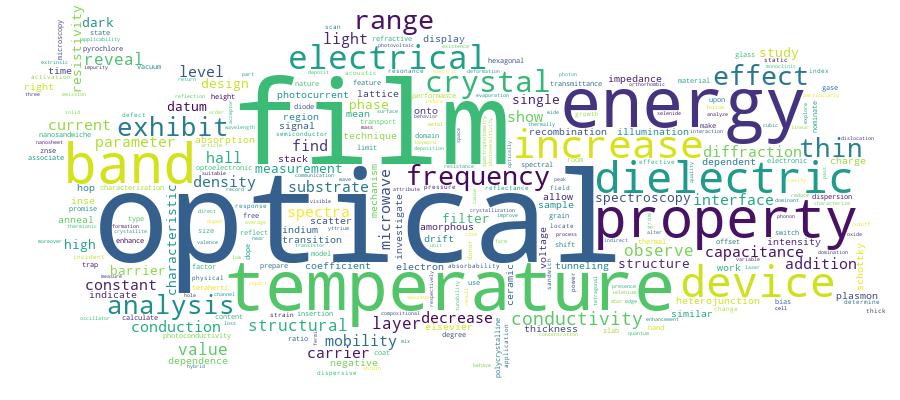
Competency Cloud
163 results
Scholarly Output Search Results
Now showing 1 - 10 of 163
Article Citation - Scopus: 1Structural and Electrical Performance of Moo3 Films Designed as Microwave Resonators(inst Materials Physics, 2020) Al Garni, S. E.; Qasrawi, A. F.; Alharbi, S. R.; Department of Electrical & Electronics EngineeringIn this work, the effect of the insertion of lithium slabs of thicknesses of 50 nm between stacked layers of MoO3 is considered. Stacked layers of MoO3 comprising lithium slabs are prepared by the thermal evaporation technique onto Au substrates under vacuum pressure of 10(-5) mbar. The effects of Li slabs are explored by the X-ray diffraction, scanning electron microscopy, current-voltage characteristics and impedance spectroscopy techniques in the frequency domain of 0.01-1.80 GHz. While the presence of Li slabs did not alter the amorphous nature of structure, it forced the growth of rod-like grains of diameters of 100-160 nm and lengths of 1.5 mu m. Electrically, the presence of Li in the samples enhanced the rectifying properties of the devices and force reverse to forward current ratios larger than 60 times. Li slabs also controlled the negative capacitance effect and resonance -antiresonance regions in the Au/MoO3/MoO3/C stacked layers. While the Au/MoO3/MoO3/C devices displayed high conductance and low impedance values in the studied frequency domain, the Au/MoO3/Li/MOO3/C devices exhibited low conductance and high impedance mode in the frequency domain of 0.01-0.59 GHz. It is also found that the presence of Li slabs improved the performance of the devices through driving it to exhibit lower reflection coefficient and high return loss values near 0.80 GHz. The features of the devices nominate them for use as RF-Microwave traps or resonators.Article Citation - WoS: 11Citation - Scopus: 11Design and Applications of Al/Inse Hybrid Device(Ieee-inst Electrical Electronics Engineers inc, 2015) Qasrawi, Atef F.; Khanfar, Hazem K.In this paper, a hybrid device made of Ag/BN Schottky barrier and anisotype InSe/BN heterojunction is designed and characterized. The design of the energy band diagram of the device revealed a valance band splitting at the InSe/BN interface and a barrier height at the Ag/BN junction of 3.04 and 6.49 eV, respectively. These parameters which were designed to force current conduction by tunneling were experimentally confirmed by the dark I-V characteristics which revealed an electric field assisted tunneling process. The hybrid device exhibited high/low current switching property at Vs = 2.60 V when forward biased. When the device was exposed to 850-nm lasers light, Vs regularly increased with increasing light power indicating the applicability of these devices as IR photodetectors. In addition, when it was used as capacitor and depleted with signal of frequency of 0.1 GHz and varying amplitude it showed good energy storing property with a quality factor of similar to 200. On the other hand, when the hybrid device was used as microwave resonator it behaves like bandstop filter that blocks signals of various notch frequencies in the range of 1.58-2.30 GHz. The features of the device are promising as they indicate the applicability of the Al/InSe/BN/Ag in communication technology.Article Citation - WoS: 2Citation - Scopus: 2Properties of Tl4se3< Single Crystals and Characterization of Ag/Tl4< Schottky Barrier Diodes(Elsevier Science Bv, 2010) Qasrawi, A. F.; Gasanly, N. M.The main physical properties of Tl4Se3S single crystals were investigated for the first time. Particularly, the crystal data, Debye temperature, dark electrical resistivity and Hall effect in addition to the temperature dependent current-voltage characteristics and photosensitivity of the Ag/Tl4Se3S Schottky barrier diode were studied. The X-ray diffraction patterns have revealed that the crystal exhibited a single phase of tetragonal structure belonging to the D-4h(18) - 14mcm space group. A Debye temperature of 100 K was calculated using the results of the X-ray diffraction analysis. The dark electrical resistivity and Hall-effect measurements indicated that the samples exhibits p-type conduction with an electrical resistivity, carrier concentration and Hall mobility of 6.20 x 10(3) Omega cm, 1.16 x 10(12) cm(-3) and 873 cm(2) V-1 s(-1), respectively. The crystals were observed to have Schottky diode properties. The Ag/Tl4Se3S Schottky barrier device bias voltage was observed to depend on the crystal direction and on temperature. It was found that the calculated energy barrier height decreased and the diode ideality factor increased with temperature decreasing. The photosensitivity-light intensity dependence of this device was found to be linear reflecting the ability of using it in optoelectronics. (C) 2009 Elsevier B.V. All rights reserved.Article Citation - WoS: 9Citation - Scopus: 9Optical Dynamics in the Ag/Α-ga2< Layer System(Elsevier Sci Ltd, 2018) Alharbi, S. R.; Qasrawi, A. F.In this work, thin films of Ga2S3 are deposited onto 150 nm thick transparent Ag substrate by the physical vapor deposition technique under vacuum pressure of 10(-5) mbar. The films are studied by the X-ray diffraction and optical spectrophotometry techniques. It is found that the Ag substrate induced the formation of the monoclinic alpha-Ga2S3 polycrystals. The transparent Ag substrate also changed the preferred optical transition in Ga2S3 from direct to indirect It also increased the light absorption by 79 and 23 times at incident light energies of 2.01 and 2.48 eV, respectively. In addition, a red shift in all types of optical transitions is observed. Some the extended energy band tails of Ag appears to form interbands in the band gap of Ga2S3. These interbands strongly attenuated the dielectric and optical conduction parameters. Particularly, an enhancement in the dielectric constant values and response to incident electromagnetic field is observed. The Drude-Lorentz modeling of this interface has shown that the free carrier density, drift mobility, plasmon frequency and reduced electron-plasmon frequency in Ga2S3 increases when the Ag substrate replaced the glass or other metals like Yb, Al and Au. The nonlinear optical dynamics of the Ag/Ga2S3 are promising as they indicate the applicability of this interface for optoelectronic applications.Article Citation - WoS: 9Citation - Scopus: 8Exploring the Optical Dynamics in the Ito/As2< Interfaces(Springer, 2019) Al Garni, S. E.; Qasrawi, A. F.In this work, the effects of indium tin oxide (ITO) substrates on the structural, compositional, optical dielectric and optical conduction properties of arsenic selenide thin films are investigated. The As2Se3 films which are prepared by the thermal deposition technique under vacuum pressure of 10(-5) mbar exhibit an induced crystallization process, improved stoichiometry, increased optical transmittance in the visible range of light and increased dielectric response in the infrared range of light upon replacement of glass substrates by ITO. The ITO/As2Se3 interfaces exhibit conduction and valence band offset values of 0.46 eV and 0.91 eV, respectively. The experimental optical conductivity spectra are theoretically reproduced with the help of the Drude-Lorentz approach for optical conduction. In accordance with this approach, owing to the improved crystallinity of the arsenic selenide, the deposition of As2Se3 onto ITO substrates increases the drift mobility value from similar to 17.6 cm(2)/Vs to 34.6 cm(2)/Vs. It also reduces the density of free carriers by one order of magnitude. The ITO/As2Se3/C heterojunction devices which are tested as band filters which may operate in the frequency domain of 0.01-3.0 GHz revealed low pass filter characteristics below 0.35 GHz and band pass filter characteristics in the remaining spectral range.Article Citation - WoS: 12Citation - Scopus: 12Energy Band Gap and Dispersive Optical Parameters in Bi1.5zn0.92< Pyrochlore Ceramics(Elsevier Science Sa, 2010) Qasrawi, A. F.; Mergen, A.The compositional and optical properties of Bi1.5Zn0.92Nb1.5O6.92 Pyrochlore ceramics have been investigated by means of scanning electron microscopy (SEM) and UV-vis spectroscopy, respectively. The SEM spectroscopy revealed that the pyrochlore exhibits a very dense microstructure with single-phase appearance. The absorption spectral analysis in the sharp absorption region revealed an indirect forbidden transitions band gap of 3.30 eV. The room temperature refractive index, which was calculated from the reflectance and transmittance data, allowed the identification of the dispersion and oscillator energies, static and lattice dielectric constants and static refractive index as 26.69 and 3.37 eV, 8.92 and 15.95 and 2.98, respectively. (C) 2010 Elsevier B.V. All rights reserved.Article Citation - WoS: 8Citation - Scopus: 9Structural and Optoelectronic Properties of Cds/Y Thin Films(Elsevier Science Sa, 2019) Qasrawi, A. F.; Abed, Tamara Y.In the current study, the structural, optical, photoelectrical and electrical properties of CdS/Y/CdS thin films are investigated. The current design include the evaporation of a layer of 70 nm thick yttrium between two layers of CdS. Each CdS layer is of thickness of 500 nm. It is observed that the yttrium slab increased the microstrain, defect density, stacking faults and decreased the grain size and redshifts the indirect allowed transitions energy band gap of CdS. In addition an enhancement by similar to 5 times in the light absorbability is detected at 1.74 eV. The enhanced absorbance results in increasing the photocurrent by similar to 21 times and changed the recombination mechanism from a trap assisted recombination to supralinear recombination mechanisms. Moreover, the ac signal analysis in the frequency domain of 10-1800 MHz has shown that the yttrium forces the CdS to exhibit negative capacitance effect and make it behave as band stop filter with notch frequency of 1520 MHz. The quality of the CdS/Y/CdS films as microwave cavities are screened by the evaluation of the return loss which revealed good features of the nanostructured films as microwave receivers.Article Citation - WoS: 3EFFECT OF Y, Au AND YAu NANOSANDWICHING ON THE STRUCTURAL, OPTICAL AND DIELECTRIC PROPERTIES OF ZnSe THIN FILMS(Natl inst R&d Materials Physics, 2019) Qasrawi, A. F.; Taleb, M. F.In this article, we report the effects of insertion of yttrium, gold and yttrium-gold (YAu) metallic nano-slabs on the structural, optical and dielectric properties of ZnSe thin films. The ZnSe thin films which are prepared by the thermal evaporation technique under vacuum pressure of 10-5 mbar exhibit hexagonal structure. While the insertion of the 70 nm thick Y layers does not alter the lattice parameters and stress values, the Au and YAu layers increased the lattice parameters along the a- and c-axes and decreased the stress values. In addition, the insertion of these metallic layers slightly alters the value of the energy band gap and increases the width of the interbands. The light absorbability are increased by 1.4, 2.0 and 2.4 times upon insertion of Y, Au and YAu, slabs, respectively. On the other hand, the dielectric and optical conductivity analyses has shown that the use of the YAu stacked metal layers increases the real part of the dielectric constant, the optical conductivity, the drift mobility and extended the plasmon frequency range from 35.1 to 254.0 (Omega cm)(-1), from 1098 to 1766 cm(2)/vs and from 0.94-3.11 GHz to 2.13-4.83 GHz, respectively. The insertion of the two stacked metallic layers between two layers of ZnSe makes the ZnSe more appropriated for thin film transistor technology.Article Citation - WoS: 9Citation - Scopus: 9Investigation of the Electrical Parameters of Ag/P-tlgases Schottky Contacts(Elsevier, 2012) Qasrawi, A. F.; Gasanly, N. M.p-type TlGaSeS single crystal was used to fabricate a Schottky device. Silver and carbon metals were used as the Ohmic and Schottky contacts, respectively. The device which displayed wide RF band at 13.200 and narrow band at 62.517 kHz with Q value of 1.4 and of 6.3 x 10(4), respectively, is characterized by means of current (I)-voltage (V), capacitance (C)-voltage characteristics as well as capacitance-frequency (f) characteristics. The device series resistance, ideality factor and barrier height are determined from the I-Vcurve as 35.8 M Omega, 1.2 and 0.74 eV, respectively. The apparent acceptor density and the build in voltage of the device increased with increasing ac signal frequency. The high Q value, observed at 62.517 kHz. indicated a much lower rate of energy loss relative to the stored energy of the device. The energy loss (Q(-1)) is much less than 0.001% of the stored value. The device was tested and found to remain at the same mode of resonance for several hours. It never switched or ceased unless it was tuned off. (c) 2012 Elsevier B.V. All rights reserved.Article Citation - WoS: 12Citation - Scopus: 11Investigation of the Structural and Optoelectronic Properties of the Se/Ga2< Heterojunctions(Elsevier Science Sa, 2018) Qasrawi, A. F.In the current study, the structural and optical properties of the Se/Ga2S3 heterojunctions are investigated by means of X-ray diffraction and ultraviolet-visible light spectrophotometry techniques. The optical interface which was prepared by the physical vapor deposition technique, comprises a polycrystalline orthorhombic selenium layer of thickness of 500 nm coated with amorphous layer of 200 nm thick Ga2S3. The top layer is observed to cause yield stress on the Se layer leading to strained type interface. Optically, the evaporation of Ga2S3 onto selenium blue shifted the energy band gap of Se. The conduction and valence band offsets exhibited values of 1.28 and 0.20 eV, respectively. On the other hand, the optical conductivity spectra which were studied and modeled by the Drude-Lorentz approach in the terahertz frequency domain of 275-675 THz revealed enhanced optical conduction parameters. The use of Se as substrate to Ga2S3 enhanced the drift mobility and plasmon frequency of the Ga2S3. The value of the drift mobility reached 64 cm(2)/Vs at plasmon frequency of 2.04 GHz. In addition, the Se/Ga2S3 interface are observed to exhibit high biasing dependent photosensitivity to visible light irradiation. Such properties of this interface nominate it for use in optoelectronics including visible light communications. (C) 2018 Elsevier B.V. All rights reserved.
