Qasrawı, Atef Fayez Hasan

Loading...
Profile Picture
Name Variants
Qasrawi, Atef Fayez
Atef Fayez Hasan, Qasrawı
Qasrawı,A.F.H.
Qasrawi,A.F.H.
Q., Atef Fayez Hasan
Q.,Atef Fayez Hasan
Atef Fayez Hasan, Qasrawi
Qasrawi, Atef Fayez Hasan
A.F.H.Qasrawı
A.F.H.Qasrawi
A., Qasrawi
A.,Qasrawı
Qasrawı, Atef Fayez Hasan
Qasrawi, A. F.
Qasrawi,A.F.
Qasrawi, AF
Qasrawi, Atef F.
Qasrawi, Atef A.
Qasrawi, Atef Fayez
Qasrawi, Atef F.
Qasrawi, Atef A.
Qasrawi, Atef
Job Title
Doçent Doktor
Email Address
atef.qasrawi@atilim.edu.tr
Main Affiliation
Department of Electrical & Electronics Engineering
Status
Former Staff
Website
ORCID ID
Scopus Author ID
Turkish CoHE Profile ID
Google Scholar ID
WoS Researcher ID

Sustainable Development Goals

2

ZERO HUNGER
ZERO HUNGER Logo

0

Research Products

11

SUSTAINABLE CITIES AND COMMUNITIES
SUSTAINABLE CITIES AND COMMUNITIES Logo

0

Research Products

14

LIFE BELOW WATER
LIFE BELOW WATER Logo

0

Research Products

6

CLEAN WATER AND SANITATION
CLEAN WATER AND SANITATION Logo

0

Research Products

1

NO POVERTY
NO POVERTY Logo

0

Research Products

5

GENDER EQUALITY
GENDER EQUALITY Logo

0

Research Products

9

INDUSTRY, INNOVATION AND INFRASTRUCTURE
INDUSTRY, INNOVATION AND INFRASTRUCTURE Logo

0

Research Products

16

PEACE, JUSTICE AND STRONG INSTITUTIONS
PEACE, JUSTICE AND STRONG INSTITUTIONS Logo

1

Research Products

17

PARTNERSHIPS FOR THE GOALS
PARTNERSHIPS FOR THE GOALS Logo

0

Research Products

15

LIFE ON LAND
LIFE ON LAND Logo

0

Research Products

10

REDUCED INEQUALITIES
REDUCED INEQUALITIES Logo

0

Research Products

7

AFFORDABLE AND CLEAN ENERGY
AFFORDABLE AND CLEAN ENERGY Logo

17

Research Products

8

DECENT WORK AND ECONOMIC GROWTH
DECENT WORK AND ECONOMIC GROWTH Logo

0

Research Products

4

QUALITY EDUCATION
QUALITY EDUCATION Logo

0

Research Products

12

RESPONSIBLE CONSUMPTION AND PRODUCTION
RESPONSIBLE CONSUMPTION AND PRODUCTION Logo

0

Research Products

3

GOOD HEALTH AND WELL-BEING
GOOD HEALTH AND WELL-BEING Logo

0

Research Products

13

CLIMATE ACTION
CLIMATE ACTION Logo

0

Research Products
This researcher does not have a Scopus ID.
This researcher does not have a WoS ID.
Scholarly Output

222

Articles

218

Views / Downloads

642/0

Supervised MSc Theses

0

Supervised PhD Theses

0

WoS Citation Count

1887

Scopus Citation Count

1907

WoS h-index

21

Scopus h-index

21

Patents

0

Projects

0

WoS Citations per Publication

8.50

Scopus Citations per Publication

8.59

Open Access Source

17

Supervised Theses

0

Google Analytics Visitor Traffic

JournalCount
Journal of Electronic Materials15
Crystal Research and Technology13
physica status solidi (a)12
Journal of Alloys and Compounds11
Materials Science in Semiconductor Processing11
Current Page: 1 / 11

Scopus Quartile Distribution

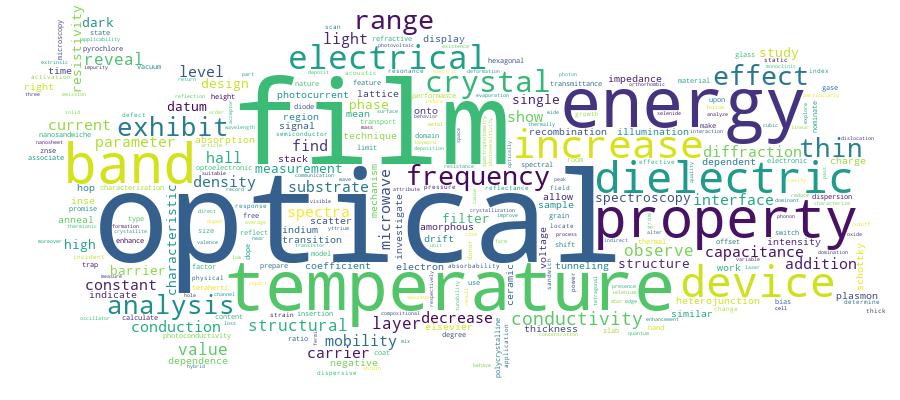
Competency Cloud

GCRIS Competency Cloud

Scholarly Output Search Results

Now showing 1 - 5 of 5
  • Article
    Citation - WoS: 9
    Citation - Scopus: 9
    Design and Characterization of Au/In4< Field Effect Transistors
    (Elsevier Science Bv, 2018) Khusayfan, Najla M.; Qasrawi, A. F.; Khanfar, Hazem K.
    In the current work, the structural and electrical properties of the In4Se3/Ga2S3 interfaces are investigated. The X-ray analysis which concern the structural evolutions that is associated with the substrate type has shown that the hexagonal kappa-In2Se3 and the selenium (rhombohedral) rich orthorhombic In4Se3 phases of InSe are grown onto glass and gold substrates, respectively, at substrate of temperature of 300 degrees C in a vacuum media. The coating of the kappa-In2Se3 and of In4Se3 with amorphous layer of Ga2S3 is accompanied with uniform strain. The In4Se3/Ga2S3 interface is found to be of attractive quantum confinement features as it exhibited a conduction and valence band offsets of 0.20 and 1.86 eV, respectively. When the Au/In4Se3/Ga2S3 interface was contacted with carbon metallic point contact, it reveals a back to back Schottky hybrid device that behaves typically as metal-oxidesemiconductor field effect transition (MOSFET). The depletion capacitance analysis of this device revealed built in voltage values of 1.91 and 1.64 V at the Au and C sides, respectively. The designed MOSFET which is characterized in the frequency domain of 0.01-1.80 GHz is observed to exhibit, resonance-anti-resonance phenomena associated with negative capacitance effect in a wide domain of frequency that nominate it for applications in electronic circuits as parasitic capacitance minimizer, bus switching speed enhancer and low pass/high pass filter at microwave frequencies. (C) 2018 The Authors. Published by Elsevier B.V.
  • Article
    Citation - WoS: 40
    Citation - Scopus: 42
    Design and Electrical Performance of Cds/Sb2< Tunneling Heterojunction Devices
    (Iop Publishing Ltd, 2018) Khusayfan, Najla M.; Qasrawi, A. F.; Khanfar, Hazem K.
    In the current work, a tunneling barrier device made of 20 nm thick Sb2Te3 layer deposited onto 500 nm thick CdS is designed and characterized. The design included a Yb metallic substrate and Ag point contact of area of 10(-3) cm(2). The heterojunction properties are investigated by means of x-ray diffraction and impedance spectroscopy techniques. It is observed that the coating of the Sb2Te3 onto the surface of CdS causes a further deformation to the already strained structure of hexagonal CdS. The designed energy band diagram for the CdS/Sb2Te3 suggests a straddling type of heterojunction with an estimated conduction and valence band offsets of 0.35 and 1.74 eV, respectively. In addition, the analysis of the capacitance-voltage characteristic curve revealed a depletion region width of 14 nm. On the other hand, the capacitance and conductivity spectra which are analyzed in the frequency domain of 0.001-1.80 GHz indicated that the conduction in the device is dominated by the quantum mechanical tunneling in the region below 0.26 GHz and by the correlated barrier hopping in the remaining region. While the modeling of the conductivity spectra allowed investigation of the density of states near Fermi levels and an average scattering time of 1.0 ns, the capacitance spectra exhibited resonance at 0.26 GHz followed by negative differential capacitance effect in the frequency domain of 0.26-1.8 GHz. Furthermore, the evaluation of the impedance and reflection coefficient spectra indicated the usability of these devices as wide range low pass filters with ideal values of voltage standing wave ratios.
  • Article
    Citation - WoS: 26
    Citation - Scopus: 27
    Impact of Yb, In, Ag and Au Thin Film Substrates on the Crystalline Nature, Schottky Barrier Formation and Microwave Trapping Properties of Bi2o3< Films
    (Elsevier Sci Ltd, 2017) Khusayfan, Najla M.; Qasrawi, A. F.; Khanfar, Hazem K.
    The effect of the Yb, In, Ag and Au thin film metal substrates on the structural and electrical properties of Bi2O3 thin films are investigated by means of X-ray diffraction, impedance spectroscopy an current-voltage characteristic techniques. The Bi2O3 films are observed to exhibit a crystallization nature depending on the crystal structure of the substrate. Particularly, when the metal substrate is facing centered cubic, the Bi2O3 prefers the gamma-phase of body centered cubic crystallization for the (Yb, Ag and Au)/Bi2O3 interfaces. Whereas when a tetragonal substrate (indium) is used, the tetragonal beta-Bi2O3 single phase is preferred. All structural parameters presented by the lattice constant, degree of orientation, dislocation density, micro-strain and grain size are observed to strongly depend on the crystal type. In addition, the evaluation of the Schottky barrier formation at the (Yb, In, Ag, Au)/Bi2O3/Au interfaces by the current-voltage characteristics, revealed that the (In, Au)/Bi2O3/Au interface exhibit ohmic nature of contact and the (Yb,Ag)/Bi2O3/Au are of Schottky type, the rectification ratio for the Yb/Bi2O3/Au interface reaches a value of 10(5) indicating the applicability of these interfaces in CMOS digital logic devices. Moreover, the impedance spectroscopy analysis revealed that the ohmic interfaces exhibit a negative capacitance effect. The In/beta-Bi2O3/Au and Yb/.-Bi2O3/Au interfaces are performing as microwave traps with wave absorption percentage of 62% and 92% at frequencies of 193 and 1200 MHz, respectively. The features of the devices are promising as they indicate the applicability as microwave resonator and fast electronic switches.
  • Article
    Citation - WoS: 8
    Citation - Scopus: 8
    Design and performance of Yb/ZnS/C Schottky barriers
    (Elsevier Science Bv, 2017) Khusayfan, Najla M.; Al Garni, S. E.; Qasrawi, A. F.
    In this work, ZnS thin films are deposited onto glass and transparent ytterbium substrates under vacuum pressure of 10(-5) mbar. The effects of the Yb substrate on the structural, mechanical, optical, dielectric and electrical performance of the ZnS are explored by means of the energy dispersion X-ray analyzer, X-ray diffraction, UVeVIS spectroscopy, current-voltage characteristics and impedance spectroscopy techniques. The techniques allowed determining the lattice parameters, the grain size, the degree of orientation, the microstrain, the dislocation density, the optical and the excitonic gaps, the energy band offsets and the dielectric resonance and dispersion. The (111) oriented planes of glass/ZnS and Yb/ZnS exhibited 2.06% lattice mismatch between Yb and ZnS and degree of orientation values of 63% and 51.6%, respectively. The interfacing of the ZnS with Yb shrunk the energy band gap of ZnS by 0.50 eV. On the other hand, the electrical analysis on the Yb/ZnS/C Schottky device has revealed a rectification ratio of 3.48 x 10(4) at a biasing voltage of 0.30 V. The barrier height and ideality factor was also determined. Moreover, the impedance spectroscopy analysis have shown that the Yb/ZnS/C device is very attractive for use as varactor devices of wide tunability. The device could also be employed as microwave resonator above 1337 MHz. (C) 2016 Elsevier B. V. All rights reserved.
  • Article
    Citation - WoS: 3
    Citation - Scopus: 3
    Enhancement of the Performance of the Cu2se Band Filters Via Yb Nanosandwiching
    (Wiley, 2019) Khusayfan, Najla M.; Qasrawı, Atef Fayez Hasan; Qasrawi, A. F.; Khanfar, Hazem K.; Qasrawı, Atef Fayez Hasan; Department of Electrical & Electronics Engineering; Department of Electrical & Electronics Engineering
    In this article, we report the experimental and theoretical modeling on the band pass filters that are made of two thin film layers of Cu2Se coated onto aluminum substrates and nanosandwiched with 50 nm ytterbium layers. The nanosandwiching of Yb between two layers of Cu2Se is found to decrease the lattice constant, the defect density, and the strain and increase the grain size in the Cu2Se. Electrically, it is observed that, Al/Cu2Se/Al structure exhibits wave trap characteristics with notch frequency of 1.31 GHz. The Yb-layers improved the performance of the band pass filters by increasing the amplitude of the reflection coefficients, increasing the return loss values and decreasing the voltage standing wave ratios. The calculated conduction and wave trapping parameters nominate the Yb-nanosandwiched Cu2Se films for use in communication technology as they exhibit negative capacitance effect and narrow band pass range.