Kavruk, Murat

Loading...
Profile Picture
Name Variants
Kavruk, Murat
Kavruk,M.
Murat, Kavruk
M.,Kavruk
K.,Murat
K., Murat
M., Kavruk
Job Title
Doktor Öğretim Üyesi
Email Address
murat.kavruk@atilim.edu.tr
Main Affiliation
Nutrition and Dietetics
Status
Former Staff
Website
ORCID ID
Scopus Author ID
Turkish CoHE Profile ID
Google Scholar ID
WoS Researcher ID

Sustainable Development Goals

NO POVERTY1
NO POVERTY
0
Research Products
ZERO HUNGER2
ZERO HUNGER
0
Research Products
GOOD HEALTH AND WELL-BEING3
GOOD HEALTH AND WELL-BEING
6
Research Products
QUALITY EDUCATION4
QUALITY EDUCATION
0
Research Products
GENDER EQUALITY5
GENDER EQUALITY
1
Research Products
CLEAN WATER AND SANITATION6
CLEAN WATER AND SANITATION
1
Research Products
AFFORDABLE AND CLEAN ENERGY7
AFFORDABLE AND CLEAN ENERGY
0
Research Products
DECENT WORK AND ECONOMIC GROWTH8
DECENT WORK AND ECONOMIC GROWTH
0
Research Products
INDUSTRY, INNOVATION AND INFRASTRUCTURE9
INDUSTRY, INNOVATION AND INFRASTRUCTURE
1
Research Products
REDUCED INEQUALITIES10
REDUCED INEQUALITIES
0
Research Products
SUSTAINABLE CITIES AND COMMUNITIES11
SUSTAINABLE CITIES AND COMMUNITIES
0
Research Products
RESPONSIBLE CONSUMPTION AND PRODUCTION12
RESPONSIBLE CONSUMPTION AND PRODUCTION
0
Research Products
CLIMATE ACTION13
CLIMATE ACTION
0
Research Products
LIFE BELOW WATER14
LIFE BELOW WATER
0
Research Products
LIFE ON LAND15
LIFE ON LAND
0
Research Products
PEACE, JUSTICE AND STRONG INSTITUTIONS16
PEACE, JUSTICE AND STRONG INSTITUTIONS
1
Research Products
PARTNERSHIPS FOR THE GOALS17
PARTNERSHIPS FOR THE GOALS
1
Research Products
This researcher does not have a Scopus ID.
This researcher does not have a WoS ID.
Scholarly Output

12

Articles

12

Views / Downloads

54/20

Supervised MSc Theses

0

Supervised PhD Theses

0

WoS Citation Count

67

Scopus Citation Count

70

Patents

0

Projects

0

WoS Citations per Publication

5.58

Scopus Citations per Publication

5.83

Open Access Source

8

Supervised Theses

0

JournalCount
The Analyst2
Biosensors1
Critical Reviews in Analytical Chemistry1
Flora İnfeksiyon Hastalıkları ve Klinik Mikrobiyoloji Dergisi1
Journal of the Science of Food and Agriculture1
Current Page: 1 / 2

Scopus Quartile Distribution

Competency Cloud

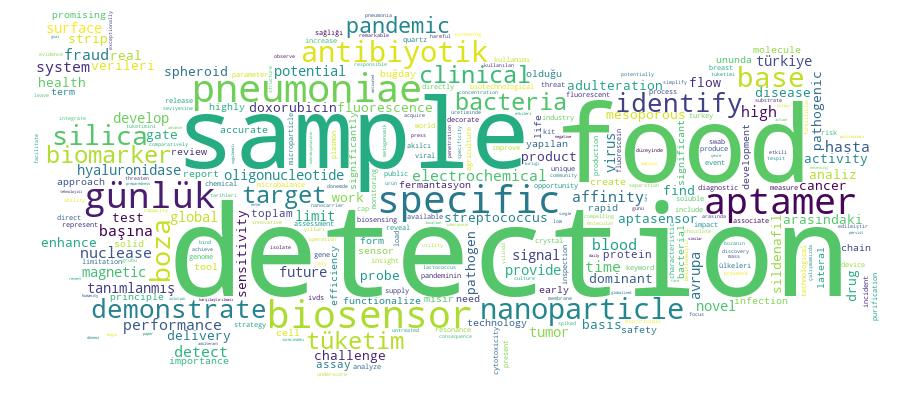
GCRIS Competency Cloud

Scholarly Output Search Results

Now showing 1 - 1 of 1
  • Review
    Citation - WoS: 29
    Citation - Scopus: 30
    Real-Time Biosensing Bacteria and Virus With Quartz Crystal Microbalance: Recent Advances, Opportunities, and Challenges
    (Taylor & Francis inc, 2023) Bonyadi, Farzaneh; Kavruk, Murat; Ucak, Samet; Cetin, Barbaros; Bayramoglu, Gulay; Dursun, Ali D. D.; Ozalp, Veli C. C.
    Continuous monitoring of pathogens finds applications in environmental, medical, and food industry settings. Quartz crystal microbalance (QCM) is one of the promising methods for real-time detection of bacteria and viruses. QCM is a technology that utilizes piezoelectric principles to measure mass and is commonly used in detecting the mass of chemicals adhering to a surface. Due to its high sensitivity and rapid detection times, QCM biosensors have attracted considerable attention as a potential method for detecting infections early and tracking the course of diseases, making it a promising tool for global public health professionals in the fight against infectious diseases. This review first provides an overview of the QCM biosensing method, including its principle of operation, various recognition elements used in biosensor creation, and its limitations and then summarizes notable examples of QCM biosensors for pathogens, focusing on microfluidic magnetic separation techniques as a promising tool in the pretreatment of samples. The review explores the use of QCM sensors in detecting pathogens in various samples, such as food, wastewater, and biological samples. The review also discusses the use of magnetic nanoparticles for sample preparation in QCM biosensors and their integration into microfluidic devices for automated detection of pathogens and highlights the importance of accurate and sensitive detection methods for early diagnosis of infections and the need for point-of-care approaches to simplify and reduce the cost of operation.