Güney, Murat Can

Loading...
Profile Picture
Name Variants
G.,Murat Can
G., Murat Can
Guney,M.C.
Güney, Murat Can
Guney, M. C.
Murat Can, Guney
M.C.Guney
M.,Güney
M. C. Güney
M. C. Guney
M.C.Güney
M., Guney
Güney,M.C.
Guney, Murat Can
Güney M.
Murat Can, Güney
Job Title
Doktor Öğretim Üyesi
Email Address
murat.guney@atilim.edu.tr
Main Affiliation
Internal Medical Sciences
Status
Website
ORCID ID
Scopus Author ID
Turkish CoHE Profile ID
Google Scholar ID
WoS Researcher ID

Sustainable Development Goals

3

GOOD HEALTH AND WELL-BEING
GOOD HEALTH AND WELL-BEING Logo

2

Research Products
Documents

19

Citations

47

h-index

4

Documents

21

Citations

44

Scholarly Output

8

Articles

7

Views / Downloads

22/0

Supervised MSc Theses

0

Supervised PhD Theses

0

WoS Citation Count

8

Scopus Citation Count

10

WoS h-index

2

Scopus h-index

2

Patents

0

Projects

0

WoS Citations per Publication

1.00

Scopus Citations per Publication

1.25

Open Access Source

7

Supervised Theses

0

Google Analytics Visitor Traffic

JournalCount
Medicina2
Brazilian Journal of Cardiovascular Surgery1
Journal of Cardiovascular Development and Disease1
Advances in Interventional Cardiology1
Texas Heart Institute Journal1
Current Page: 1 / 2

Scopus Quartile Distribution

Competency Cloud

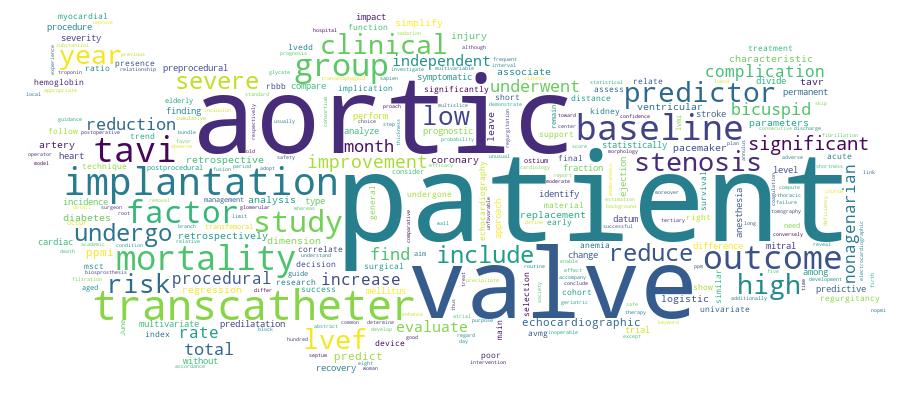
GCRIS Competency Cloud

Scholarly Output Search Results

Now showing 1 - 1 of 1
  • Article
    Citation - WoS: 2
    Citation - Scopus: 3
    Predictors and Prognostic Implications of Myocardial Injury After Transcatheter Aortic Valve Replacement
    (Texas Heart inst, 2022) Guney, Murat Can; Keles, Telat; Karaduman, Bilge Duran; Ayhan, Huseyin; Suygun, Hakan; Kahyaoglu, Muzaffer; Bozkurt, Engin
    Myocardial injury (MI) is not unusual after transcatheter aortic valve replacement (TAVR). To determine precipitating factors and prognostic outcomes of MI after TAVR, we retrospectively investigated relationships between MI after TAVR and aortic root dimensions, baseline patient characteristics, echocardiographic findings, and procedural features. Of 474 patients who underwent transfemoral TAVR for severe aortic stenosis in our tertiary center from June 2011 through June 2018, 188 (mean age, 77.7 +/- 7.7 yr; 96 women [51%]) met the study inclusion criteria. Patients were divided into postprocedural MI (PMI) (n=74) and no-PMI (n=114) groups, in accordance with high-sensitivity troponin T levels. We found that MI risk was associated with older age (odds ratio [OR]=1.054; 95% CI, 1.013-1.098; P=0.01), transcatheter heart valve type (OR=10.207; 95% CI, 2.861-36.463; P=0.001), distances from the aortic annulus to the right coronary artery ostium (OR=0.853; 95% CI, 0.731-0.995; P=0.04) and the left main coronary artery ostium (OR=0.747; 95% CI, 0.616-0.906; P=0.003), and baseline glomerular filtration rate (OR=0.985; 95% CI, 0.970-1.000; P= 0.04). Moreover, the PMI group had a longer time to hospital discharge (P=0.001) and a higher permanent pacemaker implantation rate (P=0.04) than did the noPMI group. Our findings may enable better estimation of which patients are at higher risk of MI after TAVR and thus improve the planning and course of clinical care.