Güney, Murat Can

Loading...
Profile Picture
Name Variants
G.,Murat Can
G., Murat Can
Guney,M.C.
Güney, Murat Can
Guney, M. C.
Murat Can, Guney
M.C.Guney
M.,Güney
M. C. Güney
M. C. Guney
M.C.Güney
M., Guney
Güney,M.C.
Guney, Murat Can
Güney M.
Murat Can, Güney
Job Title
Doktor Öğretim Üyesi
Email Address
murat.guney@atilim.edu.tr
Main Affiliation
Internal Medical Sciences
Status
Website
ORCID ID
Scopus Author ID
Turkish CoHE Profile ID
Google Scholar ID
WoS Researcher ID

Sustainable Development Goals

3

GOOD HEALTH AND WELL-BEING
GOOD HEALTH AND WELL-BEING Logo

2

Research Products
Documents

19

Citations

47

h-index

4

Documents

21

Citations

44

Scholarly Output

8

Articles

7

Views / Downloads

22/0

Supervised MSc Theses

0

Supervised PhD Theses

0

WoS Citation Count

8

Scopus Citation Count

10

WoS h-index

2

Scopus h-index

2

Patents

0

Projects

0

WoS Citations per Publication

1.00

Scopus Citations per Publication

1.25

Open Access Source

7

Supervised Theses

0

Google Analytics Visitor Traffic

JournalCount
Medicina2
Brazilian Journal of Cardiovascular Surgery1
Journal of Cardiovascular Development and Disease1
Advances in Interventional Cardiology1
Texas Heart Institute Journal1
Current Page: 1 / 2

Scopus Quartile Distribution

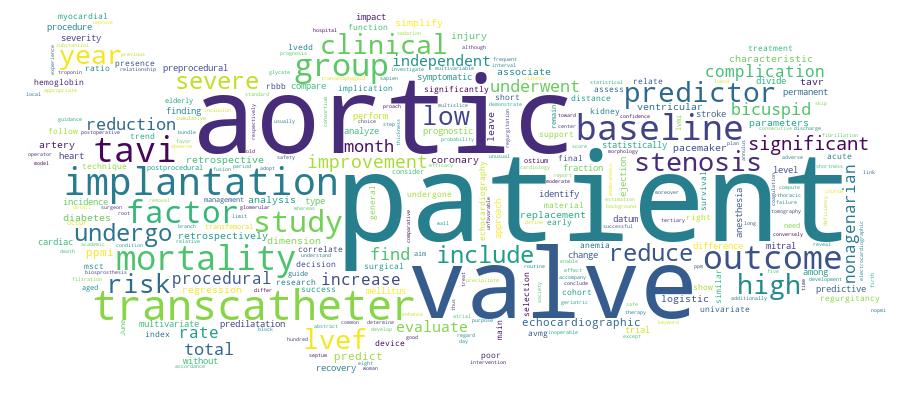
Competency Cloud

GCRIS Competency Cloud

Scholarly Output Search Results

Now showing 1 - 1 of 1
  • Article
    Citation - WoS: 1
    Citation - Scopus: 1
    Outcomes of Transcatheter Aortic Valve Implantation in Patients With and Without Diabetes Mellitus
    (Soc Brasil Cirurgia Cardiovasc, 2024) Ayhan, Huseyin; Guney, Murat Can; Keles, Telat; Bozkurt, Engin
    Introduction: Diabetes mellitus (DM) in patients undergoing cardiac transcatheter or surgical interventions usually is correlated with poor outcomes. Transcatheter aortic valve implantation (TAVI) has been developed as a therapy choice for inoperable, high-, or intermediate-risk surgical patients with severe aortic stenosis (AS). Objective: To evaluate the impact of DM and hemoglobin A1c (HbA1c) on outcomes and survival after TAVI. Methods: Five hundred and fifty-two symptomatic severe AS patients who underwent TAVI, of whom 164 (29.7%) had DM, were included in this retrospective study. Follow-up was performed after 30 days, six months, and annually. Results: The device success and risks of procedural-related complications were similar between patients with and without DM, except for acute kidney injury, which was more frequent in the DM group (2.4% vs. 0%, P=0.021). In-hospital and first-year mortality were similar between the groups (4.9% vs. 3.6%, P=0.490 and 15.0% vs. 11.2%, P=0.282, respectively). There was a statistical difference between HbA1c >= 6.5 and HbA1c <= 6.49 groups in total mortality (34.4% vs. 15.8%, P<0.001, respectively). The only independent predictors were Society of Thoracic Surgeons score (hazard ratio [HR] 1.28, 95% confidence interval [CI] 1.09-1.51; P=0.003) and HbA1c level >= 6.5 (HR 10.78, 95% CI 2.58-21.50; P=0.003) in multivariable logistic regression analysis. Conclusion: In this study, we conclude that DM was not correlated with an increased mortality risk or complication rates after TAVI. Also, it was shown that mortality was higher in patients with HbA1c >= 6.5, and it was an independent predictor for long-term mortality.