
Güney, Murat Can
Loading...

Profile URL
Name Variants
G.,Murat Can
G., Murat Can
Guney,M.C.
Güney, Murat Can
Guney, M. C.
Murat Can, Guney
M.C.Guney
M.,Güney
M. C. Güney
M. C. Guney
M.C.Güney
M., Guney
Güney,M.C.
Guney, Murat Can
Güney M.
Murat Can, Güney
G., Murat Can
Guney,M.C.
Güney, Murat Can
Guney, M. C.
Murat Can, Guney
M.C.Guney
M.,Güney
M. C. Güney
M. C. Guney
M.C.Güney
M., Guney
Güney,M.C.
Guney, Murat Can
Güney M.
Murat Can, Güney
Job Title
Doktor Öğretim Üyesi
Email Address
murat.guney@atilim.edu.tr
Main Affiliation
Internal Medical Sciences
Status
Website
ORCID ID
Scopus Author ID
Turkish CoHE Profile ID
Google Scholar ID
WoS Researcher ID
Sustainable Development Goals
3
GOOD HEALTH AND WELL-BEING

2
Research Products

Documents
19
Citations
47
h-index
4

Documents
21
Citations
44

Scholarly Output
8
Articles
7
Views / Downloads
22/0
Supervised MSc Theses
0
Supervised PhD Theses
0
WoS Citation Count
8
Scopus Citation Count
10
WoS h-index
2
Scopus h-index
2
Patents
0
Projects
0
WoS Citations per Publication
1.00
Scopus Citations per Publication
1.25
Open Access Source
7
Supervised Theses
0
Google Analytics Visitor Traffic
| Journal | Count |
|---|---|
| Medicina | 2 |
| Brazilian Journal of Cardiovascular Surgery | 1 |
| Journal of Cardiovascular Development and Disease | 1 |
| Advances in Interventional Cardiology | 1 |
| Texas Heart Institute Journal | 1 |
Current Page: 1 / 2
Scopus Quartile Distribution
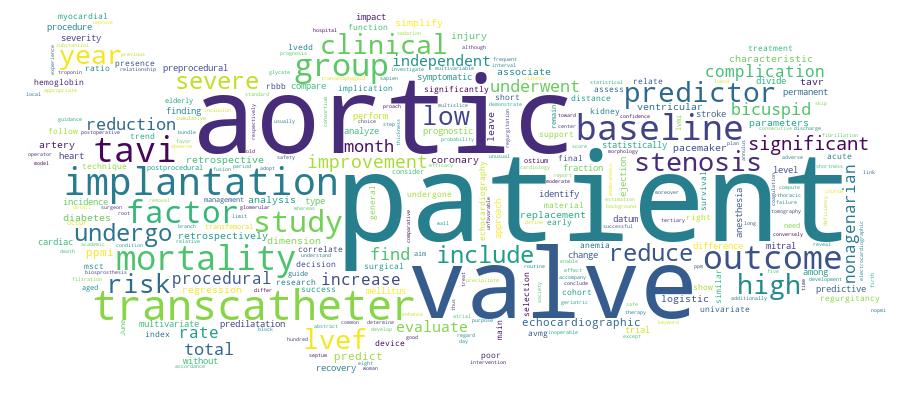
Competency Cloud
5 results
Scholarly Output Search Results
Now showing 1 - 5 of 5
Editorial Transcatheter Aortic Valve Implantation in Bicuspid Aortic Valve Patients With Coagulation Factor 7 and 11 Deficiency and Atrial Fibrillation(Kare Publ, 2023) Guney, Murat Can; Karaduman, Bilge Duran; Ayhan, Huseyin; Keles, Telat; Bozkurt, Engin[No Abstract Available]Article Predictive Factors of Cardiac Function Recovery and Mortality in Patients With Reduced Ejection Fraction Undergoing Transcatheter Aortic Valve Implantation(Mdpi, 2025) Guney, Murat Can; Suygun, Hakan; Polat, Melike; Ayhan, Huseyin; Keles, Telat; Ertop, Zeynep Seyma Turinay; Bozkurt, EnginBackground and Objectives: Patients with reduced left ventricular ejection fraction (LVEF) are reported to have unfavorable outcomes following transcatheter aortic valve implantation (TAVI). This study aims to evaluate outcomes and identify predictive factors for LVEF recovery following TAVI in patients with reduced LVEF. Materials and Methods: This retrospective study analyzed 114 patients with symptomatic severe aortic stenosis (AS) with LVEF < 40% who underwent TAVI between 2011 and 2023 at two centers. Echocardiographic parameters, including LVEF, ventricular dimensions, and relative wall thickness (RWT), were assessed at baseline and during follow-up. The outcomes and predictors of substantial LVEF improvement and mortality were analyzed using univariate and multivariate logistic regression methods. Results: Anemia (OR = 4.345, 95% CI: 1.208-15.626, p = 0.024), RWT (OR = 1.224, 95% CI: 1.064-1.407, p = 0.005), and early post-procedural changes in left ventricular end-systolic dimension (LVESD) (OR = 1.297, 95% CI: 1.037-1.622, p = 0.023) and left ventricular end-diastolic dimension (LVEDD) (OR = 1.346, 95% CI: 1.034-1.753, p = 0.027) at one-month follow-up were identified as significant factors associated with LVEF recovery at one year. Regarding factors related to mortality, higher baseline AVMG levels were associated with a lower probability of death after one year (OR = 0.926, 95% CI: 0.875-0.979, p = 0.007). Conversely, a more limited increase in LVEF from baseline to the final follow-up was linked to poor prognosis and higher mortality at one year (95% CI: 1.045-1.594, p = 0.018). Conclusions: This study demonstrated that TAVI in patients with AS and reduced LVEF can be performed with high procedural success, low mortality, and significant improvement in cardiac function during follow-up. Additionally, anemia, baseline RWT, and early post-procedural changes in LVESD and LVEDD were identified as factors associated with LVEF recovery. Baseline AVMG and changes in LVEF at the final follow-up were found to be significant predictors of total mortality.Article Citation - WoS: 1Citation - Scopus: 1Outcomes of Transcatheter Aortic Valve Implantation in Patients With and Without Diabetes Mellitus(Soc Brasil Cirurgia Cardiovasc, 2024) Ayhan, Huseyin; Guney, Murat Can; Keles, Telat; Bozkurt, EnginIntroduction: Diabetes mellitus (DM) in patients undergoing cardiac transcatheter or surgical interventions usually is correlated with poor outcomes. Transcatheter aortic valve implantation (TAVI) has been developed as a therapy choice for inoperable, high-, or intermediate-risk surgical patients with severe aortic stenosis (AS). Objective: To evaluate the impact of DM and hemoglobin A1c (HbA1c) on outcomes and survival after TAVI. Methods: Five hundred and fifty-two symptomatic severe AS patients who underwent TAVI, of whom 164 (29.7%) had DM, were included in this retrospective study. Follow-up was performed after 30 days, six months, and annually. Results: The device success and risks of procedural-related complications were similar between patients with and without DM, except for acute kidney injury, which was more frequent in the DM group (2.4% vs. 0%, P=0.021). In-hospital and first-year mortality were similar between the groups (4.9% vs. 3.6%, P=0.490 and 15.0% vs. 11.2%, P=0.282, respectively). There was a statistical difference between HbA1c >= 6.5 and HbA1c <= 6.49 groups in total mortality (34.4% vs. 15.8%, P<0.001, respectively). The only independent predictors were Society of Thoracic Surgeons score (hazard ratio [HR] 1.28, 95% confidence interval [CI] 1.09-1.51; P=0.003) and HbA1c level >= 6.5 (HR 10.78, 95% CI 2.58-21.50; P=0.003) in multivariable logistic regression analysis. Conclusion: In this study, we conclude that DM was not correlated with an increased mortality risk or complication rates after TAVI. Also, it was shown that mortality was higher in patients with HbA1c >= 6.5, and it was an independent predictor for long-term mortality.Article Citation - WoS: 2Citation - Scopus: 2Prognostic Implications and Predictors of Mitral Regurgitancy Reduction After Transcatheter Aortic Valve Implantation(Mdpi, 2024) Guney, Murat Can; Suygun, Hakan; Polat, Melike; Ayhan, Huseyin; Keles, Telat; Ertop, Zeynep Seyma Turinay; Bozkurt, EnginBackground: Mitral regurgitation (MR) is a common condition observed in patients undergoing transcatheter aortic valve implantation (TAVI) for the treatment of aortic stenosis (AS). However, the impact of TAVI on MR outcomes and the factors predicting MR improvement remains uncertain. Understanding these predictors can enhance patient management and guide clinical decisions. Methods: This retrospective cohort study included 156 patients with moderate to severe MR undergoing TAVI. MR severity was assessed via echocardiography at baseline, as well as 6 months and 1 year after TAVI. Patients were divided into groups based on MR reduction: no improvement or worsening, one-degree improvement, and at least two-degree improvement. Clinical, echocardiographic, and procedural characteristics were evaluated as predictive factors for MR improvement after TAVI. Results: MR reduction occurred in 68% of patients at 6 months and 81% at 1 year. Factors predicting a reduction of two grades or more in MR severity included lower baseline LVEDD (OR = 1.345, 95% CI: 1.112-1.628, p = 0.002) lower baseline LA (OR = 1.121, 95% CI: 1.015-1.237, p = 0.024), lower baseline LVMI (OR = 1.109, 95% CI: 1.020-1.207, p = 0.024), and higher baseline EF levels (OR = 1.701, 95% CI: 1.007-2.871, p = 0.047). No significant association was found between MR reduction at 6 months and one-year mortality. (p = 0.65). Conclusions: Baseline echocardiographic parameters are valuable in predicting MR improvement post-TAVI, with LVMI emerging as a novel predictor. However, MR reduction did not independently predict survival, underscoring the need for further research to optimize patient selection and management strategies in TAVI candidates.Article Citation - WoS: 2Citation - Scopus: 3Predictors and Prognostic Implications of Myocardial Injury After Transcatheter Aortic Valve Replacement(Texas Heart inst, 2022) Guney, Murat Can; Keles, Telat; Karaduman, Bilge Duran; Ayhan, Huseyin; Suygun, Hakan; Kahyaoglu, Muzaffer; Bozkurt, EnginMyocardial injury (MI) is not unusual after transcatheter aortic valve replacement (TAVR). To determine precipitating factors and prognostic outcomes of MI after TAVR, we retrospectively investigated relationships between MI after TAVR and aortic root dimensions, baseline patient characteristics, echocardiographic findings, and procedural features. Of 474 patients who underwent transfemoral TAVR for severe aortic stenosis in our tertiary center from June 2011 through June 2018, 188 (mean age, 77.7 +/- 7.7 yr; 96 women [51%]) met the study inclusion criteria. Patients were divided into postprocedural MI (PMI) (n=74) and no-PMI (n=114) groups, in accordance with high-sensitivity troponin T levels. We found that MI risk was associated with older age (odds ratio [OR]=1.054; 95% CI, 1.013-1.098; P=0.01), transcatheter heart valve type (OR=10.207; 95% CI, 2.861-36.463; P=0.001), distances from the aortic annulus to the right coronary artery ostium (OR=0.853; 95% CI, 0.731-0.995; P=0.04) and the left main coronary artery ostium (OR=0.747; 95% CI, 0.616-0.906; P=0.003), and baseline glomerular filtration rate (OR=0.985; 95% CI, 0.970-1.000; P= 0.04). Moreover, the PMI group had a longer time to hospital discharge (P=0.001) and a higher permanent pacemaker implantation rate (P=0.04) than did the noPMI group. Our findings may enable better estimation of which patients are at higher risk of MI after TAVR and thus improve the planning and course of clinical care.
