
Özalp Yaman, Şeniz
Loading...
Profile URL
Name Variants
Ozalp Yaman,Ş.
Ozalp Yaman, Seniz
Ş.,Özalp Yaman
S.,Ozalp Yaman
Şeniz Özalp Yaman
O., Seniz
O. Y. Seniz
Ozalp Yaman,S.
Ozalp Yaman,Seniz
O.,Seniz
Seniz, Ozalp Yaman
Şeniz, Özalp Yaman
Ö., Şeniz
Ö.Y.Şeniz
Ö. Y. Şeniz
Özalp Yaman Ş.
Özalp Yaman,Ş.
S., Ozalp Yaman
Ş., Özalp Yaman
Ö.,Şeniz
Özalp Yaman, Şeniz
Ozalp-Yaman, Seniz
Yaman, Seniz-Ozalp
Yaman, Şeniz Özalp
Özalp-Yaman, S
Oezalp-Yaman, Seniz
Özalp-Yaman,Ş.
Yaman,Ş.Ö.
Ozalp Yaman, Seniz
Ş.,Özalp Yaman
S.,Ozalp Yaman
Şeniz Özalp Yaman
O., Seniz
O. Y. Seniz
Ozalp Yaman,S.
Ozalp Yaman,Seniz
O.,Seniz
Seniz, Ozalp Yaman
Şeniz, Özalp Yaman
Ö., Şeniz
Ö.Y.Şeniz
Ö. Y. Şeniz
Özalp Yaman Ş.
Özalp Yaman,Ş.
S., Ozalp Yaman
Ş., Özalp Yaman
Ö.,Şeniz
Özalp Yaman, Şeniz
Ozalp-Yaman, Seniz
Yaman, Seniz-Ozalp
Yaman, Şeniz Özalp
Özalp-Yaman, S
Oezalp-Yaman, Seniz
Özalp-Yaman,Ş.
Yaman,Ş.Ö.
Job Title
Profesör Doktor
Email Address
seniz.ozalpyaman@atilim.edu.tr
Main Affiliation
Chemical Engineering
Status
Website
ORCID ID
Scopus Author ID
Turkish CoHE Profile ID
Google Scholar ID
WoS Researcher ID
Sustainable Development Goals
2
ZERO HUNGER

0
Research Products
11
SUSTAINABLE CITIES AND COMMUNITIES

1
Research Products
14
LIFE BELOW WATER

0
Research Products
6
CLEAN WATER AND SANITATION

4
Research Products
1
NO POVERTY

0
Research Products
5
GENDER EQUALITY

0
Research Products
9
INDUSTRY, INNOVATION AND INFRASTRUCTURE

2
Research Products
16
PEACE, JUSTICE AND STRONG INSTITUTIONS

0
Research Products
17
PARTNERSHIPS FOR THE GOALS

0
Research Products
15
LIFE ON LAND

0
Research Products
10
REDUCED INEQUALITIES

0
Research Products
7
AFFORDABLE AND CLEAN ENERGY

1
Research Products
8
DECENT WORK AND ECONOMIC GROWTH

0
Research Products
4
QUALITY EDUCATION

0
Research Products
12
RESPONSIBLE CONSUMPTION AND PRODUCTION

0
Research Products
3
GOOD HEALTH AND WELL-BEING

14
Research Products
13
CLIMATE ACTION

0
Research Products

Documents
24
Citations
567
h-index
11

This researcher does not have a WoS ID.

Scholarly Output
39
Articles
25
Views / Downloads
204/1641
Supervised MSc Theses
8
Supervised PhD Theses
5
WoS Citation Count
475
Scopus Citation Count
523
WoS h-index
11
Scopus h-index
10
Patents
0
Projects
4
WoS Citations per Publication
12.18
Scopus Citations per Publication
13.41
Open Access Source
5
Supervised Theses
13
Google Analytics Visitor Traffic
| Journal | Count |
|---|---|
| Polyhedron | 5 |
| Journal of Molecular Structure | 3 |
| Electrochimica Acta | 2 |
| Chemistry – A European Journal | 2 |
| Zeitschrift fur Naturforschung - Section B Journal of Chemical Sciences | 2 |
Current Page: 1 / 3
Scopus Quartile Distribution
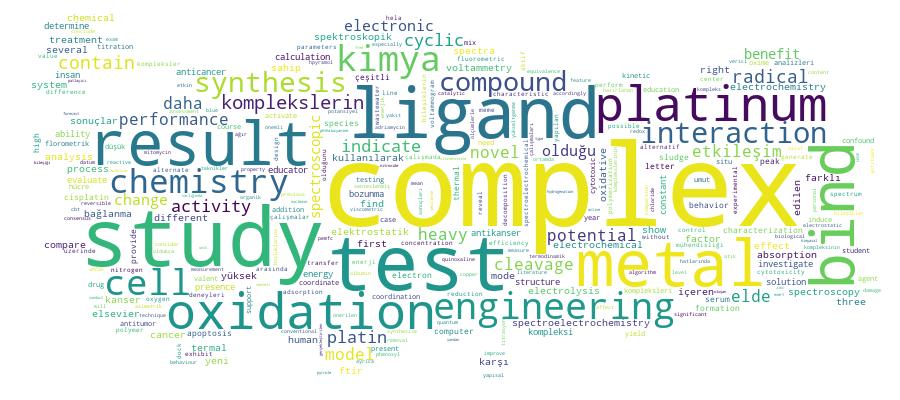
Competency Cloud
25 results
Scholarly Output Search Results
Now showing 1 - 10 of 25
Article How Can We Get Benefits of Computer-Based Testing in Engineering Education?(Computer Applications in Engineering Education, 2010) Çağıltay, Nergiz; Özalp Yaman, ŞenizUsing computers for assessment can provide several benefits for educators and test-takers. However, in the literature, there is no consensus on the equivalence of paper-and-pencil (P&P) and computer-based test (CBT) environments. Additionally, these studies fail to address the engineering domain. Our main assumption is that, if we could define the confounding factors to satisfy that these two versions of the tests provide equivalent results, then especially in the first year courses of the engineering education programs, we could get several benefits of the CBT environments. Accordingly, in this study, students' performance o different test modes waws evaluated on 209 first year engineering students of a chemistry course. The results of this study showed that there is no significant performance difference between P&P and CBT. By comparing results with the previous studies, this study concludes that personal characteristics of test talers, the features of CBT systems, and the test content are all possible confounding factors when comparing test modes anf need to be considered by the implementers. The results of this study show that once these factors are controlled, students' performance on CBTs and P&P tests in chemistry courses will not vary. This finding is encourging the educators to get benefits of CBTs without any affect on students' performance.Article Citation - WoS: 8Citation - Scopus: 6A platinum blue complex exerts its cytotoxic activity via DNA damage and induces apoptosis in cancer cells(Wiley, 2017) Adiguzel, Zelal; Ozalp-Yaman, Seniz; Celik, Gokalp; Salem, Safia; Bagci-Onder, Tugba; Senbabaoglu, Filiz; Acilan, CeydaHere, we describe the characteristics of a Pt-blue complex [Pt-4(2-atp)(8)(H2O)(OH)] (2-atp: 2-aminothiophenol) as a prodrug for its DNA-binding properties and its use in cancer therapy. The nature of the interaction between the Pt-blue complex and DNA was evaluated based on spectroscopic measurements, the electronic absorption spectra, thermal behavior, viscosity, fluorometric titration, and agarose gel electrophoresis. Our results suggested that the compound was able to partially intercalate DNA and appeared to induce both single- and double-stranded breaks (DBS) on DNA in vitro, but no DSBs in cells. The ability of the compound to induce DNA damage was dependent on reactive oxygen species (ROS) in vitro. There was also elevated formation of ROS and SOD expression in response to drug treatment in cell culture. The complex was found to be more cytotoxic to cancer cells in comparison with noncancer controls using WST-1 assay. The mean of cell death was determined to be apoptosis as assessed via biochemical, morphological, and molecular observations, including DNA condensation/fragmentation analysis, live cell imaging microscopy, TUNEL analyses, and increase in the levels of pro-apoptotic genes such as Bag3, Bak, Bik, Bmf, and Hrk. Hence, the Pt-blue complex under study grants premise for further studies.Article Citation - WoS: 36Citation - Scopus: 42Synthesis, Spectroscopy and Electrochemical Behaviors of Nickel(ii) Complexes With Tetradentate Shiff Bases Derived From 3,5-bu2t<(Pergamon-elsevier Science Ltd, 2005) Kasumov, VT; Özalp-Yaman, S; Tas, ENickel(II) complexes of a series of N,N'-polymethylenebis(3,5-Bu'(2)-salicylaidimine) ligands containing 2,4-di-Bu'(2)-phenol arms, NiLx, were synthesized and their spectroscopic and redox properties were examined. The UV-vis, H-1 NMR spectroscopic and magnetic results indicate that complexes NiL1-NiL4 unlike NiL5 and NiL6 have a square-planar structure in the solid state and in solution. Cyclic voltammograms of NiLx (x= 1-4) complexes displayed two-step oxidation processes. The first oxidation peak potentials of all Ni(II) complexes corresponds to the reversible one-electron oxidation process of the metal center, yielding Ni(III) species. The second oxidation peak of the complexes was assigned as the ligand based oxidation generating a coordinated phenoxyl radical species. (c) 2005 Elsevier B.V. All rights reserved.Article Paper-Based Versus Computer-Based Testing in Engineering Education(IEEE EDUCON Education Engineering 2010 – The Future of Global Learning Engineering Education, 2010) Çağıltay, Nergiz; Özalp Yaman, ŞenizUsing computers for assessment can provide several benefits for educators and test-takers. However, in the literature, there is no consensus on the equivalence of paper-and-pencil and computer-based test environments. Accordingly, more evidences are needed especially for the engineering education. In this study, students’ performance on different test modes was evaluated on 209 first year engineering students of a chemistry course. The results of this study showed that, there is no significant performance difference between paper-and-pencil and computer based tests. By comparing results with the previous studies, this study concludes that, personal characteristics of test takers, the features of computer-based testing systems and the test content are all possible confounding factors when comparing test modes and need to be considered by the implementers. The results of this study show that, once these factors are controlled, students’ performance on computer-based tests and paper-and-pencil tests in chemistry courses for the engineering students will not vary. This finding is encouraging the educators to get benefits of computer-based tests without any affect on students’ performance.Article Citation - WoS: 75Citation - Scopus: 80Unique Ligand-Based Oxidative Dna Cleavage by Zinc(ii) Complexes of Hpyramol and Hpyrimol(Wiley-v C H verlag Gmbh, 2007) Maheswari, Palanisamy Uma; Barends, Sharief; Oezalp-Yaman, Seniz; de Hoog, Paul; Casellas, Helene; Teat, Simon J.; Reedijk, JanThe zinc(II) complexes reported here have been synthesised from the ligand 4-methyl-2-N-(2-pyridylmethyl)aminophenol (Hpyramol) with chloride or acetate counterions. All the five complexes have been structurally characterised, and the crystal structures reveal that the ligand Hpyramol gradually undergoes an oxidative dehydrogenation to form the ligand 4-methyl-2-N-(2-pyridylmethylene)aminophenol (Hpyrimol), upon coordination to Zn-II. All the five complexes cleave the phi X174 phage DNA oxidatively and the complexes with fully dehydrogenated pyrimol ligands were found to be more efficient than the complexes with non-dehydrogenated Hpyramol ligands. The DNA cleavage is suggested to be ligand-based, whereas the pure ligands alone do not cleave DNA. The DNA cleavage is strongly suggested to be oxidative, possibly due to the involvement of a non-diffusible phenoxyl radical mechanism. ne enzymatic religation experiments and DNA cleavage in the presence of different radical scavengers further support the oxidative DNA cleavage by the zinc(II) complexes.Article Citation - WoS: 13Electrochemical and Quantum Chemical Studies on Mitomycin and Adriamycin(Elsevier, 2003) Özalp-Yaman, S; Önal, AM; Türker, LIn-situ spectroelectrochemical redox behaviour of two prominent chemotherapeutic agents, mitomycin and adriamycin were studied at constant potential. AM 1 (UHF) type quantum chemical calculations on the neutral as well as radical anion and cation forms of mitomycin and adriamycin were performed. (C) 2003 Elsevier Science B.V. All rights reserved.Article Citation - WoS: 12Citation - Scopus: 13Novel Pt(ii) Complexes Containing Pyrrole Oxime, Synthesis, Characterization and Dna Binding Studies(Elsevier, 2014) Erdogan, Deniz Altunoz; Ozalp-Yaman, SenizSince the discovery of anticancer activity and subsequent clinical success of cisplatin (cis-[PtCl2(NH3)(2)]), platinum-based compounds have since been widely synthesized and studied as potential chemotherapeutic agents. In this sense, three novel nuclease active Pt(II) complexes with general formula; [Pt(NH3)CI(L)] (1), [Pt(L)(2)] (2), and K[PtCl2(L)] (3) in which L is 1-H-pyrrole-2-carbaldehyde oxime were synthesized. Characterization of complexes was performed by elemental analysis, FT-IR, H-1 NMR and mass spectroscopy measurements. Interaction of complexes (1-3) with calf thymus deoxyribonucleic acid (ct-DNA) was investigated by using electrochemical, spectroelectrochemical methods and cleavage studies. The hyperchromic change in the electronic absorption spectrum of the Pt(II) complexes indicates an electrostatic interaction between the complexes and ct-DNA. Binding constant values between 4.42 x 10(3) and 5.09 x 10(3) M-1 and binding side size values between 2 and 3 base pairs were determined from cyclic voltammetry (CV) and differential pulse voltammetry (DPV) studies. (C) 2014 Elsevier B.V. All rights reserved.Article Citation - WoS: 41Citation - Scopus: 48Platinated Copper(3-Clip Complexes as Effective Dna-Cleaving and Cytotoxic Agents(Wiley-v C H verlag Gmbh, 2008) Ozalp-Yaman, Seniz; de Hoog, Paul; Amadei, Giulio; Pitie, Marguerite; Gamez, Patrick; Dewelle, Janique; Reedijk, JanThe synthesis and biological activity of three heteronuclear platinum-copper complexes based on 3-Clip-Phen are reported. These rigid complexes have been designed to alter the intrinsic mechanism of action of both the platinum moiety and the Cu(3-Clip-Phen) unit. The platinum centers of two of these complexes are coordinated to a 3-Clip-Phen moiety, an ammine ligand and two chlorides, which are either cis or trans to each other. The third complex comprises two 3-Clip-Phen units and two chloride ligands bound in a trans fashion to the platinum ion. DNA-cleavage experiments show that the complexes are highly efficient nuclease agents. In addition, a markedly difference in their aptitude to perform direct double-strand cleavage is observed, which appears to be strongly related to the ability of the platinum unit to coordinate to DNA. Indeed, complex 6 is unable to coordinate to DNA, which is reflected by its incapability to carry out double-strand breaks. Nonetheless, this complex exhibits efficient DNA-cleavage activity, and its cytotoxicity is high for several cell lines. Complex 6 shows better antiproliferate activity than both cisplatin and Cu(3-Clip-Phen) toward most cancer cell lines. Furthermore, the cytotoxicity observed for 1 is for most cell lines close to that of cisplatin, or even better. Cu(3-Clip-Phen) induces very low cytotoxic effects, but a marked migratory activity. Complex 6 presents DNA-cleavage properties comparable to the one of Cu(3-Clip-Phen), but it does not show any migratory activity. Interestingly, both Cu(3-Clip-Phen) and 6 induces vacuolisation processes in the cell in contrast to complex 1 and cisplatin. Thus, the four complexes cisplatin tested, Cu(3-Clip-Phen), I and 6 stimulate different cellular responses.Article Citation - WoS: 7Citation - Scopus: 10Ann-Assisted Forecasting of Adsorption Efficiency To Remove Heavy Metals(Tubitak Scientific & Technological Research Council Turkey, 2019) Buaısha, Magdi; Balku, Şaziye; Yaman, Şeniz ÖzalpIn wastewater treatment, scientific and practical models utilizing numerical computational techniques suchas artificial neural networks (ANNs) can significantly help to improve the process as a whole through adsorption systems.In the modeling of the adsorption efficiency for heavy metals from wastewater, some kinetic models have been used such as pseudo first-order and second-order. The present work develops an ANN model to forecast the adsorption efficiency of heavy metals such as zinc, nickel, and copper by extracting experimental data from three case studies. To do this, we apply trial-and-error to find the most ideal ANN settings, the efficiency of which is determined by mean square error (MSE) and coefficient of determination (R2). According to the results, the model can forecast adsorption efficiency percent (AE%) with a tangent sigmoid transfer function (tansig) in the hidden layer with 10 neurons and a linear transferfunction (purelin) in the output layer. Furthermore, the Levenberg–Marquardt algorithm is seen to be most ideal for training the algorithm for the case studies, with the lowest MSE and high R2 . In addition, the experimental results and the results predicted by the model with the ANN were found to be highly compatible with each other.Article Citation - WoS: 14Citation - Scopus: 14How Can We Get Benefits of Computer-Based Testing in Engineering Education?(Wiley, 2013) Cagiltay, Nergiz; Yaman, Seniz-OzalpUsing computers for assessment can provide several benefits for educators and test-takers. However, in the literature, there is no consensus on the equivalence of paper-and-pencil (P&P) and computer-based test (CBT) environments. Additionally, these studies fail to address the engineering domain. Our main assumption is that, if we could define the confounding factors to satisfy that these two versions of the tests provide equivalent results, then especially in the first year courses of the engineering education programs, we could get several benefits of the CBT environments. Accordingly, in this study, students' performance on different test modes was evaluated on 209 first year engineering students of a chemistry course. The results of this study showed that there is no significant performance difference between P&P and CBT. By comparing results with the previous studies, this study concludes that personal characteristics of test takers, the features of CBT systems, and the test content are all possible confounding factors when comparing test modes and need to be considered by the implementers. The results of this study show that once these factors are controlled, students' performance on CBTs and P&P tests in chemistry courses will not vary. This finding is encouraging the educators to get benefits of CBTs without any affect on students' performance. (c) 2010 Wiley Periodicals, Inc. Comput Appl Eng Educ 21: 287293, 2013; View this article online at wileyonlinelibrary.com/journal/cae; DOI 10.1002/cae.20470

- «
- 1 (current)
- 2
- 3
- »