Billur, Eren

Loading...
Profile Picture
Name Variants
Billur, E.
Eren, Billur
E., Billur
E.,Billur
B.,Eren
B., Eren
Billur, Eren
Billur,E.
Job Title
Doktor Öğretim Üyesi
Email Address
eren.billur@atilim.edu.tr
Main Affiliation
Automotive Engineering
Status
Former Staff
Website
ORCID ID
Scopus Author ID
Turkish CoHE Profile ID
Google Scholar ID
WoS Researcher ID

Sustainable Development Goals

NO POVERTY1
NO POVERTY
0
Research Products
ZERO HUNGER2
ZERO HUNGER
0
Research Products
GOOD HEALTH AND WELL-BEING3
GOOD HEALTH AND WELL-BEING
2
Research Products
QUALITY EDUCATION4
QUALITY EDUCATION
0
Research Products
GENDER EQUALITY5
GENDER EQUALITY
0
Research Products
CLEAN WATER AND SANITATION6
CLEAN WATER AND SANITATION
0
Research Products
AFFORDABLE AND CLEAN ENERGY7
AFFORDABLE AND CLEAN ENERGY
1
Research Products
DECENT WORK AND ECONOMIC GROWTH8
DECENT WORK AND ECONOMIC GROWTH
0
Research Products
INDUSTRY, INNOVATION AND INFRASTRUCTURE9
INDUSTRY, INNOVATION AND INFRASTRUCTURE
1
Research Products
REDUCED INEQUALITIES10
REDUCED INEQUALITIES
0
Research Products
SUSTAINABLE CITIES AND COMMUNITIES11
SUSTAINABLE CITIES AND COMMUNITIES
0
Research Products
RESPONSIBLE CONSUMPTION AND PRODUCTION12
RESPONSIBLE CONSUMPTION AND PRODUCTION
0
Research Products
CLIMATE ACTION13
CLIMATE ACTION
0
Research Products
LIFE BELOW WATER14
LIFE BELOW WATER
0
Research Products
LIFE ON LAND15
LIFE ON LAND
0
Research Products
PEACE, JUSTICE AND STRONG INSTITUTIONS16
PEACE, JUSTICE AND STRONG INSTITUTIONS
0
Research Products
PARTNERSHIPS FOR THE GOALS17
PARTNERSHIPS FOR THE GOALS
0
Research Products
This researcher does not have a Scopus ID.
This researcher does not have a WoS ID.
Scholarly Output

9

Articles

4

Views / Downloads

31/76

Supervised MSc Theses

1

Supervised PhD Theses

0

WoS Citation Count

40

Scopus Citation Count

43

Patents

0

Projects

0

WoS Citations per Publication

4.44

Scopus Citations per Publication

4.78

Open Access Source

3

Supervised Theses

1

JournalCount
28th International Conference on Metallurgy and Materials (METAL) -- MAY 22-24, 2019 -- Brno, CZECH REPUBLIC1
5th International Conference on Hot Sheet Metal Forming of High-Performance Steel (CHS2 2015) -- MAY 31-JUN 03, 2015 -- Toronto, CANADA1
Automotive Steels: Design, Metallurgy, Processing and Applications1
Hittite Journal of Science and Engineering1
International Conference on the Technology of Plasticity (ICTP) -- SEP 17-22, 2017 -- Cambridge, ENGLAND1
Current Page: 1 / 2

Scopus Quartile Distribution

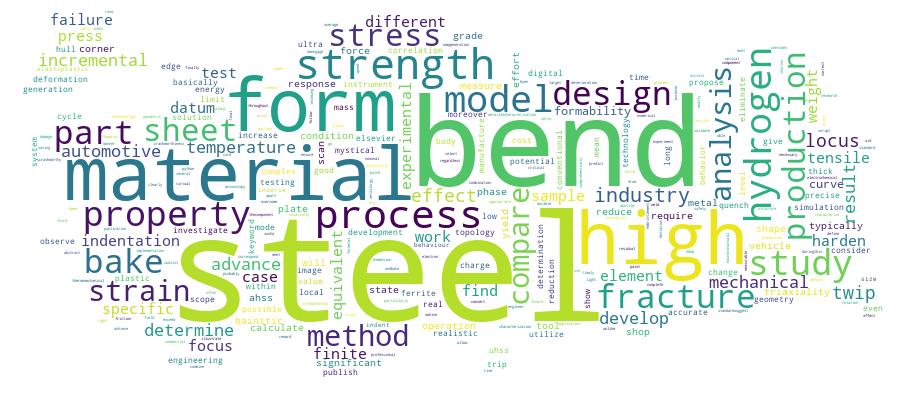
Competency Cloud

GCRIS Competency Cloud

Scholarly Output Search Results

Now showing 1 - 3 of 3
  • Article
    Citation - WoS: 13
    Citation - Scopus: 17
    Effect of hydrogen on fracture locus of Fe-16Mn-0.6C-2.15Al TWIP steel
    (Pergamon-elsevier Science Ltd, 2020) Bal, Burak; Cetin, Baris; Bayram, Ferdi Caner; Billur, Eren
    Effect of hydrogen on the mechanical response and fracture locus of commercial TWIP steel was investigated comprehensively by tensile testing TWIP steel samples at room temperature and quasi-static regime. 5 different sample geometries were utilized to ensure different specific stress states and a digital image correlation (DIC) system was used during tensile tests. Electrochemical charging method was utilized for hydrogen charging and microstructural characterizations were carried out by scanning electron microscope. Stress triaxiality factors were calculated throughout the plastic deformation via finite element analysis (FEA) based simulations and average values were calculated at the most critical node. A specific Python script was developed to determine the equivalent fracture strain. Based on the experimental and numerical results, the relation between the equivalent fracture strain and stress triaxiality was determined and the effect of hydrogen on the corresponding fracture locus was quantified. The deterioration in the mechanical response due to hydrogen was observed regardless of the sample geometry and hydrogen changed the fracture mode from ductile to brittle. Moreover, hydrogen affected the fracture locus of TWIP steel by lowering the equivalent failure strains at given stress triaxiality levels. In this study, a modified Johnson-Cook failure mode was proposed and effect of hydrogen on damage constants were quantified. (C) 2020 Hydrogen Energy Publications LLC. Published by Elsevier Ltd. All rights reserved.
  • Article
    Citation - Scopus: 2
    Temperature Effects in Deep Drawing of Advanced High Strengthsteels
    (MIM RESEARCH GROUP, 2021) Akcan, Kadir; Billur, Eren; Saraç, H. İbrahim
    As advanced high strength steels (AHSS) find more use in automotive industry to meet crashworthiness and light weighting targets, concurrently. AHSS typically have higher strength, but lower formability; often limiting a part’s dimensions and geometric complexity. Several studies have clearly shown that, in sheet metal forming, significant portion of the work done to overcome friction and to plastically deform a sheet is converted into heat. In this study, a thermomechanical finite element model has been developed to calculate the temperature rise in forming DP800 (AHSS). The model was validated with experiments from literature. A multi-cycle model is developed to find out possible problems due to tool heating. The process and material are selected to speed up the heating. Under different realistic press conditions, failures are observed after 20 to 80 hits.
  • Article
    Citation - WoS: 2
    Citation - Scopus: 3
    Development of New Vehicle Safety Structures by Using Third Generation Steels
    (Sae int, 2022) Erzincanlioglu, Samet; Aydiner, Tamer; Aras, Firat; Celik, Hafize; Billur, Eren; Karabulut, Semih; Gumus, Iskender Onder
    Research and development efforts in the automotive industry have been long focused on crashworthy, durable vehicles with the lowest mass possible as higher mass requires more energy and, thus, causes more CO2 emissions. One way of approaching these objectives is to reduce the total vehicle weight by using higher strength-to-weight ratio materials, such as Advanced High-Strength Steels (AHSS). Typically, as the steel gets stronger, its formability is reduced. The steel industry has been long developing (so-called) third-generation (Gen3) AHSS for the automotive industry. These grades offer higher formability compared to first-generation (Gent) and cost less compared to the second-generation (Gen2) AHSS. Transformation Induced Plasticity (TRIP)-aided Bainitic Ferrite (TBF) and Quenching and Partitioning (Q&P) steel families are considered to be the Gen3 AHSS. These grades can be cold-formed to more complex shapes, compared with the Geni Dual Phase (DP) and TRIP steels at equivalent strength levels. In this article, new single-piece A- and B-pillar reinforcements were designed using a Gen3 AHSS, TBF980. Spot-welding operations were eliminated due to part consolidation with the more formable steel. These parts will be the first structural automotive parts which were manufactured with cold-forming technology using TBF steels with a sstrength level close to 1 GPa or even more. Weight and cost reductions were realized by the new design while improving the crash performance.