
Dursun, Ali Doğan
Loading...
Profile URL
Name Variants
Dursun, Ali D. D.
D. Dursun
D.,Ali Dogan
Dursun A.
A., Dursun
Dursun, Ali
Ali Doan
Dursun, Ali Dogan
Dursun, A. D.
A.,Dursun
Dursun,A.D.
D., Ali Doğan
Dursun, Ali Doğan
D.,Ali Doğan
A.D.Dursun
Ali Doğan, Dursun
A. D. Dursun
Dursun, Ali D.
Ali Dogan, Dursun
D., Ali Dogan
D. Dursun
D.,Ali Dogan
Dursun A.
A., Dursun
Dursun, Ali
Ali Doan
Dursun, Ali Dogan
Dursun, A. D.
A.,Dursun
Dursun,A.D.
D., Ali Doğan
Dursun, Ali Doğan
D.,Ali Doğan
A.D.Dursun
Ali Doğan, Dursun
A. D. Dursun
Dursun, Ali D.
Ali Dogan, Dursun
D., Ali Dogan
Job Title
Doçent Doktor
Email Address
ali.dursun@atilim.edu.tr
Main Affiliation
Basic Sciences
Status
Website
ORCID ID
Scopus Author ID
Turkish CoHE Profile ID
Google Scholar ID
WoS Researcher ID
Sustainable Development Goals
 1
1NO POVERTY
0
Research Products
 2
2ZERO HUNGER
0
Research Products
 3
3GOOD HEALTH AND WELL-BEING
18
Research Products
 4
4QUALITY EDUCATION
0
Research Products
 5
5GENDER EQUALITY
1
Research Products
 6
6CLEAN WATER AND SANITATION
1
Research Products
 7
7AFFORDABLE AND CLEAN ENERGY
1
Research Products
 8
8DECENT WORK AND ECONOMIC GROWTH
0
Research Products
 9
9INDUSTRY, INNOVATION AND INFRASTRUCTURE
1
Research Products
 10
10REDUCED INEQUALITIES
0
Research Products
 11
11SUSTAINABLE CITIES AND COMMUNITIES
0
Research Products
 12
12RESPONSIBLE CONSUMPTION AND PRODUCTION
0
Research Products
 13
13CLIMATE ACTION
0
Research Products
 14
14LIFE BELOW WATER
2
Research Products
 15
15LIFE ON LAND
0
Research Products
 16
16PEACE, JUSTICE AND STRONG INSTITUTIONS
1
Research Products
 17
17PARTNERSHIPS FOR THE GOALS
0
Research Products

This researcher does not have a Scopus ID.

Documents
71
Citations
530

Scholarly Output
46
Articles
43
Views / Downloads
269/2048
Supervised MSc Theses
1
Supervised PhD Theses
0
WoS Citation Count
240
Scopus Citation Count
254
Patents
0
Projects
0
WoS Citations per Publication
5.22
Scopus Citations per Publication
5.52
Open Access Source
29
Supervised Theses
1
| Journal | Count |
|---|---|
| International Journal of General Medicine | 4 |
| Drug Design, Development and Therapy | 3 |
| Medicina | 3 |
| Sakarya Tıp Dergisi | 2 |
| Journal of Updates in Cardiovascular Medicine | 2 |
Current Page: 1 / 7
Scopus Quartile Distribution
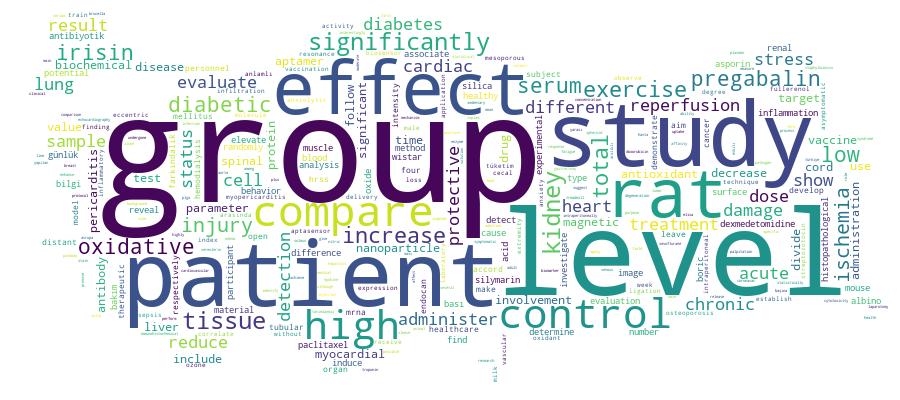
Competency Cloud
3 results
Scholarly Output Search Results
Now showing 1 - 3 of 3
Article Citation - WoS: 4Citation - Scopus: 4Effects of Cerium Oxide on Kidney and Liver Tissue Damage in an Experimental Myocardial Ischemia-Reperfusion Model of Distant Organ Damage(Mdpi, 2024) Gunes, Isin; Dursun, Ali Dogan; Ozdemir, Cagri; Kucuk, Aysegul; Sezen, Saban Cem; Arslan, Mustafa; Ozer, AbdullahBackground and Objectives: Ischemia-reperfusion (I/R) injury is a process in which impaired perfusion is restored by restoring blood flow and tissue recirculation. Nanomedicine uses cutting-edge technologies that emerge from interdisciplinary influences. In the literature, there are very few in vivo and in vitro studies on how cerium oxide (CeO2) affects systemic anti-inflammatory response and inflammation. Therefore, in our study, we aimed to investigate whether CeO2 administration has a protective effect against myocardial I/R injury in the liver and kidneys. Materials and Methods: Twenty-four rats were randomly divided into four groups after obtaining approval from an ethics committee. A control (group C), cerium oxide (group CO), IR (group IR), and Cerium oxide-IR (CO-IR group) groups were formed. Intraperitoneal CeO2 was administered at a dose of 0.5 mg/kg 30 min before left thoracotomy and left main coronary (LAD) ligation, and myocardial muscle ischemia was induced for 30 min. After LAD ligation was removed, reperfusion was performed for 120 min. All rats were euthanized using ketamine, and blood was collected. Liver and kidney tissue samples were evaluated histopathologically. Serum AST (aspartate aminotransferase), ALT (alanine aminotransaminase), GGT (gamma-glutamyl transferase), glucose, TOS (Total Oxidant Status), and TAS (Total Antioxidant Status) levels were also measured. Results: Necrotic cell and mononuclear cell infiltration in the liver parenchyma of rats in the IR group was observed to be significantly increased compared to the other groups. Hepatocyte degeneration was greater in the IR group compared to groups C and CO. Vascular vacuolization and hypertrophy, tubular degeneration, and necrosis were increased in the kidney tissue of the IR group compared to the other groups. Tubular dilatation was significantly higher in the IR group than in the C and CO groups. TOS was significantly higher in all groups than in the IR group (p < 0.0001, p < 0.0001, and p = 0.006, respectively). However, TAS level was lower in the IR group than in the other groups (p = 0.002, p = 0.020, and p = 0.031, respectively). Renal and liver histopathological findings decreased significantly in the CO-IR group compared to the IR group. A decrease in the TOS level and an increase in the TAS level were found compared to the IR group. The AST, ALT, GGT, and Glucose levels are shown. Conclusions: CeO2 administered before ischemia-reperfusion reduced oxidative stress and ameliorated IR-induced damage in distant organs. We suggest that CeO2 exerts protective effects in the myocardial IR model.Article Effects of Pregabalin on Kidney Tissue in Spinal Cord Ischemia Reperfusion Injured Rats;(Gazi Universitesi, 2021) Ceran,E.U.; Inan,N.; Kucuk,A.; Ozer,A.; Dursun,A.D.; Tosun,M.; Arslan,M.Objectives: The purpose of this study was to investigate the possible protective effects of low and high dose pregabalin that was administered in rat in a spinal cord ischemia-reperfusion (I/R) study model. Material and Method: We used 24 Wistar albino rats as subjects in our study. They were divided into 4 groups; randomized Control (C group), I/R (I/R group), I/R-low dose (30 mg/kg) pregabalin (I/R-LP group) and I/R-high dose (200 mg/kg) pregabalin (I/R-HP group). All groups have undergone a laparotomy intervention under anesthesia. In I/R group, a cross clamp was placed in the abdominal aorta just after the laparotomy for 120 minutes (to cause spinal cord ischemia injury) and then reperfusion was achieved by opening the vascular clamp. At the end of the study, kidney tissue was obtained for determining total oxidant status (TOS) and total antioxidant status (TAS) levels, histochemical and immunohistochemical determination. Results: Total Oxidative Status (TOS) enzyme activity was significantly higher in I/R group when compared to the control, I/R-LP and I/R-HP groups. Likewise, Total Antioxidant Status (TAS) enzyme activity was remarkably higher in I/R group when compared with the C, I/R-LP and I/R-HP groups. VEGF staining has yielded no expression in renal tissues. In microscopical analysis of the tissue slides which were immunohistochemically stained with p53 antibody, some crucial findings have been established as follows: As p53-expressing cells were not detected in the control group, the presence of p53-expressing cells were clearly identified at different intensities in several bowman capsules in the I/R group. However, no expression was detected in general tubules. Interestingly, p53 expression levels were prominently lower in low-dose pregabalin given group and considerably higher in the 200 mg/kg pregabalin administered group, which was more pronounced than the I/R group. Conclusion: Results established from the current study suggest that pregabalin given at different doses may have a partial protective effect in kidney tissues of rats undergone experimental spinal cord IR injury. ©Copyright 2021 by Gazi University Medical FacultyArticle Effects of Pregabalin on Kidney Tissue in Spinal Cord Ischemia Reperfusion Injured Rats(Gazi Univ, Fac Med, 2021) Ceran, Emine Unal; Inan, Nurten; Kucuk, Aysegul; Ozer, Abdullah; Dursun, Ali Dogan; Tosun, Murat; Arslan, MustafaObjectives: The purpose of this study was to investigate the possible protective effects of low and high dose pregabalin that was administered in rat in a spinal cord ischemia-reperfusion (I/R) study model. Material and Method: We used 24 Wistar albino rats as subjects in our study. They were divided into 4 groups; randomized Control (C group), I/R (I/R group), I/R-low dose (30 mg/kg) pregabalin (I/R-LP group) and I/R-high dose (200 mg/kg) pregabalin (I/R-HP group). All groups have undergone a laparotomy intervention under anesthesia. In I/R group, a cross clamp was placed in the abdominal aorta just after the laparotomy for 120 minutes (to cause spinal cord ischemia injury) and then reperfusion was achieved by opening the vascular clamp. At the end of the study, kidney tissue was obtained for determining total oxidant status (TOS) and total antioxidant status (TAS) levels, histochemical and immunohistochemical determination. Results: Total Oxidative Status (TOS) enzyme activity was significantly higher in I/R group when compared to the control, I/R-LP and I/R-HP groups. Likewise, Total Antioxidant Status (TAS) enzyme activity was remarkably higher in I/R group when compared with the C, I/R-LP and I/R-HP groups. VEGF staining has yielded no expression in renal tissues. In microscopical analysis of the tissue slides which were immunohistochemically stained with p53 antibody, some crucial findings have been established as follows: As p53-expressing cells were not detected in the control group, the presence of p53-expressing cells were clearly identified at different intensities in several bowman capsules in the I/R group. However, no expression was detected in general tubules. Interestingly, p53 expression levels were prominently lower in low-dose pregabalin given group and considerably higher in the 200 mg/kg pregabalin administered group, which was more pronounced than the I/R group. Conclusion: Results established from the current study suggest that pregabalin given at different doses may have a partial protective effect in kidney tissues of rats undergone experimental spinal cord IR injury.
