Dursun, Ali Doğan

Loading...
Profile Picture
Name Variants
Dursun, Ali D. D.
D. Dursun
D.,Ali Dogan
Dursun A.
A., Dursun
Dursun, Ali
Ali Doan
Dursun, Ali Dogan
Dursun, A. D.
A.,Dursun
Dursun,A.D.
D., Ali Doğan
Dursun, Ali Doğan
D.,Ali Doğan
A.D.Dursun
Ali Doğan, Dursun
A. D. Dursun
Dursun, Ali D.
Ali Dogan, Dursun
D., Ali Dogan
Job Title
Doçent Doktor
Email Address
ali.dursun@atilim.edu.tr
Main Affiliation
Basic Sciences
Status
Website
Scopus Author ID
Turkish CoHE Profile ID
Google Scholar ID
WoS Researcher ID

Sustainable Development Goals

5

GENDER EQUALITY
GENDER EQUALITY Logo

1

Research Products

14

LIFE BELOW WATER
LIFE BELOW WATER Logo

2

Research Products

10

REDUCED INEQUALITIES
REDUCED INEQUALITIES Logo

0

Research Products

3

GOOD HEALTH AND WELL-BEING
GOOD HEALTH AND WELL-BEING Logo

17

Research Products

2

ZERO HUNGER
ZERO HUNGER Logo

0

Research Products

9

INDUSTRY, INNOVATION AND INFRASTRUCTURE
INDUSTRY, INNOVATION AND INFRASTRUCTURE Logo

1

Research Products

16

PEACE, JUSTICE AND STRONG INSTITUTIONS
PEACE, JUSTICE AND STRONG INSTITUTIONS Logo

1

Research Products

11

SUSTAINABLE CITIES AND COMMUNITIES
SUSTAINABLE CITIES AND COMMUNITIES Logo

0

Research Products

8

DECENT WORK AND ECONOMIC GROWTH
DECENT WORK AND ECONOMIC GROWTH Logo

0

Research Products

13

CLIMATE ACTION
CLIMATE ACTION Logo

0

Research Products

4

QUALITY EDUCATION
QUALITY EDUCATION Logo

0

Research Products

6

CLEAN WATER AND SANITATION
CLEAN WATER AND SANITATION Logo

1

Research Products

1

NO POVERTY
NO POVERTY Logo

0

Research Products

15

LIFE ON LAND
LIFE ON LAND Logo

0

Research Products

17

PARTNERSHIPS FOR THE GOALS
PARTNERSHIPS FOR THE GOALS Logo

0

Research Products

7

AFFORDABLE AND CLEAN ENERGY
AFFORDABLE AND CLEAN ENERGY Logo

1

Research Products

12

RESPONSIBLE CONSUMPTION AND PRODUCTION
RESPONSIBLE CONSUMPTION AND PRODUCTION Logo

0

Research Products
This researcher does not have a Scopus ID.
Documents

71

Citations

530

Scholarly Output

41

Articles

38

Views / Downloads

10/0

Supervised MSc Theses

1

Supervised PhD Theses

0

WoS Citation Count

240

Scopus Citation Count

251

WoS h-index

10

Scopus h-index

11

Patents

0

Projects

0

WoS Citations per Publication

5.85

Scopus Citations per Publication

6.12

Open Access Source

25

Supervised Theses

1

Google Analytics Visitor Traffic

JournalCount
International Journal of General Medicine4
Drug Design, Development and Therapy3
Medicina3
Gazi Medical Journal2
Bratislava Medical Journal2
Current Page: 1 / 6

Scopus Quartile Distribution

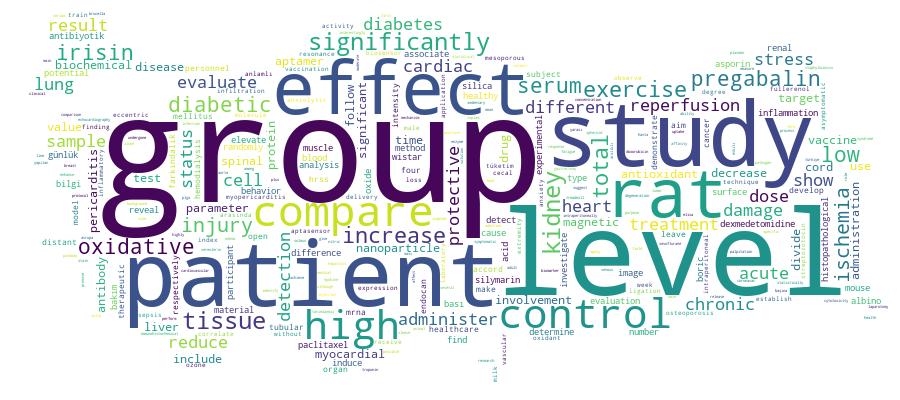
Competency Cloud

GCRIS Competency Cloud

Scholarly Output Search Results

Now showing 1 - 3 of 3
  • Article
    Enhanced Doxorubicin Cytotoxicity on Breast Cancer Spheroids by Aptamer Targeted Co-Delivery With Hyaluronidase
    (Wiley, 2025) Kavruk, Murat; Demirel, Dide Su; Bonyadi, Farzaneh; Guner, Buket Cakmak; Dursun, Ali Dogan; Vakifahmetoglu, Cekdar; Ozalp, Veli Cengiz
    Breast cancer is one of the most prevalent solid tumors in women and can be classified into subtypes based on molecular characteristics, such as hormone receptor status and HER2 expression. Aptamers, highly specific affinity molecules, are extensively studied for targeted drug delivery using nanocarriers to enhance anti-cancer efficacy. This study focused on HER2-responsive co-delivery of doxorubicin and hyaluronidase via aptamer-gated mesoporous silica nanoparticles to improve therapeutic outcomes in solid tumors. SK-BR-3 spheroids are employed as a model for resistant tumor environments in solid tumors. Previous research is shown that conjugating cytotoxic drugs with nanoparticles or cells enhances drug penetration into tumor spheroids. In this work, doxorubicin is loaded into mesoporous silica nanoparticles and capped with HER2-specific aptamers, while the particle surface is functionalized with hyaluronidase. This dual-functionalized nanocarrier system achieves an approximate to 8.5-fold increase in cytotoxicity compared to aptamer-targeted delivery lacking hyaluronidase. The enhanced effect is attributed to hyaluronidase-mediated loosening of the spheroid structure, facilitating nanoparticle penetration and localized release of doxorubicin at high concentrations on HER2-positive cells.
  • Article
    Citation - WoS: 35
    Citation - Scopus: 40
    Surface Plasmon Resonance Aptasensor for Brucella Detection in Milk
    (Elsevier, 2022) Dursun, Ali D.; Borsa, Baris A.; Bayramoglu, Gulay; Arica, M. Yakup; Ozalp, Veli C.
    A Surface Plasmon Resonance (SPR) aptasensor was developed for the detection of Brucella melitensis (B. melitensis) in milk samples. Brucellosis is a bacterial zoonotic disease with global distribution caused mostly by contaminated milk or their products. Aptamers recognizing B. melitensis were selected following a whole bacteria-SELEX procedure. Two aptamers were chosen for high affinity and high specificity. The high affinity aptamer (B70 aptamer) was immobilized on the surface of magnetic silica core-shell nanoparticles for initial purification of the target bacteria cells from milk matrix. Another aptamer, highly specific for B. melitensis cells (B46 aptamer), was used to prepare SPR sensor chips for sensitive determination of Brucella in eluted samples from magnetic purification since direct injection of milk samples to SPR sensor chips is known for a high background unspecific signal. Thus, we integrated a quick and efficient magnetic isolation step for subsequent instant detection of B. melitensis contamination in one ml of milk sample by SPR with a LOD value as low as 27 +/- 11 cells.
  • Article
    Citation - WoS: 3
    Citation - Scopus: 2
    Targeted Multidrug Delivery Systems To Kill Antibiotic-Resistant Staphylococcus Aureus
    (Elsevier, 2023) Ozalp, Veli Cengiz; Ucak, Samet; Dursun, Ali D.; Sudagidan, Mert; Icin, Oyku; Vakifahmetoglu, Cekdar; Gurlo, Aleksander
    Different ordered mesoporous silica (OMS) nanoparticles, ranging from regular COK-12 to COK-12 modified in terms of pore shape and size, have been employed as standard drug carriers for the controlled adsorption and release of drug molecules in comparison to well-known OMS SBA-15 and MCM-41. The cytotoxicity analysis demonstrated that regular COK-12 particles were less harmful to mammalian cultured cells, causing lower apoptosis induction than modified COK-12, MCM-41, and SBA-15 particles.Thus, regular COK-12 was further used to prepare a dual antibiotic-loaded drug delivery material, followed by surface functionalization with Staphylococcus aureus-specific aptamers for targeting. The results demonstrated that the joint loading of lysozyme and vancomycin in regular COK-12 improved the ability of the antibiotic treatments to kill methicillin-resistant Staphylococcus strains via aptamer targeting. The minimum inhibitory concentration (MIC) values decreased 4.1-fold and 12-fold compared to the non-targeted use of the antimicrobial agents in homogeneous solutions for vancomycin and lysozyme, respectively, clearly demonstrating the high potential of COK-12 to be used as a carrier in multidrug therapy.