Dursun, Ali Doğan

Loading...
Profile Picture
Name Variants
Dursun, Ali D. D.
D. Dursun
D.,Ali Dogan
Dursun A.
A., Dursun
Dursun, Ali
Ali Doan
Dursun, Ali Dogan
Dursun, A. D.
A.,Dursun
Dursun,A.D.
D., Ali Doğan
Dursun, Ali Doğan
D.,Ali Doğan
A.D.Dursun
Ali Doğan, Dursun
A. D. Dursun
Dursun, Ali D.
Ali Dogan, Dursun
D., Ali Dogan
Job Title
Doçent Doktor
Email Address
ali.dursun@atilim.edu.tr
Main Affiliation
Basic Sciences
Status
Website
Scopus Author ID
Turkish CoHE Profile ID
Google Scholar ID
WoS Researcher ID

Sustainable Development Goals

5

GENDER EQUALITY
GENDER EQUALITY Logo

1

Research Products

14

LIFE BELOW WATER
LIFE BELOW WATER Logo

2

Research Products

10

REDUCED INEQUALITIES
REDUCED INEQUALITIES Logo

0

Research Products

3

GOOD HEALTH AND WELL-BEING
GOOD HEALTH AND WELL-BEING Logo

17

Research Products

2

ZERO HUNGER
ZERO HUNGER Logo

0

Research Products

9

INDUSTRY, INNOVATION AND INFRASTRUCTURE
INDUSTRY, INNOVATION AND INFRASTRUCTURE Logo

1

Research Products

16

PEACE, JUSTICE AND STRONG INSTITUTIONS
PEACE, JUSTICE AND STRONG INSTITUTIONS Logo

1

Research Products

11

SUSTAINABLE CITIES AND COMMUNITIES
SUSTAINABLE CITIES AND COMMUNITIES Logo

0

Research Products

8

DECENT WORK AND ECONOMIC GROWTH
DECENT WORK AND ECONOMIC GROWTH Logo

0

Research Products

13

CLIMATE ACTION
CLIMATE ACTION Logo

0

Research Products

4

QUALITY EDUCATION
QUALITY EDUCATION Logo

0

Research Products

6

CLEAN WATER AND SANITATION
CLEAN WATER AND SANITATION Logo

1

Research Products

1

NO POVERTY
NO POVERTY Logo

0

Research Products

15

LIFE ON LAND
LIFE ON LAND Logo

0

Research Products

17

PARTNERSHIPS FOR THE GOALS
PARTNERSHIPS FOR THE GOALS Logo

0

Research Products

7

AFFORDABLE AND CLEAN ENERGY
AFFORDABLE AND CLEAN ENERGY Logo

1

Research Products

12

RESPONSIBLE CONSUMPTION AND PRODUCTION
RESPONSIBLE CONSUMPTION AND PRODUCTION Logo

0

Research Products
This researcher does not have a Scopus ID.
Documents

71

Citations

530

Scholarly Output

41

Articles

38

Views / Downloads

10/0

Supervised MSc Theses

1

Supervised PhD Theses

0

WoS Citation Count

240

Scopus Citation Count

251

WoS h-index

10

Scopus h-index

11

Patents

0

Projects

0

WoS Citations per Publication

5.85

Scopus Citations per Publication

6.12

Open Access Source

25

Supervised Theses

1

Google Analytics Visitor Traffic

JournalCount
International Journal of General Medicine4
Drug Design, Development and Therapy3
Medicina3
Gazi Medical Journal2
Bratislava Medical Journal2
Current Page: 1 / 6

Scopus Quartile Distribution

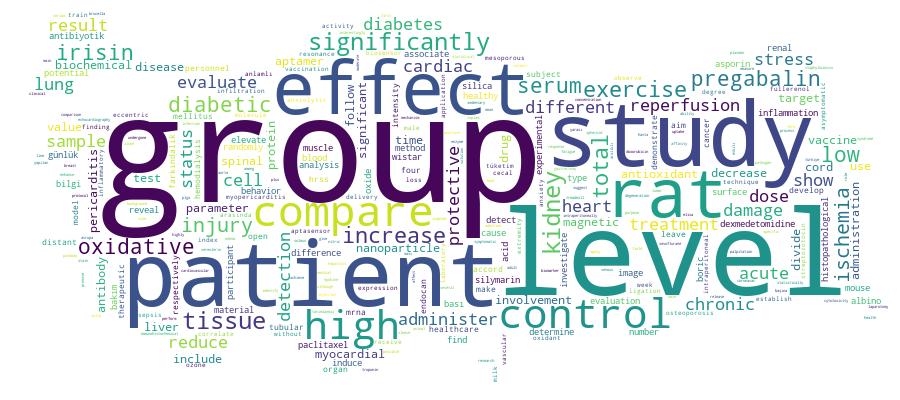
Competency Cloud

GCRIS Competency Cloud

Scholarly Output Search Results

Now showing 1 - 2 of 2
  • Article
    Citation - WoS: 17
    Citation - Scopus: 19
    Effects of Dexmedetomidine Administered Through Different Routes on Kidney Tissue in Rats With Spinal Cord Ischaemia-Reperfusion Injury
    (Dove Medical Press Ltd, 2022) Sengel, Necmiye; Koksal, Zeynep; Dursun, Ali Dogan; Kurtipek, Omer; Sezen, Saban Cem; Arslan, Mustafa; Kavutcu, Mustafa
    Background: Ischaemia-reperfusion (IR) injury, which can be encountered during surgical procedures involving the abdominal aorta, is a complex process that affects distant organs, such as the heart, liver, kidney, and lungs, as well as the lower extremities. In this study, we aimed to contribute to the limited literature by investigating the protective effect of dexmedetomidine, which was administered through different routes, on kidney tissue in rats with spinal cord IR injury.Methods: A total of 30 rats were randomly divided into five groups: control (C group), IR (IR group), IR-intraperitoneal dexmedetomidine (IRIPD group), IR-intrathecal dexmedetomidine (IRITD group), and IR-intravenous dexmedetomidine (IRIVD group). The spinal cord IR model was established. Dexmedetomidine was administered at doses of 100 mu g/kg intraperitoneally, 3 mu g/ kg intrathecally, and 9 mu g/kg intravenously. Histopathologic parameters in kidney tissue samples taken at the end of the reperfusion period and biochemical parameters in serum were evaluated.Results: When examined histopathologically, tubular dilatation was found to be significantly reduced in the IRIVD, IRITD, and IRIPD groups compared with the IR group (p = 0.012, all). Vascular vacuolization and hypertrophy were significantly decreased in the IRIVD, IRITD, and IRIPD groups compared with the IR group (p = 0.006, all). Tubular cell degeneration and necrosis were significantly reduced in the IRIVD, IRITD, and IRIPD groups compared with the IR group (p = 0.008, p = 0.08, and p = 0.030, respectively). Lymphocyte infiltration was significantly decreased in the IRIVD and IRITD groups compared with the IR group (p = 0.006 and p = 0.06, respectively). Conclusion: It was observed that dexmedetomidine administered by different routes improved the damage caused by IR in kidney histopathology. We think that the renoprotective effects of dexmedetomidine administered intravenously and intrathecally before IR in rats are greater.
  • Article
    Citation - WoS: 5
    Evaluation of the Efficacy of Silymarin and Dexmedetomidine on Kidney and Lung Tissue in the Treatment of Sepsis in Rats With Cecal Perforation
    (Spandidos Publ Ltd, 2024) Yavuz, Aydin; Kucuk, Aysegul; Ergorun, Aydan Iremnur; Dursun, Ali Dogan; Yigman, Zeynep; Alkan, Metin; Arslan, Mustafa
    Sepsis is a systemic inflammatory response syndrome that develops in the host against microorganisms. This response develops away from the primary infection site and results in end-organ damage. The present study aimed to investigate the protective and therapeutic effects on lung and kidney tissue of silymarin (S) and dexmedetomidine (DEX) applied 1 h before and after sepsis induced by the cecal ligation and puncture (CLP) method in rats. A total of 62 rats was randomly divided into eight groups: i) Control (n=6); ii) cecal perforation (CLP; n=8); iii) S + CLP (n=8; S + CLP; S administered 1 h before CPL); iv) CLP + S (n=8; S administered 1 h after CLP); v) DEX + CLP (n=8; D + CLP; DEX administered 1 h before CLP); vi) CLP + D (n=8; DEX administered 1 h after CLP); vii) SD + CLP (n=8; S and DEX administered 1 h before CLP) and viii) CLP + SD (n=8; S and DEX administered 1 h after CLP). After the cecum filled with stool, it was tied with 3/0 silk under the ileocecal valve and the anterior surface of the cecum was punctured twice with an 18-gauge needle. A total of 100 mg/kg silymarin and 100 mu g/kg DEX were administered intraperitoneally to the treatment groups. Lung and kidney tissue samples were collected to evaluate biochemical and histopathological parameters. In the histopathological examination, all parameters indicating kidney injury; interstitial edema, peritubular capillary dilatation, vacuolization, ablation of tubular epithelium from the basement membrane, loss of brush border in the proximal tubule epithelium, cell swelling and nuclear defragmentation; were increased in the CLP compared with the control group. Silymarin administration increased kidney damage, including ablation of tubular epithelium from the basement membrane, compared with that in the CLP group. DEX significantly reduced kidney damage compared with the CLP and silymarin groups. The co-administration of DEX + silymarin decreased kidney damage, although it was not as effective as DEX-alone. To conclude, intraperitoneal DEX ameliorated injury in CLP rats. DEX + silymarin partially ameliorated injury but silymarin administration increased damage. As a result, silymarin has a negative effects with this dosage and DEX has a protective effect. In the present study, it was determined that using the two drugs together had a greater therapeutic effect than silymarin and no differences in the effects were not observed any when the application times of the agents were changed.