Dursun, Ali Doğan

Loading...
Profile Picture
Name Variants
Dursun, Ali D. D.
D. Dursun
D.,Ali Dogan
Dursun A.
A., Dursun
Dursun, Ali
Ali Doan
Dursun, Ali Dogan
Dursun, A. D.
A.,Dursun
Dursun,A.D.
D., Ali Doğan
Dursun, Ali Doğan
D.,Ali Doğan
A.D.Dursun
Ali Doğan, Dursun
A. D. Dursun
Dursun, Ali D.
Ali Dogan, Dursun
D., Ali Dogan
Job Title
Doçent Doktor
Email Address
ali.dursun@atilim.edu.tr
Main Affiliation
Basic Sciences
Status
Website
Scopus Author ID
Turkish CoHE Profile ID
Google Scholar ID
WoS Researcher ID

Sustainable Development Goals

NO POVERTY1
NO POVERTY
0
Research Products
ZERO HUNGER2
ZERO HUNGER
0
Research Products
GOOD HEALTH AND WELL-BEING3
GOOD HEALTH AND WELL-BEING
18
Research Products
QUALITY EDUCATION4
QUALITY EDUCATION
0
Research Products
GENDER EQUALITY5
GENDER EQUALITY
1
Research Products
CLEAN WATER AND SANITATION6
CLEAN WATER AND SANITATION
1
Research Products
AFFORDABLE AND CLEAN ENERGY7
AFFORDABLE AND CLEAN ENERGY
1
Research Products
DECENT WORK AND ECONOMIC GROWTH8
DECENT WORK AND ECONOMIC GROWTH
0
Research Products
INDUSTRY, INNOVATION AND INFRASTRUCTURE9
INDUSTRY, INNOVATION AND INFRASTRUCTURE
1
Research Products
REDUCED INEQUALITIES10
REDUCED INEQUALITIES
0
Research Products
SUSTAINABLE CITIES AND COMMUNITIES11
SUSTAINABLE CITIES AND COMMUNITIES
0
Research Products
RESPONSIBLE CONSUMPTION AND PRODUCTION12
RESPONSIBLE CONSUMPTION AND PRODUCTION
0
Research Products
CLIMATE ACTION13
CLIMATE ACTION
0
Research Products
LIFE BELOW WATER14
LIFE BELOW WATER
2
Research Products
LIFE ON LAND15
LIFE ON LAND
0
Research Products
PEACE, JUSTICE AND STRONG INSTITUTIONS16
PEACE, JUSTICE AND STRONG INSTITUTIONS
1
Research Products
PARTNERSHIPS FOR THE GOALS17
PARTNERSHIPS FOR THE GOALS
0
Research Products
This researcher does not have a Scopus ID.
Documents

71

Citations

530

Scholarly Output

46

Articles

43

Views / Downloads

10/0

Supervised MSc Theses

1

Supervised PhD Theses

0

WoS Citation Count

240

Scopus Citation Count

254

Patents

0

Projects

0

WoS Citations per Publication

5.22

Scopus Citations per Publication

5.52

Open Access Source

29

Supervised Theses

1

JournalCount
International Journal of General Medicine4
Drug Design, Development and Therapy3
Medicina3
Sakarya Tıp Dergisi2
Journal of Updates in Cardiovascular Medicine2
Current Page: 1 / 7

Scopus Quartile Distribution

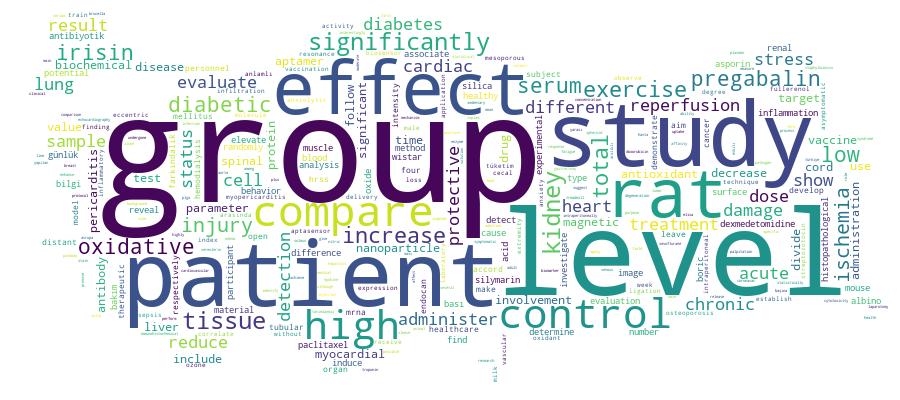
Competency Cloud

GCRIS Competency Cloud

Scholarly Output Search Results

Now showing 1 - 2 of 2
  • Article
    Citation - WoS: 2
    Citation - Scopus: 3
    Irisin Pathways in Hearts of Type 1 Diabetic Adult Male Rats Following 6 Weeks of Moderate and High-Volume Aerobic Exercise on a Treadmill
    (Springernature, 2023) Celik, Humeyra; Dursun, Ali Dogan; Tatar, Yakup; Omercioglu, Goktug; Bastug, Metin
    Purpose Exercise-mediated protection from cardiomyopathy in diabetes through myokines raises the question of what volume of exercise should be performed. Irisin pathway molecules (consisting of peroxisome proliferator-activated receptor gamma coactivator 1-alpha (PGC-1 alpha), irisin, peroxisome proliferator-activated receptors-alpha (PPAR-alpha) and uncoupling protein 1 (UCP1)), which have been shown to be mostly expressed in the heart, are thought to have beneficial effects on diabetic heart. The aim of the study is to evaluate the effects of different exercise protocols on irisin pathway in Type 1 diabetic heart. Methods Diabetic (60 mg/kg streptozotocin i.p.) and healthy Wistar Albino rats (n = 60) were trained under moderate and high-volume exercise protocols on rat treadmill for 6 weeks. After killing, mRNA transcript and protein abundance of PGC-1 alpha, irisin, PPAR-alpha, and UCP1 were determined in the left ventricles of healthy and diabetic rats. Results PPAR-alpha, FNDC5, and UCP1 mRNA levels increased significantly in healthy moderate-volume exercise group (HMVE) compared to healthy high-volume exercise (HHVE) and diabetic moderate-volume exercise groups (DMVE). Moreover, protein levels of irisin and UCP1 also elevated significantly in the diabetic high-volume exercise group (DHVE) compared to the healthy control group (HC), although there was no significant difference between the groups in PPAR-alpha. Conclusion Irisin and UCP1 protein values increased due to HHEV in the heart of Type 1 diabetic rats, but PPAR-alpha values did not change; it shows that HHEV is suitable for the heart of Type 1 diabetic rats in terms of the benefits of the pathway of irisin.
  • Article
    Citation - WoS: 29
    Citation - Scopus: 32
    Effects of Exercise Training on Anxiety in Diabetic Rats
    (Elsevier, 2019) Caliskan, Hasan; Akat, Firat; Tatar, Yakup; Zaloglu, Nezahet; Dursun, Ali Dogan; Bastug, Metin; Ficicilar, Hakan
    Diabetes mellitus (DM) is a common health problem, which manifests itself with chronic hyperglycemia and impaired insulin action. The prevalence of anxiety disorders tends to be high in the diabetic population. Exercise has a well-known anxiolytic effect, also demonstrated on rodents, but the effect of exercise on the DM-induced anxiety is still unknown. Female, Wistar albino rats were randomly divided into four groups (n=8) (C; EX; DM; DM+EX). DM was induced by injection (i.p.; 50 mg/kg) of Streptozotocin (STZ). Rats exercised in moderate intensity on the treadmill (15m/min; 5 degrees; 30 min) for 5 weeks. Anxiety-like behavior (ALB) was evaluated by Open field test (OFT) and Elevated Plus Maze (EPM). According to OFT, central time and central entry have increased with in EX but not in DM+EX. There was no difference between C and DM. Central latency time didn't differ among groups. Unsupported rearing increased in both EX and DM+EX. There was no significant decrease in DM. Freezing time was significantly increased in the DM group. Exercise training reduced freezing time both in diabetic and non-diabetic animals. EPM results were similar. Time spent in open arm was increased significantly in exercise groups compared to their sedentary matches, and freezing time data were also parallel to OFT. Our study revealed that diabetes had shown an anxiogenic effect, which was not severe, and it only manifested itself on some behavioral parameters. Exercise training was reduced anxiety-like behavior both in diabetic and non-diabetic rats. However, because of the nature of exercise studies, it is hard to separate the anxiolytic effect of exercise from the alteration of locomotion.