Dursun, Ali Doğan

Loading...
Profile Picture
Name Variants
Dursun, Ali D. D.
D. Dursun
D.,Ali Dogan
Dursun A.
A., Dursun
Dursun, Ali
Ali Doan
Dursun, Ali Dogan
Dursun, A. D.
A.,Dursun
Dursun,A.D.
D., Ali Doğan
Dursun, Ali Doğan
D.,Ali Doğan
A.D.Dursun
Ali Doğan, Dursun
A. D. Dursun
Dursun, Ali D.
Ali Dogan, Dursun
D., Ali Dogan
Job Title
Doçent Doktor
Email Address
ali.dursun@atilim.edu.tr
Main Affiliation
Basic Sciences
Status
Website
Scopus Author ID
Turkish CoHE Profile ID
Google Scholar ID
WoS Researcher ID

Sustainable Development Goals

NO POVERTY1
NO POVERTY
0
Research Products
ZERO HUNGER2
ZERO HUNGER
0
Research Products
GOOD HEALTH AND WELL-BEING3
GOOD HEALTH AND WELL-BEING
18
Research Products
QUALITY EDUCATION4
QUALITY EDUCATION
0
Research Products
GENDER EQUALITY5
GENDER EQUALITY
1
Research Products
CLEAN WATER AND SANITATION6
CLEAN WATER AND SANITATION
1
Research Products
AFFORDABLE AND CLEAN ENERGY7
AFFORDABLE AND CLEAN ENERGY
1
Research Products
DECENT WORK AND ECONOMIC GROWTH8
DECENT WORK AND ECONOMIC GROWTH
0
Research Products
INDUSTRY, INNOVATION AND INFRASTRUCTURE9
INDUSTRY, INNOVATION AND INFRASTRUCTURE
1
Research Products
REDUCED INEQUALITIES10
REDUCED INEQUALITIES
0
Research Products
SUSTAINABLE CITIES AND COMMUNITIES11
SUSTAINABLE CITIES AND COMMUNITIES
0
Research Products
RESPONSIBLE CONSUMPTION AND PRODUCTION12
RESPONSIBLE CONSUMPTION AND PRODUCTION
0
Research Products
CLIMATE ACTION13
CLIMATE ACTION
0
Research Products
LIFE BELOW WATER14
LIFE BELOW WATER
2
Research Products
LIFE ON LAND15
LIFE ON LAND
0
Research Products
PEACE, JUSTICE AND STRONG INSTITUTIONS16
PEACE, JUSTICE AND STRONG INSTITUTIONS
1
Research Products
PARTNERSHIPS FOR THE GOALS17
PARTNERSHIPS FOR THE GOALS
0
Research Products
This researcher does not have a Scopus ID.
Documents

71

Citations

546

Scholarly Output

46

Articles

43

Views / Downloads

133/47

Supervised MSc Theses

1

Supervised PhD Theses

0

WoS Citation Count

250

Scopus Citation Count

268

Patents

0

Projects

0

WoS Citations per Publication

5.43

Scopus Citations per Publication

5.83

Open Access Source

29

Supervised Theses

1

JournalCount
International Journal of General Medicine4
Drug Design, Development and Therapy3
Medicina3
Sakarya Tıp Dergisi2
Journal of Updates in Cardiovascular Medicine2
Current Page: 1 / 7

Scopus Quartile Distribution

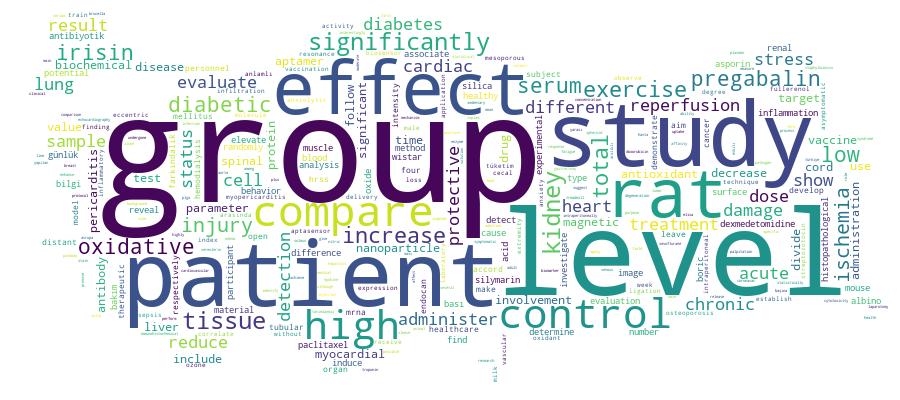
Competency Cloud

GCRIS Competency Cloud

Scholarly Output Search Results

Now showing 1 - 3 of 3
  • Article
    Citation - Scopus: 2
    Effects of Eccentric Exercise on Different Slopes
    (Jmni, 2019) Gokce, Evrim; Akat, Firat; Dursun, Ali Dogan; Gunes, Emel; Bayram, Pinar; Billur, Deniz; Koc, Emine; Basic Sciences
    Objectives: Eccentric contraction occurs when the muscle lengthens under tension. Damage-induced responses seen in the muscle after eccentric exercise usually experienced by sedentary individuals. This study aims to investigate muscle damage on different slopes. Methods: 32 male Wistar albino rats randomly divided into four groups: sedentary, horizontal running, and eccentric exercise (-8 degrees, -16 degrees) groups. Animals ran for 90 min with the speed of 25 m/s for five days. After 48h from the last exercise, rats were sacrificed, and plasma creatine kinase (CK), heat shock protein 70 (HSP70) levels were examined. Plasma and soleus total oxidant/antioxidant status (TOS-TAS) and histological changes of soleus muscle assessed. Results: CK and HSP70 significantly increased in 16 degrees EE group. TOS increased at 16 degrees EE and 8 degrees EE, but oxidative stress index (OSI) was only high at 8 degrees EE group. Mononuclear cell infiltration and the angiogenesis increased in soleus after eccentric exercise, and there was a correlation with slope. Sarcomere breaks were detected in 16 degrees EE group also in a correlation with slope. Conclusions: Consequently, sedentary individuals are vulnerable to injuries induced by eccentric contraction. Therefore, our study provides information for reconsidering rehabilitation and training programs.
  • Article
    Citation - WoS: 2
    Citation - Scopus: 2
    Chronic Pregabalin Treatment Reduced Anxiety, and Acute Pregabalin Treatment Increased Depression-Like Behaviors in Rats
    (Bmc, 2024) Caliskan, Hasan; Akat, Firat; Dursun, Ali Dogan; Zaloglu, Nezahet
    BackgroundPregabalin is an antiepileptic drug that binds to the alpha-2/delta unit at presynaptic voltage-dependent calcium channels. We aimed to investigate the effect of acute and chronic pregabalin administration on anxiety and depression-like behaviors.MethodsFifty-six male Wistar albino rats were divided into seven groups: control, vehicle, and five different dose groups (5, 10, 30, 60, and 100 mg/kg). Pregabalin was administered for two weeks. Depression-like behaviors were evaluated by Forced swimming test. Anxiety-like behavior (ALB) was evaluated by Open field test (OFT), Elevated Plus Maze (EPM), and light-dark box. Subjects underwent the forced swimming test (FST) after the first dose, while the open field test (OFT), elevated plus maze (EPM), and light-dark box (LDB) were performed after two weeks of treatment. Further sucrose preference test was conducted to evaluate anhedonia until the end of the experiment.ResultsIn the forced swimming test, depression-like behaviors increased after acute single-dose administration of 10, 30, 60, 100 mg/kg pregabalin. According to OFT results, chronic 100 mg/kg pregabalin showed anxiolytic effects by decreasing grooming, and freezing behaviors. In addition, 100 mg/kg chronic pregabalin administration significantly increased the time spent in the central region, the number of entries to the center, and the unsupported rearing number without causing any change in locomotor activity. According to EPM results, both chronic 60 and 100 mg/kg pregabalin treatments showed anxiolytic effects by increasing open arm time and head dipping behavior. In addition, 60 and 100 mg/kg chronic pregabalin administration significantly decreased stretch attend posture. All pregabalin administrations between 5 and 100 mg/kg displayed anxiolytic effects in the LDB. Sucrose preference was above 65% for the duration of all experiments and subjects did not show anhedonia.ConclusionAcute pregabalin treatment triggered depression-like behaviors. Anhedonia, which may be associated with depression, was not observed during chronic treatment. Moreover, chronic treatment with pregabalin revealed potent anxiolytic effects in different behavior patterns and doses for all tests of unconditional anxiety. In particular, 100 mg/kg chronic pregabalin administration decreased anxiety-like behaviors in all experiment setups. Although the anxiolytic effect was demonstrated in chronic treatment, acute treatment of pregabalin induced depression-like behaviors, and thus in clinical practice should be done with caution, especially in patients with anxiety-depression comorbidity.
  • Article
    Citation - WoS: 29
    Citation - Scopus: 32
    Effects of Exercise Training on Anxiety in Diabetic Rats
    (Elsevier, 2019) Caliskan, Hasan; Akat, Firat; Tatar, Yakup; Zaloglu, Nezahet; Dursun, Ali Dogan; Bastug, Metin; Ficicilar, Hakan
    Diabetes mellitus (DM) is a common health problem, which manifests itself with chronic hyperglycemia and impaired insulin action. The prevalence of anxiety disorders tends to be high in the diabetic population. Exercise has a well-known anxiolytic effect, also demonstrated on rodents, but the effect of exercise on the DM-induced anxiety is still unknown. Female, Wistar albino rats were randomly divided into four groups (n=8) (C; EX; DM; DM+EX). DM was induced by injection (i.p.; 50 mg/kg) of Streptozotocin (STZ). Rats exercised in moderate intensity on the treadmill (15m/min; 5 degrees; 30 min) for 5 weeks. Anxiety-like behavior (ALB) was evaluated by Open field test (OFT) and Elevated Plus Maze (EPM). According to OFT, central time and central entry have increased with in EX but not in DM+EX. There was no difference between C and DM. Central latency time didn't differ among groups. Unsupported rearing increased in both EX and DM+EX. There was no significant decrease in DM. Freezing time was significantly increased in the DM group. Exercise training reduced freezing time both in diabetic and non-diabetic animals. EPM results were similar. Time spent in open arm was increased significantly in exercise groups compared to their sedentary matches, and freezing time data were also parallel to OFT. Our study revealed that diabetes had shown an anxiogenic effect, which was not severe, and it only manifested itself on some behavioral parameters. Exercise training was reduced anxiety-like behavior both in diabetic and non-diabetic rats. However, because of the nature of exercise studies, it is hard to separate the anxiolytic effect of exercise from the alteration of locomotion.