Boyacıoğlu, Özge

Loading...
Profile Picture
Name Variants
Boyacioglu,Ozge
Boyacioglu,Ö.
Boyacioglu, Ozge
Özge Boyacıoğlu
B., Özge
Boyacioglu,O.
Ö.,Boyacıoğlu
B.,Özge
Ozge, Boyacioglu
Boyacıoğlu, Özge
Ö., Boyacıoğlu
B.,Ozge
B., Ozge
Boyacioglu O.
O.,Boyacioglu
Boyacıoğlu,Ö.
O., Boyacioglu
Özge, Boyacıoğlu
Boyacioglu, OEzge
Job Title
Araştırma Görevlisi
Email Address
ozge.boyacioglu@atilim.edu.tr
Main Affiliation
Basic Sciences
Status
Website
Scopus Author ID
Turkish CoHE Profile ID
Google Scholar ID
WoS Researcher ID

Sustainable Development Goals

NO POVERTY1
NO POVERTY
0
Research Products
ZERO HUNGER2
ZERO HUNGER
0
Research Products
GOOD HEALTH AND WELL-BEING3
GOOD HEALTH AND WELL-BEING
9
Research Products
QUALITY EDUCATION4
QUALITY EDUCATION
0
Research Products
GENDER EQUALITY5
GENDER EQUALITY
0
Research Products
CLEAN WATER AND SANITATION6
CLEAN WATER AND SANITATION
0
Research Products
AFFORDABLE AND CLEAN ENERGY7
AFFORDABLE AND CLEAN ENERGY
0
Research Products
DECENT WORK AND ECONOMIC GROWTH8
DECENT WORK AND ECONOMIC GROWTH
0
Research Products
INDUSTRY, INNOVATION AND INFRASTRUCTURE9
INDUSTRY, INNOVATION AND INFRASTRUCTURE
0
Research Products
REDUCED INEQUALITIES10
REDUCED INEQUALITIES
0
Research Products
SUSTAINABLE CITIES AND COMMUNITIES11
SUSTAINABLE CITIES AND COMMUNITIES
0
Research Products
RESPONSIBLE CONSUMPTION AND PRODUCTION12
RESPONSIBLE CONSUMPTION AND PRODUCTION
0
Research Products
CLIMATE ACTION13
CLIMATE ACTION
0
Research Products
LIFE BELOW WATER14
LIFE BELOW WATER
1
Research Products
LIFE ON LAND15
LIFE ON LAND
0
Research Products
PEACE, JUSTICE AND STRONG INSTITUTIONS16
PEACE, JUSTICE AND STRONG INSTITUTIONS
0
Research Products
PARTNERSHIPS FOR THE GOALS17
PARTNERSHIPS FOR THE GOALS
0
Research Products
Documents

13

Citations

109

h-index

5

Documents

9

Citations

62

Scholarly Output

13

Articles

9

Views / Downloads

11/0

Supervised MSc Theses

0

Supervised PhD Theses

0

WoS Citation Count

46

Scopus Citation Count

109

Patents

0

Projects

0

WoS Citations per Publication

3.54

Scopus Citations per Publication

8.38

Open Access Source

3

Supervised Theses

0

JournalCount
Advances in Experimental Medicine and Biology2
Biotechnic & Histochemistry1
Cell Death & Disease1
Comparative Kinesiology of the Human Body: Normal and Pathological Conditions1
International Journal of Biological Macromolecules1
Current Page: 1 / 3

Scopus Quartile Distribution

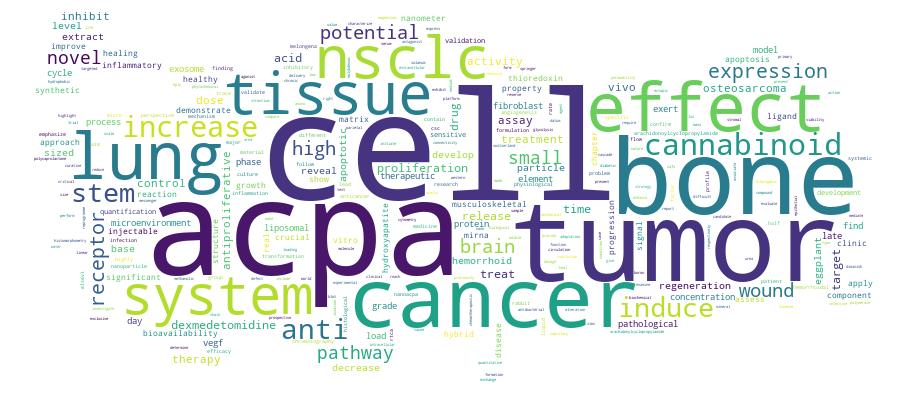
Competency Cloud

GCRIS Competency Cloud

Scholarly Output Search Results

Now showing 1 - 3 of 3
  • Article
    Citation - WoS: 3
    Citation - Scopus: 3
    Development and Validation of a Sensitive Assay for the Quantification of Arachidonoylcyclopropylamide (acpa) in Cell Culture by Lc-ms/Ms
    (Springer int Publ Ag, 2023) Boyacioglu, Ozge; Recber, Tuba; Kir, Sedef; Korkusuz, Petek; Nemutlu, Emirhan
    Synthetic and natural cannabinoid derivatives are highly investigated as drug candidates due to their antinociceptive, antiepileptic and anticancer potential. Arachidonoylcyclopropylamide (ACPA) is a synthetic cannabinoid with antiproliferative and apoptotic effects on non-small cell lung cancer and pancreatic and endometrial carcinoma. Thus, ACPA has a great potential for being used as an anticancer drug for epithelial cancers. Therefore, determining the levels of ACPA in biological fluids, cells, tissues and pharmaceutical dosage forms is crucial in monitoring the effects of various pharmacological, physiological and pathological stimuli on biological systems. However, the challenge in the quantification of ACPA is its short half-life and lack of UV signal. Therefore, we developed a liquid chromatography-tandem mass spectrometric (LC-MS/MS) method for sensitive and selective quantification of ACPA in cell culture medium and intracellular matrix. Multiple reaction monitoring in the positive ionization mode was used for detection with 344 -> 203 m/z transitions. The separation of ACPA was performed on C18 column (50 x 3.0 mm, 2.1 mu m) with the mobile phase run in the gradient mode with 0.1% formic acid (FA) in water and 0.1% FA in acetonitrile at a flow rate of 0.3 ml/min. The assay was linear in the concentration range of 1.8-1000 ng/mL (r = 0.999). The validation studies revealed that the method was linear, sensitive, accurate, precise, selective, repeatable, robust and rugged. Finally, the developed method was applied to quantify ACPA in cell culture medium and intracellular matrix.
  • Article
    ACPA Prevents Lung Fibroblast-to Transformation by Reprogramming the Tumor Microenvironment through NSCLC-Derived Exosomes
    (Nature Portfolio, 2025) Boyacioglu, Ozge; Kalali, Berfin Deniz; Recber, Tuba; Gelen-Gungor, Dilek; Nemutlu, Emirhan; Eroglu, Ipek; Korkusuz, Petek; Kilic, Nedret
    Non-small cell lung cancer (NSCLC) accounts for most lung cancer cases. Current treatments often cause systemic side effects or lead to drug resistance, prompting the development of new therapies targeting tumors and related cells simultaneously. Cancer-associated fibroblasts (CAFs) are crucial stromal cells within the tumor microenvironment (TME), making them potential targets for therapy. Previously, we found that the CB1 receptor agonist ACPA has anti-tumor effects on NSCLC, inhibiting pathways such as Akt/PI3K, JNK, glycolysis, the citric acid cycle, and the urea cycle both in vitro and in vivo. We hypothesize that ACPA could enhance therapy by inhibiting the transformation of lung fibroblasts into CAFs via exosomes. Control and ACPA-treated NSCLC cell exosomes exhibited similar size, PDI, ZP, and high expression of CD9, CD63, and CD81. ACPA-treated exosomes showed reduced levels of miR-21 and miR-23. These exosomes decreased fibroblast viability within 12 h by disrupting pentose phosphate, lipid, and amino acid metabolism, and by lowering PDPN, alpha-SMA, and FAP expressions. This research highlights ACPA as a promising chemotherapeutic agent, capable of improving NSCLC treatment and reprogramming the TME with more targeted therapies.
  • Article
    Citation - WoS: 3
    Citation - Scopus: 4
    A Novel Injectable Nanotherapeutic Platform Increasing the Bioavailability and Anti-Tumor Efficacy of Arachidonylcyclopropylamide on an Ectopic Non-Small Cell Lung Cancer Xenograft Model: A Randomized Controlled Trial
    (Elsevier, 2025) Boyacioglu, Ozge; Varan, Cem; Bilensoy, Erem; Aykut, Zaliha Gamze; Recber, Tuba; Nemutlu, Emirhan; Korkusuz, Petek
    Rapid progressing non-small cell lung adenocarcinoma (NSCLC) decreases treatment success. Cannabinoids emerge as drug candidates for NSCLC due to their anti-tumoral capabilities. We previously reported the controlled release of Arachidonylcyclopropylamide (ACPA) selectively targeting cannabinoid 1 (CB1) receptor in NSCLC cells in vitro. Hydrophobic polymers like polycaprolactone (PCL) offer prolonged circulation time and slower drug clearance which is suitable for hydrophobic molecules like ACPA. Thus, the extended circulation time with enhanced bioavailability and half-life of nanoparticular ACPA is crucial for its therapeutic performance in the tumor area. We assumed that a novel high technology-controlled release system increasing the bioavailability of ACPA compared to free ACPA could be transferred to the clinic when validated in vivo. Plasma profile of ACPA and ACPA-loaded PCL-based nanomedicine by LC-MS/MS and complete blood count (CBC) was assessed in wild-type Balb/c mice. Tumor growth in nanomedicine-applied NSCLC-induced athymic nude mice was assessed using bioluminescence imaging (BLI) and caliper measurements, histomorphometry,immunohistochemistry, TUNEL assay, and Western blot on days 7-21. Injectable NanoACPA increased its systemic exposure to tissues 5.5 times and maximum plasma concentration 6 times higher than free ACPA by substantially improving bioavailability. The potent effect of NanoACPA lasted for at least two days on ectopic NSCLC model through Akt/PI3K, Ras/MEK/Erk, and JNK pathways that diminished Ki-67 proliferative and promoted TUNEL apoptotic cell scores on days 7-21. The output reveals that NanoACPA platform could be a chemotherapeutic for NSCLC in the clinic following scale-up GLP/GMP-based phase trials, owing to therapeutic efficacy at a safe low dose window.