Cihaner, Atilla

Loading...
Profile Picture
Name Variants
C.,Atilla
A., Cihaner
C., Atilla
Cihaner A.
A.,Cihaner
Cihaner, Atilla
Cihaner,A.
Atilla Cihaner
Atilla, Cihaner
Cihaner,Atilla
Cihaner, A.
Cihaner, A
Job Title
Profesör Doktor
Email Address
atilla.cihaner@atilim.edu.tr
Main Affiliation
Chemical Engineering
Status
Website
Scopus Author ID
Turkish CoHE Profile ID
Google Scholar ID
WoS Researcher ID

Sustainable Development Goals

2

ZERO HUNGER
ZERO HUNGER Logo

0

Research Products

11

SUSTAINABLE CITIES AND COMMUNITIES
SUSTAINABLE CITIES AND COMMUNITIES Logo

0

Research Products

14

LIFE BELOW WATER
LIFE BELOW WATER Logo

0

Research Products

6

CLEAN WATER AND SANITATION
CLEAN WATER AND SANITATION Logo

1

Research Products

1

NO POVERTY
NO POVERTY Logo

0

Research Products

5

GENDER EQUALITY
GENDER EQUALITY Logo

0

Research Products

9

INDUSTRY, INNOVATION AND INFRASTRUCTURE
INDUSTRY, INNOVATION AND INFRASTRUCTURE Logo

0

Research Products

16

PEACE, JUSTICE AND STRONG INSTITUTIONS
PEACE, JUSTICE AND STRONG INSTITUTIONS Logo

0

Research Products

17

PARTNERSHIPS FOR THE GOALS
PARTNERSHIPS FOR THE GOALS Logo

0

Research Products

15

LIFE ON LAND
LIFE ON LAND Logo

0

Research Products

10

REDUCED INEQUALITIES
REDUCED INEQUALITIES Logo

0

Research Products

7

AFFORDABLE AND CLEAN ENERGY
AFFORDABLE AND CLEAN ENERGY Logo

3

Research Products

8

DECENT WORK AND ECONOMIC GROWTH
DECENT WORK AND ECONOMIC GROWTH Logo

0

Research Products

4

QUALITY EDUCATION
QUALITY EDUCATION Logo

0

Research Products

12

RESPONSIBLE CONSUMPTION AND PRODUCTION
RESPONSIBLE CONSUMPTION AND PRODUCTION Logo

0

Research Products

3

GOOD HEALTH AND WELL-BEING
GOOD HEALTH AND WELL-BEING Logo

1

Research Products

13

CLIMATE ACTION
CLIMATE ACTION Logo

0

Research Products
Documents

101

Citations

2363

h-index

28

Documents

103

Citations

2256

Scholarly Output

121

Articles

108

Views / Downloads

531/1823

Supervised MSc Theses

12

Supervised PhD Theses

0

WoS Citation Count

2256

Scopus Citation Count

2342

WoS h-index

27

Scopus h-index

28

Patents

0

Projects

13

WoS Citations per Publication

18.64

Scopus Citations per Publication

19.36

Open Access Source

6

Supervised Theses

12

Google Analytics Visitor Traffic

JournalCount
Electrochimica Acta15
Journal of Electroanalytical Chemistry13
Turkish Journal of Chemistry6
Dyes and Pigments6
Organic Electronics6
Current Page: 1 / 8

Scopus Quartile Distribution

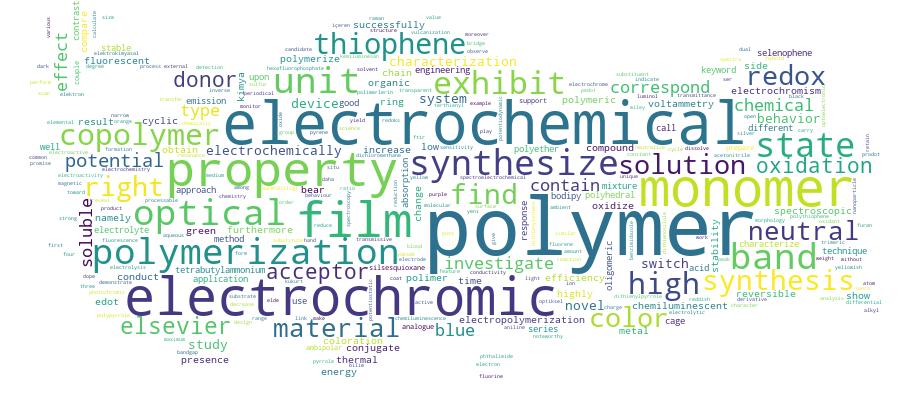
Competency Cloud

GCRIS Competency Cloud

Scholarly Output Search Results

Now showing 1 - 3 of 3
  • Article
    Catalyst-Free Synthesis of Thiourea-Linked Dumbbell-Shaped POSS for Ultrasensitive Determination of Prilocaine in Human Blood with Computational Insights
    (Elsevier Inc., 2026) Bilge, S.; Bayraktar, E.N.; Erkmen, C.; Balci, B.; Abofoul, A.; Içli-Özkut, M.I.; Cihaner, A.
    Although various electrochemical sensors have been reported for the determination of local anesthetic drugs, most existing platforms suffer from limited sensitivity, insufficient surface stability, or inadequate electron-transfer efficiency, particularly when applied to complex biological matrices. Moreover, the potential of hybrid polyhedral oligomeric silsesquioxane (POSS)-based nanostructures combined with metal oxide nanoparticles for improving electroanalytical performance has not yet been thoroughly explored. In this study, a high-sensitivity electrochemical nanosensor was developed for the determination of prilocaine (PC), an amide-type local anesthetic, using a glassy carbon (GC) electrode modified with POSS‑titanium dioxide (TiO2) nanoparticles (Nps). The combination of modifications provided a unique electrode surface by combining the high stability of POSS with the strong adsorption properties of TiO2 Nps, thereby increasing both surface loading and adsorption capacity. To elucidate the structure of the modification combination, 1H and 13C nuclear magnetic resonance (NMR) and Fourier transform infrared (FTIR) spectroscopic techniques, as well as Brunauer–Emmett–Teller (BET), X-Ray diffraction (XRD), Electrochemical impedance spectroscopy (EIS), and high-resolution transmission electron microscopy (HRTEM) analysis techniques were used, respectively. The analytical performance of the developed nanosensor was systematically optimized using differential pulse voltammetry (DPV), adsorptive stripping differential pulse voltammetry (AdSDPV), square wave voltammetry (SWV), and adsorptive stripping square wave voltammetry (AdSSWV) techniques. As a result of the optimization studies, the lowest limit of detection (LOD) was 3.66 × 10⁻⁸ M with the AdSSWV technique. DFT results corroborated the mechanism, indicating ring-centered electron donation (HOMO) and adsorption-favored N/O regions (MEP). Low LOD values were also recorded with other techniques, demonstrating the method's high sensitivity in analyte detection. In real sample analysis tests, PC recovery value in human blood samples was determined to be 98.69% using the AdSDPV technique. Despite the matrix effect, the nanosensor demonstrated high accuracy and reproducibility. The results indicate that the developed POSS-TiO2 Nps modified GC electrode sensor offers a high-performance, reliable, and good electrochemical detection platform suitable for use in biological and clinical applications. © 2024
  • Article
    Citation - WoS: 9
    Citation - Scopus: 10
    Polyhedral Oligomeric Silsesquioxanes Appended Conjugated Soluble Polymers Based on Thieno[3,4-C]pyrrole Acceptor Unit
    (Pergamon-elsevier Science Ltd, 2021) Cakal, Deniz; Cihaner, Atilla; Onal, Ahmet M.
    A series of new donor-acceptor-donor type fluorescent molecules incorporating thieno[3,4-c]pyrrole-4,6-dione (TPD) as the acceptor unit were synthesized. TPD acceptor unit was modified with polyhedral oligomeric silsesquioxanes (POSS) cages and integrated with thiophene and alkylenedioxythiophene derivatives (3,4-ethylenedioxythiophene (EDOT) and 3,4-propylenedioxythiophene (ProDOT)) using Stille coupling reaction. The monomers, T-2-POSS, E-2-POSS, and P-2-POSS, were polymerized successfully via electrochemical and chemical polymerization techniques. As a fingerprint of D-A-D monomers, all monomers showed dual band characteristics due to intramolecular charge transfer. Soluble polymers exhibited reversible electrochromic responses electrochemically and chemically with fast switching times and high coloration efficiencies. E-2-POSS and its polymer PE2-POSS exhibited the lowest oxidation potential and band gap values as compared to their thiophene and ProDOT analogs. Also, P-2-POSS and its chemically obtained fluorescent polymer PP2-POSS-C represented high sensitivity towards Fe2+ and Fe3+ ions, which makes them potential candidates to be amenable for use in ion sensing. (C) 2021 Elsevier Ltd. All rights reserved.
  • Article
    Citation - WoS: 3
    Citation - Scopus: 2
    Polyhedral Oligomeric Silsesquioxane Cage Integrated Soluble and Fluorescent Poly(3,4-Propylenedioxythiophene) Dye
    (Elsevier Sci Ltd, 2021) Ertan, Salih; Kaya, Murat; Cihaner, Atilla
    A new analog of poly (3,4-propylenedioxythiophene) conjugated polymers called PProDOT-POSS, where polyhedral oligomeric silsesquioxane (POSS) nanocage with alkyl substitutions was integrated on the bridge of 3,4-propylenedioxythiophene unit and its structure was confirmed by spectroscopic techniques, was reported. The polymers were synthesized via both chemical and electrochemical polymerization techniques. While chemical polymerization was carried out in the presence of anhydrous FeCl3 as an oxidant, a solution of 0.1 M tetrabutylammonium hexafluoride electrolyte dissolved in a mixture of dichloromethane and acetonitrile (1/3: v/v) was used as an electrolyte solution for electrochemical polymerization. Electro-optical properties of the corresponding polymers were characterized by using electroanalytical techniques such as cyclic voltammetry and square wave potentiometry, and spectrophotometric methods like ultraviolet-visible and fluorescent spectrophotometry. Corresponding polymers obtained both electrochemically and chemically are soluble completely in common organic solvents such as chloroform, toluene, dichloromethane, tetrahydrofuran, etc. Polymer samples both in film and solution forms can be doped/dedoped reversibly by using a chemical oxidant or an external potential. The optical bandgap of the neutral polymer film with a maximum absorption band at 555 nm was calculated as 1.95 eV. Polymers have fluorescent property and excited polymers represented a red/orange light with an emission band centered at 605 nm in toluene. Also, PProDOT-POSS polymers have electrochromic properties under external potentials and they have an optical contrast of 55% at 555 nm between their neutral and oxidized states. Upon oxidation, they showed high transparency and they can switch between redox states in a short time (switching time = similar to 1.0 s) as well as high coloration efficiency (502 cm(2)/C for 95% switching). It can be concluded that POSS based PProDOT polymers can be good candidates for optoelectronic and bioelectronics applications. Short Abstract for Paper Submission: A new analog of poly (3,4-propylenedioxythiophene) conjugated polymers called PProDOT-POSS, was reported with the integrated of alkyl-substituted polyhedral oligomeric silsesquioxane nanocage structure. The polymers were synthesized via both chemical and electrochemical polymerization techniques. Corresponding polymers obtained both electrochemically and chemically are soluble completely in common organic solvents such as chloroform, toluene, dichloromethane, tetrahydrofuran, etc. Polymer samples both in film and solution forms can be doped/dedoped reversibly by using a chemical oxidant or an external potential. The optical bandgap of the neutral polymer film with a maximum absorption band at 555 nm was calculated as 1.95 eV. Polymers have fluorescent property and excited polymers represented a red/orange light with an emission band centered at 605 nm in toluene.