Balku, Şaziye

Loading...
Profile Picture
Name Variants
B., Saziye
B.,Saziye
Ş.,Balku
Balku, Şaziye
Saziye, Balku
Şaziye, Balku
Balku, Saziye
B.,Şaziye
Balku,Ş.
S.,Balku
S., Balku
Balku,S.
Job Title
Doçent Doktor
Email Address
saziye.balku@atilim.edu.tr
Main Affiliation
Energy Systems Engineering
Status
Former Staff
Website
ORCID ID
Scopus Author ID
Turkish CoHE Profile ID
Google Scholar ID
WoS Researcher ID

Sustainable Development Goals

NO POVERTY1
NO POVERTY
0
Research Products
ZERO HUNGER2
ZERO HUNGER
0
Research Products
GOOD HEALTH AND WELL-BEING3
GOOD HEALTH AND WELL-BEING
1
Research Products
QUALITY EDUCATION4
QUALITY EDUCATION
0
Research Products
GENDER EQUALITY5
GENDER EQUALITY
0
Research Products
CLEAN WATER AND SANITATION6
CLEAN WATER AND SANITATION
7
Research Products
AFFORDABLE AND CLEAN ENERGY7
AFFORDABLE AND CLEAN ENERGY
3
Research Products
DECENT WORK AND ECONOMIC GROWTH8
DECENT WORK AND ECONOMIC GROWTH
0
Research Products
INDUSTRY, INNOVATION AND INFRASTRUCTURE9
INDUSTRY, INNOVATION AND INFRASTRUCTURE
2
Research Products
REDUCED INEQUALITIES10
REDUCED INEQUALITIES
0
Research Products
SUSTAINABLE CITIES AND COMMUNITIES11
SUSTAINABLE CITIES AND COMMUNITIES
3
Research Products
RESPONSIBLE CONSUMPTION AND PRODUCTION12
RESPONSIBLE CONSUMPTION AND PRODUCTION
0
Research Products
CLIMATE ACTION13
CLIMATE ACTION
3
Research Products
LIFE BELOW WATER14
LIFE BELOW WATER
0
Research Products
LIFE ON LAND15
LIFE ON LAND
0
Research Products
PEACE, JUSTICE AND STRONG INSTITUTIONS16
PEACE, JUSTICE AND STRONG INSTITUTIONS
0
Research Products
PARTNERSHIPS FOR THE GOALS17
PARTNERSHIPS FOR THE GOALS
0
Research Products
This researcher does not have a Scopus ID.
This researcher does not have a WoS ID.
Scholarly Output

14

Articles

13

Views / Downloads

72/118

Supervised MSc Theses

0

Supervised PhD Theses

1

WoS Citation Count

253

Scopus Citation Count

287

Patents

0

Projects

0

WoS Citations per Publication

18.07

Scopus Citations per Publication

20.50

Open Access Source

5

Supervised Theses

1

JournalCount
Celal Bayar Üniversitesi Fen Bilimleri Dergisi1
Civil Engineering Journal1
Energy Conversion and Management1
Gazi University Journal of Science1
Hittite Journal of Science and Engineering1
Current Page: 1 / 2

Scopus Quartile Distribution

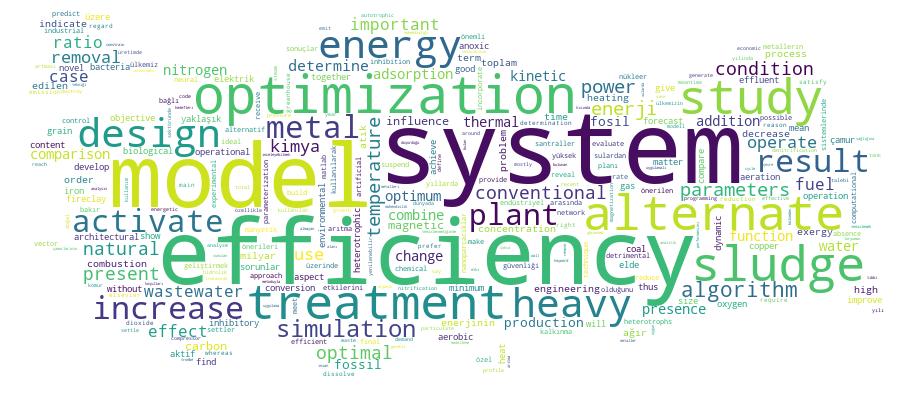
Competency Cloud

GCRIS Competency Cloud

Scholarly Output Search Results

Now showing 1 - 2 of 2
  • Article
    Citation - WoS: 7
    Citation - Scopus: 10
    Ann-Assisted Forecasting of Adsorption Efficiency To Remove Heavy Metals
    (Tubitak Scientific & Technological Research Council Turkey, 2019) Buaısha, Magdi; Balku, Şaziye; Yaman, Şeniz Özalp; Özalp Yaman, Şeniz
    In wastewater treatment, scientific and practical models utilizing numerical computational techniques suchas artificial neural networks (ANNs) can significantly help to improve the process as a whole through adsorption systems.In the modeling of the adsorption efficiency for heavy metals from wastewater, some kinetic models have been used such as pseudo first-order and second-order. The present work develops an ANN model to forecast the adsorption efficiency of heavy metals such as zinc, nickel, and copper by extracting experimental data from three case studies. To do this, we apply trial-and-error to find the most ideal ANN settings, the efficiency of which is determined by mean square error (MSE) and coefficient of determination (R2). According to the results, the model can forecast adsorption efficiency percent (AE%) with a tangent sigmoid transfer function (tansig) in the hidden layer with 10 neurons and a linear transferfunction (purelin) in the output layer. Furthermore, the Levenberg–Marquardt algorithm is seen to be most ideal for training the algorithm for the case studies, with the lowest MSE and high R2 . In addition, the experimental results and the results predicted by the model with the ANN were found to be highly compatible with each other.
  • Doctoral Thesis
    Yenilikci Değişken Aktif Çamur Sistemlerinde Manyetik Nanoparcacıklar Kullanarak Ağır Metal Temizlenmesi için Tasarım Parametrelerinin Belirlenmesinde Benzetim ve Optimizasyon Algoritmaları
    (2019) Buaısha, Magdı; Balku, Şaziye; Yaman, Şeniz Özalp
    Atık sularda bulunan ağır metaller arıtma tesislerinin performansını düşürdüğü gibi temizlenmediğinde insan ve çevre sağlığına etki etmektedir. Ağır metalleri atık sulardan temizlemek için gerekli olan en uygun koşulları ve etkilerini inceleyebilmek için sunulan bu tez iki ana bölümden oluşmaktadır. İlk kısımda son yıllarda çokca uygulama alanı bulan 'yapay sinir ağları' (ANN) metoduyla literatürde yer almayan bir modelleme tekniği ilk kez önerilmiştir. Bu yöntem ile basit çıktılardan elde edilen öngörüler karşılaştırılmış ve bu değerler yüzey tutulumu sürecinde hata göstergesi olarak kullanılmıştır. Model geliştirmek için manyetik nanoparçacıklar ile atık sulardan ağır metallerin temizlenmesi ile ilgili araştırmaları içeren üç örnek literatür çalışmasından veriler seçilmiştir. Elde edilen sonuçlar deneysel ve ANN yöntemiyle elde edilen verilerin birbiriyle oldukça uyumlu olduğunu göstermiştir. Çalışmanın ikinci kısmında ise geleneksel ve alternatif aktif çamur sistemlerinde heterotrofik ve ototrofik biyokütlelerin oksijenli ve oksijensiz ortamda büyümeleri üzerinde bakır metalinin etkisinin incelenebilmesi amacıyla MATLAB kullanılarak bir benzetim algoritması geliştirilmiştir. Sonuçlar bakır metali varlığının hem nitratlama hem de nitratsızlaştırma üzerinde engelleyici bir etkiye sahip olduğunu göstermiştir. Buna bağlı olarak bakırın alternatif aktif çamur sistemlerinde azot giderme işlevinde negatif bir etkisi olduğu saptanmıştır. Sonuç olarak; önerilen ANN modelinin atık suların biyolojik arıtımı öncesinde ağır metallerin manyetik nanoparçacıklar ile ayrıştırılmasında kullanılabilecek bir araç olabileceği anlaşılmıştır. Ayrıca, ASM3 modeli endüstriyel arıtma tesislerinden beslenen aktif çamur sistemlerinin işlevlerini önceden tahmin edebileceği ve değerlendirebileceği gösterilmiştir. Bununla birlikte önerilen model, seçilen endüstriyel alanın karakteristiklerine bağlı olarak bazı önemli parametrelerin etkilerini uyumlandırarak geliştirilebilir.