
Khan, Muhammad Umer
Loading...
Profile URL
Name Variants
Khan, Muhammad Umer
K.,Muhammad Umer
Muhammad Umer, Khan
Khan,Muhammad Umer
M.U.Khan
M., Khan
M.,Khan
Khan U.
Khan M.
Khan,M.U.
M. U. Khan
Umer Khan M.
K., Muhammad Umer
Muhammad Umer Khan
Khan, Umer
Khan, Muhammed Umer
Khan, M. U.
Khan, M.U
K.,Muhammad Umer
Muhammad Umer, Khan
Khan,Muhammad Umer
M.U.Khan
M., Khan
M.,Khan
Khan U.
Khan M.
Khan,M.U.
M. U. Khan
Umer Khan M.
K., Muhammad Umer
Muhammad Umer Khan
Khan, Umer
Khan, Muhammed Umer
Khan, M. U.
Khan, M.U
Job Title
Yardımcı Doçent
Email Address
umer.khan@atilim.edu.tr
Main Affiliation
Mechatronics Engineering
Status
Website
ORCID ID
Scopus Author ID
Turkish CoHE Profile ID
Google Scholar ID
WoS Researcher ID
Sustainable Development Goals
 1
1NO POVERTY
0
Research Products
 2
2ZERO HUNGER
4
Research Products
 3
3GOOD HEALTH AND WELL-BEING
1
Research Products
 4
4QUALITY EDUCATION
0
Research Products
 5
5GENDER EQUALITY
0
Research Products
 6
6CLEAN WATER AND SANITATION
0
Research Products
 7
7AFFORDABLE AND CLEAN ENERGY
4
Research Products
 8
8DECENT WORK AND ECONOMIC GROWTH
0
Research Products
 9
9INDUSTRY, INNOVATION AND INFRASTRUCTURE
1
Research Products
 10
10REDUCED INEQUALITIES
0
Research Products
 11
11SUSTAINABLE CITIES AND COMMUNITIES
0
Research Products
 12
12RESPONSIBLE CONSUMPTION AND PRODUCTION
0
Research Products
 13
13CLIMATE ACTION
0
Research Products
 14
14LIFE BELOW WATER
0
Research Products
 15
15LIFE ON LAND
0
Research Products
 16
16PEACE, JUSTICE AND STRONG INSTITUTIONS
0
Research Products
 17
17PARTNERSHIPS FOR THE GOALS
1
Research Products

Documents
38
Citations
641
h-index
13

Documents
30
Citations
486

Scholarly Output
38
Articles
15
Views / Downloads
189/1701
Supervised MSc Theses
11
Supervised PhD Theses
0
WoS Citation Count
264
Scopus Citation Count
392
Patents
0
Projects
0
WoS Citations per Publication
6.95
Scopus Citations per Publication
10.32
Open Access Source
10
Supervised Theses
11
| Journal | Count |
|---|---|
| Applied Sciences | 2 |
| 2018 14th IEEE/ASME International Conference on Mechatronic and Embedded Systems and Applications, MESA 2018 -- 14th IEEE/ASME International Conference on Mechatronic and Embedded Systems and Applications, MESA 2018 -- 2 July 2018 through 4 July 2018 -- Oulu -- 139111 | 2 |
| 2019 2nd International Conference on Communication, Computing and Digital Systems, C-CODE 2019 -- 2nd International Conference on Communication, Computing and Digital Systems, C-CODE 2019 -- 6 March 2019 through 7 March 2019 -- Islamabad -- 146997 | 1 |
| 2020 7th International Conference on Electrical and Electronics Engineering, ICEEE 2020 -- 7th International Conference on Electrical and Electronics Engineering, ICEEE 2020 -- 14 April 2020 through 16 April 2020 -- Antalya -- 160450 | 1 |
| 2021 IEEE International Conference on Robotics, Automation and Artificial Intelligence, RAAI 2021 -- 2021 IEEE International Conference on Robotics, Automation and Artificial Intelligence, RAAI 2021 -- 21 April 2021 through 23 April 2021 -- Virtual, Online -- 176794 | 1 |
Current Page: 1 / 5
Scopus Quartile Distribution
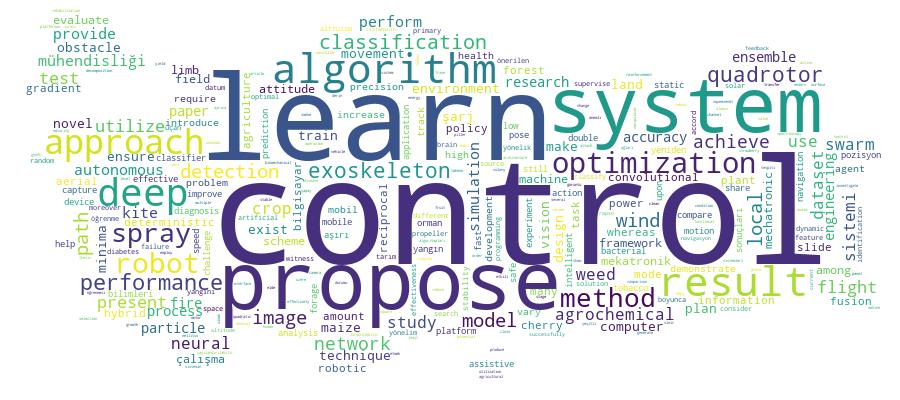
Competency Cloud
10 results
Scholarly Output Search Results
Now showing 1 - 10 of 10
Conference Object Citation - WoS: 3Citation - Scopus: 10Biomechanical Design and Control of Lower Limb Exoskeleton for Sit-To and Stand-To Movements(Institute of Electrical and Electronics Engineers Inc., 2018) Qureshi,M.H.; Masood,Z.; Rehman,L.; Owais,M.; Khan,M.U.In this paper, we present design and development phase of lower limb robotic exoskeleton that can assist paralyzed individuals. Motion of the human wearing exoskeleton is introduced by actuators. Both exoskeleton legs are attached to the supporting frame by passive universal joints. The exoskeleton provides 3 DOFs per limb of which two joints are active and one passive. The control actions i.e., sit-to-stand and stand-to-sit movements are triggered using Double Pole Double Throw (DPDT) toggle switch. The control scheme is implement using Switch control method and the feedback is provided by means of current measurement. This assistive device can be utilized for the disabled persons. The simulation results are provided that evaluates the performance of the control actions on exoskeleton. © 2018 IEEE.Article Utilization of Robotics for Solar Panel Cleaning and Maintenance(2019) Park, Haon; Öztürk, Abdullah; Park, Hajun; Khan, Muhammed UmerIn this study, a portable and low-cost solar panel cleaning robot with a functioning to blowaway dust was designed and built to incur labor costs.The robot is service effective, environmentallyfriendly, energy independent, self-automated, long durable, and cost-effective. After cleaning operation,output voltage and current in solar panel increased by 8.02% and 18.78%, respectively. Moreover, theimage processing with the photos taken by a camera fixed on the robot made classification according tocolor changes in the solar panel. Therefore, it can be concluded that the automated and multifunctionalrobot may facilitate the solar panel surface cleaning and be an applicable maintenance method throughremote monitoring of the surface conditions.Conference Object Citation - Scopus: 9Attitude Control of Quad-Copter Using Deterministic Policy Gradient Algorithms (dpga)(Institute of Electrical and Electronics Engineers Inc., 2019) Ghouri,U.H.; Zafar,M.U.; Bari,S.; Khan,H.; Khan,M.U.In aerial robotics, intelligent control has been a buzz for the past few years. Extensive research efforts can be witnessed to produce control algorithms for stable flight operation of aerial robots using machine learning. Supervised learning has the tendency but training an agent using supervised learning can be a tedious task. Moreover, the data gathering could be expensive and always prone to inaccuracies due to parametric variations and system dynamics. An alternative approach is to ensure the stability of the aerial robots with the help of Deep Re-inforcement Learning (DRL). This paper deals with the intelligent control of quad-copter using deterministic policy gradient algorithms. In this research, state of the art Deep Deterministic Policy Gradient (DDPG) and Distributed Distributional Deep Deterministic Policy Gradient (D4PG) algorithms are employed for attitude control of quad-copter. An open source simulation environment GymFC is used for training of quad-copter. The results for comparative analysis of DDPG D4PG algorithms are also presented, highlighting the attitude control performance. © 2019 IEEE.Conference Object Citation - WoS: 3Biomechanical Design and Control of Lower Limb Exoskeleton for Sit-to-Stand and Stand-to-Sit Movements(Ieee, 2018) Qureshi, Muhammad Hamza; Masood, Zeeshan; Rehman, Linta; Owais, Muhammad; Khan, Muhammad UmerIn this paper, we present design and development phase of lower limb robotic exoskeleton that can assist paralyzed individuals. Motion of the human wearing exoskeleton is introduced by actuators. Both exoskeleton legs are attached to the supporting frame by passive universal joints. The exoskeleton provides 3 DOFs per limb of which two joints are active and one passive. The control actions i.e., sit-to-stand and stand-to-sit movements are triggered using Double Pole Double Throw (DPDT) toggle switch. The control scheme is implement using Switch control method and the feedback is provided by means of current measurement. This assistive device can be utilized for the disabled persons. The simulation results are provided that evaluates the performance of the control actions on exoskeleton.Master Thesis Hava Manipülatörü için Farklı Kontrol Sistemlerinin Tasarımı(2019) Başaranoğlu, Ahmet Turgut; Khan, Muhammad Umer; Arıkan, Kutluk BilgeBu tez kapsamında, dört rotorlu bir multikopter ve tek serbestlik dereceli robot koldan oluşan bir uçan manipülatör için yönelim ve pozisyon denetimcileri tasarlanmış ve tartışılmıştır. Robotik kol uçan platformun yunuslama düzleminde çalışmaktadır. Seçilen senaryolara yönelik çeşitli denetim algoritmaları tasarlanmıştır. Bütüncül sistem dinamiğine (multikopter ve manipülatörün etkileşimli doğrusal olmayan modeli) yönelik merkezi denetimciler tasarlanmıştır. Bununla birlikte, platform ve manipülatörü ayrı ayrı denetleyen dağıtılmış kontrol sistemleri de tasarlanmıştır. Robotik kolun uçan sisteme etki eden bozucu girdinin bertaraf edilmesine, sistemin yönelim ve pozisyon kontrolüne yönelik kullanımı senaryolar çerçevesinde çalışılmıştır. ADRC, T-LQR ve ardışık PID denetim algoritmaları tasarlanmıştır. Seçilen denetim yapısı ve senaryo iç mekanda çalışan bir uçan manipülatör üzerinde uygulanmıştır. Ultra geniş bant konumlandırma sistemi pozisyon ve yükseklik ölçümü için kullanılmıştır. Raspberry Pi 3 B +, Naze 32 donanımı ile Phyton kodu ve Matlab/Simulink yazılımı kullanarak gerçek zamanlı testler gerçekleştirilmiştir. Yönelik denetimcisi parametrelerinin test düzeneği üzerinde ince ayarları gerçekleştirilmiştir. Temel uçuş testleri ile yönelim ve pozisyon kontrolcü parametreleri düzenlenmiştir. Benzetimler ve testler ile robotik manipülatörün bozucu girdileri bertaraf etmeye, yönelim ve pozisyon denetimini sağlamaya yönelik kullanımı gösterilmiştir. Anahtar Kelimeler: Uçan Manipülatör, Kuadkopter, ADRC, Takipçi LQR, Ardışık PID, Naze 32, Raspberry Pi, İç Mekan Konumlama, Yönelim Denetimi, Pozisyon DenetimiConference Object Citation - WoS: 8Attitude Control of Quad-Copter Using Deterministic Policy Gradient Algorithms (dpga)(Ieee, 2019) Ghouri, Usama Hamayun; Zafar, Muhammad Usama; Bari, Salman; Khan, Haroon; Khan, Muhammad UmerIn aerial robotics, intelligent control has been a buzz for the past few years. Extensive research efforts can be witnessed to produce control algorithms for stable flight operation of aerial robots using machine learning. Supervised learning has the tendency but training an agent using supervised learning can be a tedious task. Moreover, the data gathering could be expensive and always prone to inaccuracies due to parametric variations and system dynamics. An alternative approach is to ensure the stability of the aerial robots with the help of Deep Re-inforcement Learning (DRL). This paper deals with the intelligent control of quad-copter using deterministic policy gradient algorithms. In this research, state of the art Deep Deterministic Policy Gradient (DDPG) and Distributed Distributional Deep Deterministic Policy Gradient (D4PG) algorithms are employed for attitude control of quad-copter. An open source simulation environment GymFC is used for training of quad-copter. The results for comparative analysis of DDPG & D4PG algorithms are also presented, highlighting the attitude control performance.Article Mobile Robot Navigation Using Reinforcement Learning in Unknown Environments(2019) Khan, M. U.In mobile robotics, navigation is considered as one of the most primary tasks, which becomes more challenging during local navigation when the environment is unknown. Therefore, the robot has to explore utilizing the sensory information. Reinforcement learning (RL), a biologically-inspired learning paradigm, has caught the attention of many as it has the capability to learn autonomously in an unknown environment. However, the randomized behavior of exploration, common in RL, increases computation time and cost, hence making it less appealing for real-world scenarios. This paper proposes an informed-biased softmax regression (iBSR) learning process that introduce a heuristic-based cost function to ensure faster convergence. Here, the action-selection is not considered as a random process, rather, is based on the maximum probability function calculated using softmax regression. Through experimental simulation scenarios for navigation, the strength of the proposed approach is tested and, for comparison and analysis purposes, the iBSR learning process is evaluated against two benchmark algorithms.Master Thesis Motor Görüntü Görevlerinin Hibrit Elektroensefalografi (eeg)- İşlevesel Kızılötesine Yakın Spektroskopi (fnirs) Beyin Bilgisayar Ara Birimi (bcı) Sınıflandırması(2019) Hasan, Mustafa Amer Hasan; Khan, Muhammad UmerHibrid Beyin Bilgisayar Ara Birimi, iki ya da daha fazla nörofizyolojik sinyalin birleşimidir ve tek modalite sakıncalarını tamamlama yeteneği ile uyumlu hale getirici özellikleri ortaya çıkarmada güvenilir sonuçlar elde etmesiyle dikkat çekmektedir. Simultane biçimde kaydedilen işlevsel kızılötesine yakın spektroskopi(fNIRS) füzyonu ve Elektroensefalografi (EEG)aracılığı ile elde edilen hibrid bir EEG-fNIRS BCI sistemi, tek-modalite sınırlarını aşmak ve yüksek motor görevlerinin üstesinden gelmek üzere kullanılmaktadır. Her ne kadar hibrid BCI yaklaşımı sistemin performansını başarıya ulaştırsa da, hala ilerlemeler iki modaliteyi birleştirmek üzere hesaplama olmaması nedeniyle henüz makul düzeydedir. Bu teze katkılar iki yönlüdür: en çok temsili kanalları seçme konusundaki roman kanal seçim katsayı korelasyonu ve Çoklu çözünürlük tek değerli dekompozisyan kullanan roman füzyon yaklaşımı (MSVD). MSVD' den, optimal EEG-fNIRS kanallar için hem sistem-temelli ve hem de özellik-temelli füzyon elde etmekte yararlanılır. Bu teze diğer bir katkı da, özellik-temelli füzyon için kanonik korelasyon analizinden (CCA) yararlanmaktır. Korelasyon analizi, öncelikle iki modalite arasındaki ilişki üzerinde çalışmak üzere kullanılmaktadır. CCA özellik-temelli füzyon, iki modalite üstünden inter-konulu orta değişikliği maksimize ederek performansı arttırdı. Simülasyon sonuçları vasıtasıyla, hesaplama karmaşıklığını azaltırken, amaçlanan yaklaşımların optimal performansı elde etmeye katkı sağladığına tanık olunabilmektedir.Master Thesis Parça Swarm Optimizasyonunu (pso) Kullanarakresiprokal Altruizm Tabanlı Yol Planlaması(2019) Maeedı, Alı Fadhıl Alı; Khan, Muhammad UmerDoğanın sorunları ile başa çıkmak, her zaman zorlu bir görev olmuştur, bunu daha zorlaştıran şey ise zamanla çalışma koşullarındaki değişimdir. Bu nedenle, zaman içinde sürekli değişen optimayı takip edebilecek sağlam bir algoritmaya ihtiyaç vardır. Bu tezde, partikül bilgisinin paylaşılmasını sağlayarak performansın geliştirilmesi amacıyla bir parçacık sürüsü optimizasyonuna dayalı popülasyon akrabalık bağlantısının önerilmiştir. Karşılıklı Fedakarlığa Dayalı Parçacık Sürü Optimizasyonu (RAPSO) olarak tanımlanan algoritma, optimizasyon işlemi sırasında partiküller arasındaki benzerliği, peyzajla ilgili anlamlı verileri geri almak için kullanır. Resiprokal altruizm (Karşılıklı Özgecilik) teorisi, örneğin farklı grup içi işbirlikçi davranış biçimlerinde neden olan ilgisiz parçacıkların çiftler olarak yardımcı olduğunu açıklığa kavuşturmak için düzenli olarak düzenlenmiştir; hermafroditik balıklar arasında yumurta alışverişi, vampir yarasalar arasında kan yayılması, geri tepmeler arasında yırtıcı hayvanların değerlendirilmesi, vervet maymunları ve impala arasında serbest bırakma, insanlar arasında yaşama payı, kahverengi capuchin maymunları ve temel şempanzeler. Karşılıklı hareket kavramını kullanan RAPSO, bilgi alışverişi yoluyla tüm parçacıkların birbiriyle yakın temasta kalmasını sağlayacaktır. Ayrıca, parçacıklar arasında değiştirilen bilgi miktarı, arama alanı bölgelerine fiziksel olarak yerleştirilmelerine bağlıdır. Bölgelerine bağlı olarak, bağışçı veya alıcı olarak sınıflandırılabilirler; ayrıca, parçacıklar arasında değiştirilen bilgi miktarı doğrudan ilişkili sağlık göstergeleri ile izlenir. Önerilen yaklaşımın performansı, karşılıklı paylaşımın, sürünün optimize edilmiş yol boyunca hareketini kontrol etmek için etkin bir rol oynadığını göstermektedir. Simülasyon sonuçları, RAPSO'nun konik PSO algoritmasını hem hata azaltma hem de yakın bağlantı açısından daha iyi performans gösterdiğini kanıtladı.Conference Object Biomechanical Design and Control of Lower Limb Exoskeleton for Sit-To and Stand-To Movements(Institute of Electrical and Electronics Engineers Inc., 2018) Qureshi,M.H.; Masood,Z.; Rehman,L.; Owais,M.; Khan,M.U.In this paper, we present design and development phase of lower limb robotic exoskeleton that can assist paralyzed individuals. Motion of the human wearing exoskeleton is introduced by actuators. Both exoskeleton legs are attached to the supporting frame by passive universal joints. The exoskeleton provides 3 DOFs per limb of which two joints are active and one passive. The control actions i.e., sit-to-stand and stand-to-sit movements are triggered using Double Pole Double Throw (DPDT) toggle switch. The control scheme is implement using Switch control method and the feedback is provided by means of current measurement. This assistive device can be utilized for the disabled persons. The simulation results are provided that evaluates the performance of the control actions on exoskeleton. © 2018 IEEE.
