
Mıshra, Alok
Loading...
Profile URL
Name Variants
Mishra, A.
Mishra, A
Mishra A.
Alok, Mishra
Mıshra, Alok
A., Mishra
Alok M.
M., Alok
M.,Alok
Mishra, Alok
Mishra,A.
A.,Mıshra
A.,Mishra
Alok, Mıshra
A., Mıshra
Mıshra,A.
Mishra, A
Mishra A.
Alok, Mishra
Mıshra, Alok
A., Mishra
Alok M.
M., Alok
M.,Alok
Mishra, Alok
Mishra,A.
A.,Mıshra
A.,Mishra
Alok, Mıshra
A., Mıshra
Mıshra,A.
Job Title
Profesor Doktor
Email Address
alok.mishra@atilim.edu.tr
Main Affiliation
Software Engineering
Status
Website
ORCID ID
Scopus Author ID
Turkish CoHE Profile ID
Google Scholar ID
WoS Researcher ID
Sustainable Development Goals
 1
1NO POVERTY
0
Research Products
 2
2ZERO HUNGER
1
Research Products
 3
3GOOD HEALTH AND WELL-BEING
9
Research Products
 4
4QUALITY EDUCATION
6
Research Products
 5
5GENDER EQUALITY
1
Research Products
 6
6CLEAN WATER AND SANITATION
1
Research Products
 7
7AFFORDABLE AND CLEAN ENERGY
0
Research Products
 8
8DECENT WORK AND ECONOMIC GROWTH
0
Research Products
 9
9INDUSTRY, INNOVATION AND INFRASTRUCTURE
8
Research Products
 10
10REDUCED INEQUALITIES
0
Research Products
 11
11SUSTAINABLE CITIES AND COMMUNITIES
4
Research Products
 12
12RESPONSIBLE CONSUMPTION AND PRODUCTION
4
Research Products
 13
13CLIMATE ACTION
4
Research Products
 14
14LIFE BELOW WATER
4
Research Products
 15
15LIFE ON LAND
0
Research Products
 16
16PEACE, JUSTICE AND STRONG INSTITUTIONS
10
Research Products
 17
17PARTNERSHIPS FOR THE GOALS
2
Research Products

This researcher does not have a Scopus ID.

Documents
165
Citations
2516

Scholarly Output
197
Articles
103
Views / Downloads
696/2397
Supervised MSc Theses
13
Supervised PhD Theses
8
WoS Citation Count
2022
Scopus Citation Count
3009
Patents
0
Projects
0
WoS Citations per Publication
10.26
Scopus Citations per Publication
15.27
Open Access Source
42
Supervised Theses
21
| Journal | Count |
|---|---|
| Sensors | 7 |
| TEM Journal | 7 |
| Computers in Human Behavior | 4 |
| Applied Sciences | 4 |
| Electronics Information and Planning | 4 |
Current Page: 1 / 22
Scopus Quartile Distribution
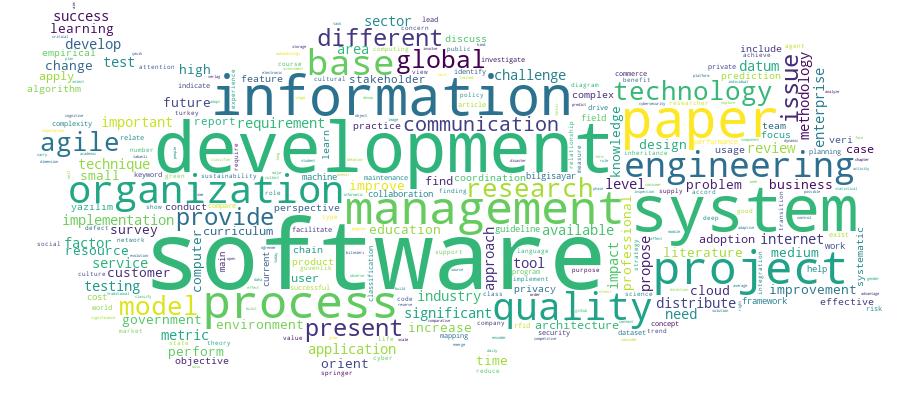
Competency Cloud
7 results
Scholarly Output Search Results
Now showing 1 - 7 of 7
Review Citation - WoS: 75Citation - Scopus: 120Hybrid Blockchain Platforms for the Internet of Things (iot): a Systematic Literature Review(Mdpi, 2022) Alkhateeb, Ahmed; Catal, Cagatay; Kar, Gorkem; Mishra, AlokIn recent years, research into blockchain technology and the Internet of Things (IoT) has grown rapidly due to an increase in media coverage. Many different blockchain applications and platforms have been developed for different purposes, such as food safety monitoring, cryptocurrency exchange, and secure medical data sharing. However, blockchain platforms cannot store all the generated data. Therefore, they are supported with data warehouses, which in turn is called a hybrid blockchain platform. While several systems have been developed based on this idea, a current state-of-the-art systematic overview on the use of hybrid blockchain platforms is lacking. Therefore, a systematic literature review (SLR) study has been carried out by us to investigate the motivations for adopting them, the domains at which they were used, the adopted technologies that made this integration effective, and, finally, the challenges and possible solutions. This study shows that security, transparency, and efficiency are the top three motivations for adopting these platforms. The energy, agriculture, health, construction, manufacturing, and supply chain domains are the top domains. The most adopted technologies are cloud computing, fog computing, telecommunications, and edge computing. While there are several benefits of using hybrid blockchains, there are also several challenges reported in this study.Review Information System Process Improvement: a Managerial Perspective(2003) Mishra,A.System process improvement is a continuous strategy in organizations for reducing overall cost, shortening cycle times, and improve quality and user satisfaction. For software organizations to remain competitive and survive in the global market place, it is now inevitable. All organizations are trying to achieve more value from their technology investments. There are various models like Capability Maturity Model (CMM), ISO, etc., available to measure it. However management role is vital for effective process improvement implementation strategy. This paper briefly presents an assessment of all the factors which if taken care by the management effectively can ensure success in information system process improvement.Review Web Privacy: a Commercial, Social and Technological Perspective(2003) Mishra,A.People all over the world are increasingly concerned about the privacy issues surrounding the personal information collected by the private organizations, governments and employers. Privacy relates to issues surrounding collection, secure transmission, storage, authorized access, usage and disclosure of personal information. This information is used for the commercial gain by many organizations. Individual privacy concerns significantly affects consumer willingness to engage in electronic commerce over the internet. The increased use of the internet and web for everyday activities is bringing new threats to personal privacy. This paper assessed various issues related to individual privacy on the web, growing concerns among the web users, technologies employed for collecting and protecting information on the web, privacy-enhancing technologies and the legal provisions to curb the web privacy.Review Citation - WoS: 1Citation - Scopus: 1Software Maintenance Practices Using Agile Methods Towards Cloud Environment: a Systematic Mapping(Wiley, 2024) Almashhadani, Mohammed; Mishra, Alok; Yazici, AliAgile methods have emerged to overcome the obstacles of structured methodologies, such as the waterfall, prototype, spiral, and so on. There are studies showing the usefulness of agile approaches in software development. However, studies on Agile maintenance are very limited in number. Regardless of the chosen methodology, software maintenance can be carried out in either a local (on-the-premise) or global (distributed) environment. In a local environment, the software maintenance team is co-located on the same premises, while in a global environment, the team is geographically dispersed from the customer. The main objective of this Systematic Mapping (SM) study is to identify the practices useful for software maintenance using the Agile approaches in the Cloud environment. We have conducted a comprehensive search in well-known digital databases and examined the articles that map to the pre-defined inclusion criteria. The study selected and analyzed 48 articles out of 320 published between 2000 and 2022. The findings of the mapping study reveal that Agile can resolve the major issues faced in traditional software maintenance, making the role of this approach significant in global/distributed software maintenance. Cloud computing plays a vital role in software maintenance. Most of the studies highlight the application of XP- and Scrum-based Agile maintenance models. The study found a need for more Agile maintenance solutions in the cloud, highlighting the importance of agile in software maintenance, both locally and globally. Irrespective of the environment, Cloud computing provides a centralized platform for collaboration and communication, while also offering scalability and flexibility to adapt to diverse infrastructure needs. This allows agile maintenance practices to be implemented across both local and global environments, leveraging the cloud's capabilities to overcome geographical and infrastructural challenges. imageReview Global It Outsourcing: Benefits, Risks and Current Trends(2003) Mishra,A.The growing trends towards information technology (IT) outsourcing is increasing among organizations all over the world. This article reviews the factors, which affects the success in outsourcing, areas of outsourcing, contract-crafting deal, and risk factors involved. It also presents current scenario of global IT outsourcing briefly.Review Citation - WoS: 73Citation - Scopus: 112Devops and Software Quality: a Systematic Mapping(Elsevier, 2020) Mishra, Alok; Otaiwi, ZiadoonQuality pressure is one of the factors affecting processes for software development in its various stages. DevOps is one of the proposed solutions to such pressure. The primary focus of DevOps is to increase the deployment speed, frequency and quality. DevOps is a mixture of different developments and operations to its multitudinous ramifications in software development industries, DevOps have attracted the interest of many researchers. There are considerable literature surveys on this critical innovation in software development, yet, little attention has been given to DevOps impact on software quality. This research is aimed at analyzing the implications of DevOps features on software quality. DevOps can also be referred to a change in organization cultures aimed at removal of gaps between the development and operations of an organization. The adoption of DevOps in an organization provides many benefits including quality but also brings challenges to an organization. This study presents systematic mapping of the impact of DevOps on software quality. The results of this study provide a better understanding of DevOps on software quality for both professionals and researchers working in this area. The study shows research was mainly focused in automation, culture, continuous delivery, fast feedback of DevOps. There is need of further research in many areas of DevOps (for instance: measurement, development of metrics of different stages to assess its performance, culture, practices toward ensuring quality assurance, and quality factors such as usability, efficiency, software maintainability and portability). (C) 2020 The Author(s). Published by Elsevier Inc.Review Citation - Scopus: 31E-Government - Exploring the Different Dimensions of Challenges, Implementation, and Success Factors(2011) Mishra,A.; Mishra,D.This paper explores the different dimensions of egovernment significant issues - Challenges, Implementation, and Success Factors. The main objective is to highlight the current research and practice direction in these important areas of egovernment. The results were limited to peerreviewed conference papers and journal articles, published from 2001 up to and including early 2011. The analysis revealed that most research has been done in formulating challenges and barriers, implementation plan, evaluation/assessment and success factors of e-government while studies on knowledge management in e-government, readiness for e-government, e-Gov. process and security/privacy issues could get only limited attention. This indicates the need for future research (quantitative and qualitative) in these areas. Further it also reports a summary of the research in these egovernment areas.
