
Nazlıbilek, Sedat
Loading...

Profile URL
Name Variants
S.,Nazlibilek
N., Sedat
Nazlıbilek,S.
Sedat, Nazlıbilek
N.,Sedat
Nazlibilek,S.
S., Nazlibilek
S.,Nazlıbilek
Sedat, Nazlibilek
Nazlıbilek, Sedat
Nazlibilek, Sedat
N., Sedat
Nazlıbilek,S.
Sedat, Nazlıbilek
N.,Sedat
Nazlibilek,S.
S., Nazlibilek
S.,Nazlıbilek
Sedat, Nazlibilek
Nazlıbilek, Sedat
Nazlibilek, Sedat
Job Title
Doçent Doktor
Email Address
Main Affiliation
Department of Mechatronics Engineering
Status
Former Staff
Website
ORCID ID
Scopus Author ID
Turkish CoHE Profile ID
Google Scholar ID
WoS Researcher ID
Sustainable Development Goals
2
ZERO HUNGER

0
Research Products
14
LIFE BELOW WATER

2
Research Products
17
PARTNERSHIPS FOR THE GOALS

1
Research Products
5
GENDER EQUALITY

0
Research Products
16
PEACE, JUSTICE AND STRONG INSTITUTIONS

0
Research Products
8
DECENT WORK AND ECONOMIC GROWTH

0
Research Products
4
QUALITY EDUCATION

0
Research Products
6
CLEAN WATER AND SANITATION

0
Research Products
7
AFFORDABLE AND CLEAN ENERGY

1
Research Products
10
REDUCED INEQUALITIES

0
Research Products
11
SUSTAINABLE CITIES AND COMMUNITIES

1
Research Products
9
INDUSTRY, INNOVATION AND INFRASTRUCTURE

0
Research Products
1
NO POVERTY

0
Research Products
3
GOOD HEALTH AND WELL-BEING

1
Research Products
12
RESPONSIBLE CONSUMPTION AND PRODUCTION

0
Research Products
13
CLIMATE ACTION

0
Research Products
15
LIFE ON LAND

0
Research Products

This researcher does not have a Scopus ID.

This researcher does not have a WoS ID.

Scholarly Output
22
Articles
14
Views / Downloads
5/0
Supervised MSc Theses
3
Supervised PhD Theses
3
WoS Citation Count
243
Scopus Citation Count
302
WoS h-index
7
Scopus h-index
8
Patents
0
Projects
0
WoS Citations per Publication
11.05
Scopus Citations per Publication
13.73
Open Access Source
1
Supervised Theses
6
Google Analytics Visitor Traffic
| Journal | Count |
|---|---|
| Measurement | 7 |
| Indian Journal of Pure and Applied Physics | 2 |
| IEEE Transactions on Instrumentation and Measurement | 2 |
| 20th Annual International Conference on Mechatronics and Machine Vision in Practice, M2VIP 2013 -- 20th Annual International Conference on Mechatronics and Machine Vision in Practice, M2VIP 2013 -- 20 September 2013 through 20 September 2013 -- Ankara -- 102276 | 1 |
| International Conference of Control, Dynamic Systems, and Robotics -- 4th International Conference of Control, Dynamic Systems, and Robotics, CDSR 2017 -- 21 August 2017 through 23 August 2017 -- Toronto -- 139918 | 1 |
Current Page: 1 / 2
Scopus Quartile Distribution
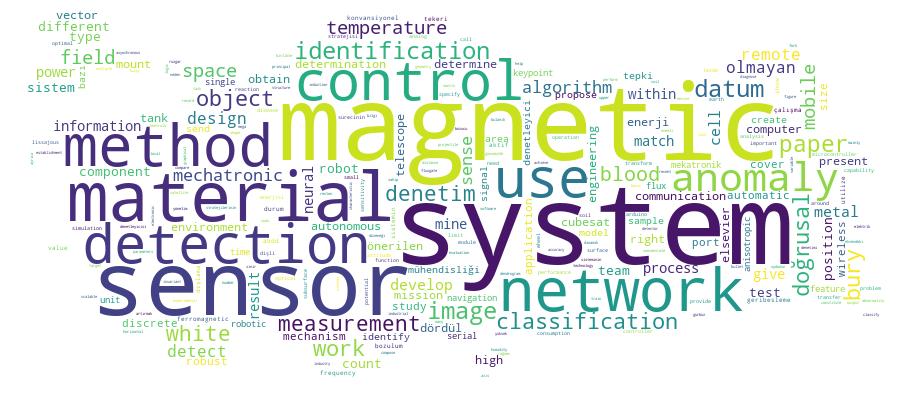
Competency Cloud
10 results
Scholarly Output Search Results
Now showing 1 - 10 of 10
Article Citation - WoS: 2Citation - Scopus: 2Optimization of Parameters Acting on a Projectile Velocity Within a Four Stage Induction Coil-Gun(Elsevier Sci Ltd, 2010) Coskun, Ismail; Kalender, Osman; Ege, Yavuz; Nazlibilek, SedatIn this work, a four stage induction coil-gun has been designed and the parameters acting on the bullet velocity has been investigated. The mutual inductance variation depending on the bullet coil position, determination of firing point exposed to the maximum force with respect to the length, and appropriate material selection for the bullet coil have been analyzed. Optimum solutions for these parameters have been presented. (C) 2010 Elsevier Ltd. All rights reserved.Article Citation - WoS: 10Citation - Scopus: 12Anomaly Detection With Low Magnetic Flux: a Fluxgate Sensor Network Application(Elsevier Sci Ltd, 2016) Ege, Yavuz; Coramik, Mustafa; Kabadayi, Murat; Citak, Hakan; Kalender, Osman; Yuruklu, Emrah; Nazlibilek, SedatRecent studies on remote detection methods were mostly for improving variables like sensing distance, sensitivity and power consumption. Especially using anisotropic magneto-resistive sensors with low power consumption and high sensitivity for detecting subsurface magnetic materials became very popular in last decades. In our study, for detecting subsurface materials, we have used fluxgate sensor network for having even higher sensitivity and also minimizing the power consumption by detecting the changing rates of horizontal component of earth's magnetic flux which is assumed to be very low. We have constituted a magnetic measurement system which comprises a detector system, which has a mechanism enables sensors to move in 3-D space, a data acquisition module for processing and sending all sensor information, and a computer for running the magnetic flux data evaluation and recording software. Using this system, tests are carried out to detect anomalies on horizontal component of earth's magnetic flux which is created by different subsurface materials with known magnetic, chemical and geometric properties. The harmonics of horizontal component of earth's magnetic flux in scanned area are analyzed by the help of DSP Lock-In amplifier and the amplitudes of high variation harmonics are shown as computer graphics. Using the graphic information, the upside surface geometry of subsurface material is defined. For identifying the magnetic anomalies, we have used the scale-invariant feature transform (SIFT)-binary robust invariant scalable keypoints (BRISKs) as keypoint and descriptor. We used an algorithm for matching the newly scanned image to the closest image in database which is constituted of mines and possible other metal objects like cans, etc. Results show that, if the proposed detection system is used instead of metal detectors which cannot distinguish mines from other metal materials and alert for every type of metal with different geometries, it can be said that miss alarm count, work force and time can be decreased dramatically. In this paper, mostly the setup of the system is described and in Appendix A some experimental outputs of the system for different geometries of metal samples are given. And also for comparing the results of the proposed system, additional experiments are carried out with a different type of sensor chip, namely KMZ51, and also given in Appendix A. (C) 2015 Elsevier Ltd. All rights reserved.Article Citation - WoS: 126Citation - Scopus: 163Automatic Segmentation, Counting, Size Determination and Classification of White Blood Cells(Elsevier Sci Ltd, 2014) Nazlibilek, Sedat; Karacor, Deniz; Ercan, Tuncay; Sazli, Murat Husnu; Kalender, Osman; Ege, YavuzThe counts, the so-called differential counts, and sizes of different types of white blood cells provide invaluable information to evaluate a wide range of important hematic pathologies from infections to leukemia. Today, the diagnosis of diseases can still be achieved mainly by manual techniques. However, this traditional method is very tedious and time-consuming. The accuracy of it depends on the operator's expertise. There are laser based cytometers used in laboratories. These advanced devices are costly and requires accurate hardware calibration. They also use actual blood samples. Thus there is always a need for a cost effective and robust automated system. The proposed system in this paper automatically counts the white blood cells, determine their sizes accurately and classifies them into five types such as basophil, lymphocyte, neutrophil, monocyte and eosinophil. The aim of the system is to help for diagnosing diseases. In our work, a new and completely automatic counting, segmentation and classification process is developed. The outputs of the system are the number of white blood cells, their sizes and types. (C) 2014 Elsevier Ltd. All rights reserved.Article Citation - WoS: 19Citation - Scopus: 19Identification of Materials With Magnetic Characteristics by Neural Networks(Elsevier Sci Ltd, 2012) Nazlibilek, Sedat; Ege, Yavuz; Kalender, Osman; Sensoy, Mehmet Gokhan; Karacor, Deniz; Sazh, Murat HusnuIn industry, there is a need for remote sensing and autonomous method for the identification of the ferromagnetic materials used. The system is desired to have the characteristics of improved accuracy and low power consumption. It must also autonomous and fast enough for the decision. In this work, the details of inaccurate and low power remote sensing mechanism and autonomous identification system are given. The remote sensing mechanism utilizes KMZ51 anisotropic magneto-resistive sensor with high sensitivity and low power consumption. The images and most appropriate mathematical curves and formulas for the magnetic anomalies created by the magnetic materials are obtained by 2-D motion of the sensor over the material. The contribution of the paper is the use of the images obtained by the measurement of the perpendicular component of the Earth magnetic field that is a new method for the purpose of identification of an unknown magnetic material. The identification system is based on two kinds of neural network structures. The MultiLayer Perceptron (MLP) and the Radial Basis Function (RBF) network types are used for training of the neural networks. In this work, 23 different materials such as SAE/AISI 1030, 1035, 1040, 1060, 4140 and 8260 are identified. Besides the ferromagnetic materials, three objects are also successfully identified. Two of them are anti-personal and anti-tank mines and one is an empty can box. It is shown that the identification system can also be used as a buried mine identification system. The neural networks are trained with images which are originally obtained by the remote sensing system and the system is operated by images with added Gaussian white noises. Crown Copyright (C) 2012 Published by Elsevier Ltd. All rights reserved.Article Citation - WoS: 2Citation - Scopus: 5New Magnetic Measurement System for Determining Metal Covered Mines by Detecting Magnetic Anomaly Using a Sensor Network(Natl inst Science Communication-niscair, 2015) Ege, Yavuz; Kakilli, Adnan; Citak, Hakan; Kalender, Osman; Nazlibilek, Sedat; Sensoy, Mehmet Gokhan; Department of Mechatronics EngineeringThe most commonly used remote sensing methods are used in such applications as the aquistic emmission, ground penetration radar (GPR) detection, electromagnetic induction spectroscopy, infrared imaging, thermal neutron activation, nuclear quadruple resonance, X-ray back scattering, neutron back scattering and magnetic anomaly detection. In deciding which type of method has to be used for detection, the variables such as the type of object, material used, position, geographical and environmental conditions, etc. play important roles. In recent years, studies are mainly concentrated on the improvement of detection distance, accuracy, power consumption aspects of remote sensing methods. In the present study, the same concerns are taken into account and a new magnetic measurement system is developed in this context. The system is made up of a sensor network consisting of high sensitive and low power anisotropic magneto-resistive KMZ51 sensors. The sensor network can detect the magnetic anomalies of vertical component of earth's magnetic field created by buried objects as metal covered mines. In the present paper, the effects of physical properties of metal covered materials to magnetic anomalies have been studied. The sensor network is composed of 24 sensors. The voltage levels of each sensor are measured one-by one and transferred to a digital computer where the distribution of the voltages in x-y plane is plotted as 3D graphics. Furthermore, the performance of the system on the detection of buried metallic mines and determination of their shapes have been investigated.Article Citation - WoS: 1Citation - Scopus: 1New Real Time Temperature Monitoring and Evaluation System(Natl inst Science Communication-niscair, 2015) Ege, Yavuz; Kalender, Osman; Citak, Hakan; Nazlibilek, Sedat; Coramik, Mustafa; Department of Mechatronics EngineeringThe storage of many drugs, serum and vaccines at specified temperature limit is very important. Therefore, it is necessary to read and record the ambient temperature and control the refrigerating device according to the limiting values specified by the user. Taking into account these requirements, a new PIC microprocessor-based temperature monitoring system that triggers the DS18B20 temperature sensor and controls the running of the refrigerator system is designed and developed. At the controlling operation, performed by this system, temperature limits are specified by the user. In case these limit values are exceeded, a warning message is sent to the user through GSM module. Furthermore, the temperature values that are read between the time intervals specified by the user are sent to a GLCD screen and presented in a graphical form. The temperature readings can be transferred to the computer environment as text file through a Visual Basic based interface with using a serial port. At this system which has one year data storage capacity, it is possible that the temperature values can be transferred to the computer by wireless communication facility. Differently from the present systems, recording, evaluation, warning and device control operations are performed in the same system. In the present paper, the system operation and its performance at the fields of application are expressed in detail.Article Citation - WoS: 11Citation - Scopus: 12A Magnetic Measurement System and Identification Method for Buried Magnetic Materials Within Wet and Dry Soils(Ieee-inst Electrical Electronics Engineers inc, 2016) Ege, Yavuz; Nazlibilek, Sedat; Kakilli, Adnan; Citak, Hakan; Kalender, Osman; Erturk, Korhan Levent; Karacor, DenizIn this paper, a new magnetic measurement system is developed to determine upper surfaces of buried magnetic materials, particularly land mines. This measurement system uses the magnetic-anomaly-detection method. It also has intelligent identification software based on an image matching algorithm. It is aimed to determine and identify the buried ferromagnetic materials with minimum energy consumption. It is concentrated on the detection and identification of the shapes of upper surfaces of buried magnetic materials in dry and wet conditions. The effect of humidity in the detection process for detection is tested. In this paper, we used sensor images to identify various ferromagnetic materials and similar objects. Sensor images of soils at various humidities covering the objects were obtained. We used the speeded-up-feature-transform algorithm in the comparison process of the images. Dry soil sample images match with the corresponding wet soil samples with the highest matching rate. The images for different objects can easily be distinguished by the matching process.Article Citation - WoS: 5Citation - Scopus: 5A Study on the Performance of Magnetic Material Identification System by Sift-Brisk and Neural Network Methods(Ieee-inst Electrical Electronics Engineers inc, 2015) Ege, Yavuz; Nazlibilek, Sedat; Kakilli, Adnan; Citak, Hakan; Kalender, Osman; Karacor, Deniz; Sengul, GokhanIndustry requires low-cost, low-power consumption, and autonomous remote sensing systems for detecting and identifying magnetic materials. Magnetic anomaly detection is one of the methods that meet these requirements. This paper aims to detect and identify magnetic materials by the use of magnetic anomalies of the Earth's magnetic field created by some buried materials. A new measurement system that can determine the images of the upper surfaces of buried magnetic materials is developed. The system consists of a platform whose position is automatically controlled in x-axis and y-axis and a KMZ51 anisotropic magneto-resistive sensor assembly with 24 sensors mounted on the platform. A new identification system based on scale-invariant feature transform (SIFT)-binary robust invariant scalable keypoints (BRISKs) as keypoint and descriptor, respectively, is developed for identification by matching the similar images of magnetic anomalies. The results are compared by the conventional principal component analysis and neural net algorithms. On the six selected samples and the combinations of these samples, 100% correct classification rates were obtained.Article Citation - WoS: 21Citation - Scopus: 22Mine Identification and Classification by Mobile Sensor Network Using Magnetic Anomaly(Ieee-inst Electrical Electronics Engineers inc, 2011) Nazlibilek, Sedat; Kalender, Osman; Ege, YavuzIn this paper, a new method is proposed to identify and classify the data obtained by the sensor network (SN) for the detection of mines. This method is used for the identification of antitank and antipersonnel mines and classification of buried objects within a target region. In this paper, a mobile SN is used to detect mines and some other objects buried and creating magnetic anomaly in and around the region where they are found, with the behavior of the individual sensors swarming onto the area under which a mine or any other object is buried. The process of collecting data by the SN and modeling it mathematically are explained in detail. The SN is modeled as a fictitious two-dimensional spatial impulse sampler. This paper is motivated by clearing the territories of mine fields to open them to agriculture. It is very important because, currently, in some countries, very fertile territories around the borders are covered by buried mines. The approach is basically based on magnetic anomaly measurements, which directly tackles the subregions corresponding to buried objects whether they represent objects that are separately located or occluded by other objects. It is based on a new developed method that is called "the back-most object detection and identification algorithm." This method is fully automatic, and there is no human intervention throughout the process. In this paper, classification of objects is based on their well-known shapes and dimensions. Therefore, there is no need for sophisticated learning algorithms to achieve classification. The experimental results are given both for detection and identification of a single mine and classification of a number of mines and any other objects that have a potential of giving false alarms in a target region.Article Citation - WoS: 5Citation - Scopus: 5A New Wireless Asynchronous Data Communications Module for Industrial Applications(Elsevier Sci Ltd, 2013) Ege, Yavuz; Sensoy, Mehmet Gokhan; Kalender, Osman; Nazlibilek, Sedat; Citak, HakanAll the sensors such as temperature, humidity, and pressure used in industry provide analog outputs as inputs for their control units. Wireless transmission of the data has advantages on wired transmission such as USB port, parallel port and serial port and therefore has great importance for industrial applications. In this work, a new wireless asynchronous data communications module has been developed to send the earth magnetic field data around a ferromagnetic material detected by a KMZ51 AMR sensor. The transmitter module transmits the analog data obtained from a source to a computer environment where they are stored and then presented in a graphical form. In this design, an amplitude shift keying (ASK) transceiver working at the frequency of 433.92 MHz which is a frequency inside the so called Industrial Scientific Medical band (ISM band) used for wireless communications. The analog data first fed into a 10-bit ADC controlled by a PIC microcontroller and then the digital data is sent to the transmitter. A preamble bit string is added in front of the data bits and another bit string for achieving synchronization and determination the start of the data is used. The data arriving at the receiver is taken by the microcontroller and sent to a LCD display as well as the serial port of a computer where it is written in a text file. A Visual Basic based graphics interface is designed to receive, store and present the data in the form of graphical shapes. In the paper, all the work has been explained in detail. Crown Copyright (C) 2013 Published by Elsevier Ltd. All rights reserved.
