Aslantamer, Özlem Nur

Loading...
Profile Picture
Name Variants
Aslantamer,O.N.
Özlem Nur, Aslantamer
A.,Özlem Nur
Ö. N. Aslantamer
Ö.,Aslantamer
Ö.N.Aslantamer
Aslantamer,Ozlem Nur
Aslantamer, Özlem Nur
Aslantamer, Ozlem Nur
O.N.Aslantamer
Aslantamer,Ö.N.
A.,Ozlem Nur
O., Aslantamer
A., Ozlem Nur
Özlem Nur Aslantamer
A., Özlem Nur
O. N. Aslantamer
Ozlem Nur, Aslantamer
Aslantamer, Ö.N.
Job Title
Doktor Öğretim Üyesi
Email Address
ozlem.aslantamer@atilim.edu.tr
Main Affiliation
Interior Architecture and Environmental Design
Status
Website
Scopus Author ID
Turkish CoHE Profile ID
Google Scholar ID
WoS Researcher ID

Sustainable Development Goals

NO POVERTY1
NO POVERTY
0
Research Products
ZERO HUNGER2
ZERO HUNGER
0
Research Products
GOOD HEALTH AND WELL-BEING3
GOOD HEALTH AND WELL-BEING
2
Research Products
QUALITY EDUCATION4
QUALITY EDUCATION
0
Research Products
GENDER EQUALITY5
GENDER EQUALITY
0
Research Products
CLEAN WATER AND SANITATION6
CLEAN WATER AND SANITATION
0
Research Products
AFFORDABLE AND CLEAN ENERGY7
AFFORDABLE AND CLEAN ENERGY
1
Research Products
DECENT WORK AND ECONOMIC GROWTH8
DECENT WORK AND ECONOMIC GROWTH
1
Research Products
INDUSTRY, INNOVATION AND INFRASTRUCTURE9
INDUSTRY, INNOVATION AND INFRASTRUCTURE
1
Research Products
REDUCED INEQUALITIES10
REDUCED INEQUALITIES
0
Research Products
SUSTAINABLE CITIES AND COMMUNITIES11
SUSTAINABLE CITIES AND COMMUNITIES
5
Research Products
RESPONSIBLE CONSUMPTION AND PRODUCTION12
RESPONSIBLE CONSUMPTION AND PRODUCTION
0
Research Products
CLIMATE ACTION13
CLIMATE ACTION
1
Research Products
LIFE BELOW WATER14
LIFE BELOW WATER
0
Research Products
LIFE ON LAND15
LIFE ON LAND
0
Research Products
PEACE, JUSTICE AND STRONG INSTITUTIONS16
PEACE, JUSTICE AND STRONG INSTITUTIONS
0
Research Products
PARTNERSHIPS FOR THE GOALS17
PARTNERSHIPS FOR THE GOALS
0
Research Products
Documents

19

Citations

100

h-index

7

Documents

17

Citations

77

Scholarly Output

24

Articles

22

Views / Downloads

117/2658

Supervised MSc Theses

0

Supervised PhD Theses

0

WoS Citation Count

76

Scopus Citation Count

100

Patents

0

Projects

0

WoS Citations per Publication

3.17

Scopus Citations per Publication

4.17

Open Access Source

19

Supervised Theses

0

JournalCount
Buildings7
Applied Sciences3
Journal of Design for Resilience in Architecture and Planning2
Highlights of Sustainability2
Journal of Asian Architecture and Building Engineering2
Current Page: 1 / 3

Scopus Quartile Distribution

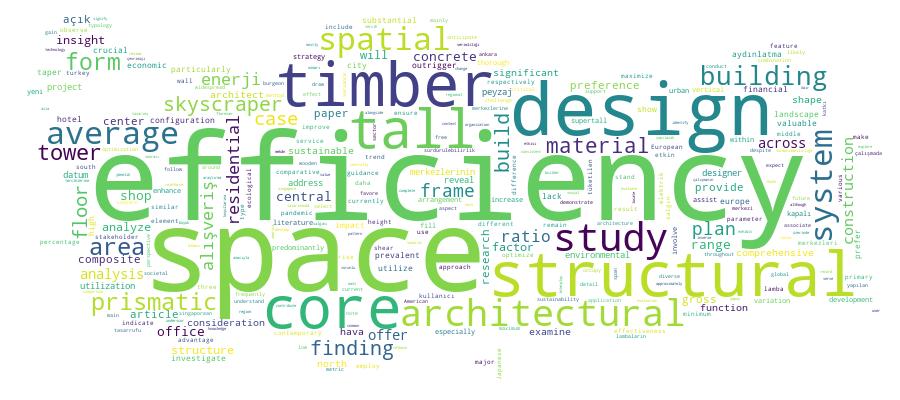
Competency Cloud

GCRIS Competency Cloud

Scholarly Output Search Results

Now showing 1 - 3 of 3
  • Article
    Exploring the Impact of Landscape Design on User Preferences in Shopping Centers Post the Covid-19 Pandemic
    (2024) Aslantamer, Özlem Nur; Ilgın, Hüseyin Emre
    This study explores the impact of landscape design, which has gained importance alongside architectural changes in shopping centers, and investigates preferences in the post-COVID-19 pandemic era. Although e-commerce has increased during the pandemic, research and societal behaviors suggest that shopping centers will continue to serve as contemporary agoras due to their socialization and leisure functions. However, in response to the pandemic, it is anticipated that newly designed shopping centers will be architecturally conceived as semi-outdoor or outdoor spaces, regardless of climate conditions. This transformation will involve the softening of rigid appearances through landscape elements, making them both ecologically and psychologically sustainable. The number of studies on this subject is limited. To address this knowledge gap, an online survey was conducted with 586 randomly selected users across nine shopping centers located in three major cities of Turkey: Istanbul, Ankara, and Izmir, with three shopping centers in each city. The survey investigated users' preferences for architectural styles (indoor, semi-outdoor, or outdoor) and landscape design in shopping centers. The findings of the study indicate that post-pandemic, outdoor and semi-outdoor shopping centers are likely to be preferred more frequently. An emphasis is likely to be placed on natural landscape elements such as plants and water features in landscape design. Furthermore, shopping center designs are likely to become simpler, offering comfortable and spacious navigation areas while optimizing parking and transportation conditions. This study is expected to shed light on decision-making processes for future shopping centers. By incorporating consumer preferences, architects can enhance the sustainability of shopping center investments through next-generation design.
  • Article
    Yeni bir Yapı Tipolojisini Keşfetmek: Yapısal Hibritler
    (2025) Ilgın, Hüseyin Emre; Aslantamer, Özlem Nur
    In recent years, the increasing demand for iconic towers, coupled with intense competition among major cities to construct the most distinguished vertical structures and the continuous pursuit of building the world’s loftiest structures, has come to characterize the forefront of modern high-rise architecture. In this race, many vertical structures have essentially become vertical extensions of land, primarily aimed at maximizing the financial value of the ground they occupy. However, this approach has often resulted in the proliferation of uninspiring and homogeneous towers across the globe, largely products of isolated architectural practices. Despite nearly 150 years of innovation, the architectural design of high-rise buildings has yet to fully achieve the desired advancement, particularly in terms of urban integration and structural design. In this study, the authors propose a classification system for contemporary high-rise typologies, with a particular focus on hybrid structures. The study underscores the importance of spatial quality and the integration of structural design, aiming to raise architects' awareness of structure as a fundamental element of architecture. Structural hybrids offer a transformative approach to high-rise design by integrating structure and architecture to overcome the limitations of standardized designs, creating dynamic and contextually enriched spaces.
  • Article
    A Comparative Analysis of Space Efficiency in Skyscrapers: Case Studies From the Middle East, Asia, and North America
    (2025) Aslantamer, Özlem Nur; Ilgın, Hüseyin Emre
    This study conducts a critical comparative analysis of spatial efficiency in supertall buildings across three major geographic contexts: the Middle East, Asia, and North America. Through the examination of selected case studies representative of each region, the research investigates the interplay between architectural form, structural typology, and the distribution of usable floor area within vertical structures. The findings reveal significant regional variations in spatial efficiency metrics and core-to-GFA (gross floor area) proportions. In the Asian context, towers predominantly adopt a tapered morphological strategy combined with composite structural systems, resulting in an average spatial efficiency of approximately 68%, with vertical service cores occupying nearly 30% of the GFA. Conversely, Middle Eastern high-rises, typically defined by prismatic massing and monolithic concrete structures, demonstrate a higher spatial efficiency—averaging 76%—with a core-to-GFA ratio of around 21%. North American skyscrapers, frequently employing prismatic or setback configurations alongside reinforced concrete systems, exhibit comparable efficiency rates, with an average of 76% and a similarly proportioned core area. Despite these regional divergences, the analysis identifies a consistent inverse correlation between building height and spatial efficiency, underscoring the technical and spatial challenges associated with height-induced inefficiencies in high-rise design. By elucidating these interregional patterns, the study offers valuable insights into the optimization of vertical spatial organization, contributing to the evolving discourse on high-rise architecture and urban densification.