Sönmez, Çağla

Loading...
Profile Picture
Name Variants
Sonmez,Cagla
Sönmez, Çağla
Sönmez Ç.
Ç.,Sönmez
Çağla Sönmez
Altun C.
Ç., Sönmez
Sonmez,C.
Sonmez, Cagla
S., Çağla
S.,Çağla
Çağla, Sönmez
C., Sonmez
C.,Sonmez
Sonmez C.
Sönmez,Ç.
S.,Cagla
S., Cagla
Cagla, Sonmez
Sonmez,Ç.
Job Title
Profesör Doktor
Email Address
cagla.sonmez@atilim.edu.tr
Main Affiliation
Basic Sciences
Status
Scopus Author ID
Turkish CoHE Profile ID
Google Scholar ID
WoS Researcher ID

Sustainable Development Goals

NO POVERTY1
NO POVERTY
0
Research Products
ZERO HUNGER2
ZERO HUNGER
1
Research Products
GOOD HEALTH AND WELL-BEING3
GOOD HEALTH AND WELL-BEING
2
Research Products
QUALITY EDUCATION4
QUALITY EDUCATION
0
Research Products
GENDER EQUALITY5
GENDER EQUALITY
0
Research Products
CLEAN WATER AND SANITATION6
CLEAN WATER AND SANITATION
0
Research Products
AFFORDABLE AND CLEAN ENERGY7
AFFORDABLE AND CLEAN ENERGY
0
Research Products
DECENT WORK AND ECONOMIC GROWTH8
DECENT WORK AND ECONOMIC GROWTH
0
Research Products
INDUSTRY, INNOVATION AND INFRASTRUCTURE9
INDUSTRY, INNOVATION AND INFRASTRUCTURE
0
Research Products
REDUCED INEQUALITIES10
REDUCED INEQUALITIES
0
Research Products
SUSTAINABLE CITIES AND COMMUNITIES11
SUSTAINABLE CITIES AND COMMUNITIES
0
Research Products
RESPONSIBLE CONSUMPTION AND PRODUCTION12
RESPONSIBLE CONSUMPTION AND PRODUCTION
0
Research Products
CLIMATE ACTION13
CLIMATE ACTION
1
Research Products
LIFE BELOW WATER14
LIFE BELOW WATER
0
Research Products
LIFE ON LAND15
LIFE ON LAND
0
Research Products
PEACE, JUSTICE AND STRONG INSTITUTIONS16
PEACE, JUSTICE AND STRONG INSTITUTIONS
0
Research Products
PARTNERSHIPS FOR THE GOALS17
PARTNERSHIPS FOR THE GOALS
0
Research Products
Documents

13

Citations

492

h-index

7

Documents

13

Citations

462

Scholarly Output

3

Articles

2

Views / Downloads

31/299

Supervised MSc Theses

0

Supervised PhD Theses

0

WoS Citation Count

4

Scopus Citation Count

6

Patents

0

Projects

0

WoS Citations per Publication

1.33

Scopus Citations per Publication

2.00

Open Access Source

2

Supervised Theses

0

JournalCount
Scientific Reports2
Journal of Agronomy and Crop Science1
Current Page: 1 / 1

Scopus Quartile Distribution

Competency Cloud

GCRIS Competency Cloud

Scholarly Output Search Results

Now showing 1 - 2 of 2
  • Correction
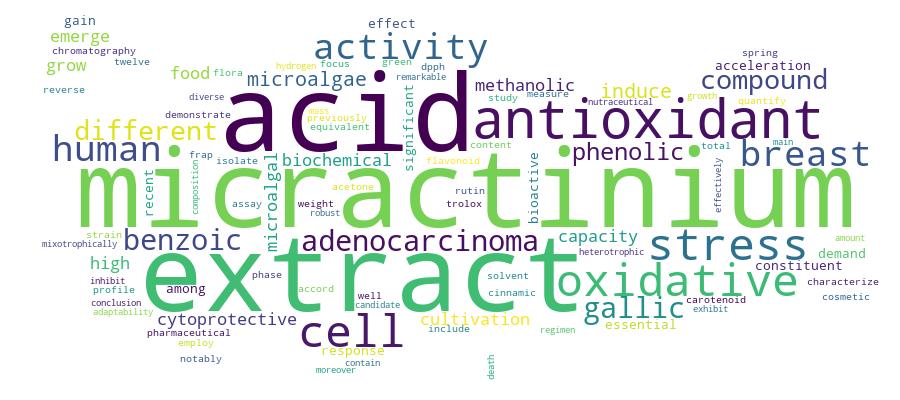
    Antioxidant Activity of Micractinium Sp. (Chlorophyta) Extracts Against H2o2 Induced Oxidative Stress in Human Breast Adenocarcinoma Cells
    (Nature Portfolio, 2025) Bulut, Onur; Kose, Iskin Engin; Sonmez, Cagla; Oktem, Huseyin Avni
  • Article
    Unveiling the Impact of Vernalisation on Seed Oil Content and Fatty Acid Composition in Rapeseed (Brassica Napus L.) Through Simulated Shorter Winters
    (John Wiley and Sons Inc, 2025) Çağlı, İ.; Kıvrak, B.E.; Altunbaş, O.; Sönmez, Ç.
    Climate change is leading to warmer winters world-wide with an increasing number of extreme events every year. Studies show that winter varieties of rapeseed are particularly impacted negatively by global warming. This study investigates the molecular, physiological, and biochemical effects of diverse vernalisation scenarios (i.e., the vernalisation models) on rapeseed plants and seeds. The winter and spring varieties of rapeseed (Brassica napus L.) were subjected to short durations of vernalisation (3 and 4 weeks) as well as to 6- and 8-week long vernalisation interrupted by 1-week devernalisation intervals at warm temperatures. Our results reveal a notable difference in vernalisation responsiveness in major floral regulator FLC orthologues between the late-flowering winter variety, Darmor, the early-flowering winter variety, Bristol, and the spring variety, Helios, after 3 weeks of vernalisation. Within the three FLC genes (BnaFLCA02, BnaFLCA10, and BnaFLCC02) analysed in this study, BnaFLCA10 emerged as the most responsive to vernalisation in all three varieties. The vernalisation duration significantly influenced seed oil content and fatty acid composition in both Bristol and Helios varieties. In Bristol, the 2 + 6w vernalisation model in which vernalisation was interrupted for 1 week after 2 weeks of vernalisation and continued for another 4 weeks consistently resulted in the highest oil content and oleic acid percentage. The interrupted vernalisation (2 + 4w and 2 + 6w) also led to increased monounsaturated fatty acids across all 3 years. In Helios, non-vernalised plants produced seeds with the lowest oil content, and vernalisation duration positively correlated with both seed oil content and oleic acid percentage. Our findings unveil a robust correlation between vernalisation and seed oil content, as well as fatty acid composition in rapeseed. © 2025 The Author(s). Journal of Agronomy and Crop Science published by Wiley-VCH GmbH.