Doğu, Merve Nur

Loading...
Profile Picture
Name Variants
M.,Doğu
Merve Nur, Dogu
Dogu,M.N.
Doğu,M.N.
Dogu, Merve Nur
M., Dogu
Merve Nur, Doğu
M.N.Dogu
Doğu, Merve Nur
D., Merve Nur
D.,Merve Nur
M.N.Doğu
Job Title
Araştırma Görevlisi
Email Address
merve.dogu@atilim.edu.tr
Main Affiliation
Department of Metallurgical and Materials Engineering
Status
Former Staff
Website
ORCID ID
Scopus Author ID
Turkish CoHE Profile ID
Google Scholar ID
WoS Researcher ID

Sustainable Development Goals

2

ZERO HUNGER
ZERO HUNGER Logo

0

Research Products

14

LIFE BELOW WATER
LIFE BELOW WATER Logo

0

Research Products

17

PARTNERSHIPS FOR THE GOALS
PARTNERSHIPS FOR THE GOALS Logo

0

Research Products

5

GENDER EQUALITY
GENDER EQUALITY Logo

0

Research Products

16

PEACE, JUSTICE AND STRONG INSTITUTIONS
PEACE, JUSTICE AND STRONG INSTITUTIONS Logo

0

Research Products

8

DECENT WORK AND ECONOMIC GROWTH
DECENT WORK AND ECONOMIC GROWTH Logo

0

Research Products

4

QUALITY EDUCATION
QUALITY EDUCATION Logo

0

Research Products

6

CLEAN WATER AND SANITATION
CLEAN WATER AND SANITATION Logo

0

Research Products

7

AFFORDABLE AND CLEAN ENERGY
AFFORDABLE AND CLEAN ENERGY Logo

0

Research Products

10

REDUCED INEQUALITIES
REDUCED INEQUALITIES Logo

0

Research Products

11

SUSTAINABLE CITIES AND COMMUNITIES
SUSTAINABLE CITIES AND COMMUNITIES Logo

0

Research Products

9

INDUSTRY, INNOVATION AND INFRASTRUCTURE
INDUSTRY, INNOVATION AND INFRASTRUCTURE Logo

7

Research Products

1

NO POVERTY
NO POVERTY Logo

0

Research Products

3

GOOD HEALTH AND WELL-BEING
GOOD HEALTH AND WELL-BEING Logo

0

Research Products

12

RESPONSIBLE CONSUMPTION AND PRODUCTION
RESPONSIBLE CONSUMPTION AND PRODUCTION Logo

0

Research Products

13

CLIMATE ACTION
CLIMATE ACTION Logo

0

Research Products

15

LIFE ON LAND
LIFE ON LAND Logo

0

Research Products
This researcher does not have a Scopus ID.
This researcher does not have a WoS ID.
Scholarly Output

7

Articles

7

Views / Downloads

3/0

Supervised MSc Theses

0

Supervised PhD Theses

0

WoS Citation Count

164

Scopus Citation Count

175

WoS h-index

7

Scopus h-index

7

Patents

0

Projects

0

WoS Citations per Publication

23.43

Scopus Citations per Publication

25.00

Open Access Source

6

Supervised Theses

0

Google Analytics Visitor Traffic

JournalCount
Journal of Materials Research and Technology3
Materials & Design1
Materials Characterization1
Materials Today Communications1
SSRN Electronic Journal1
Current Page: 1 / 1

Scopus Quartile Distribution

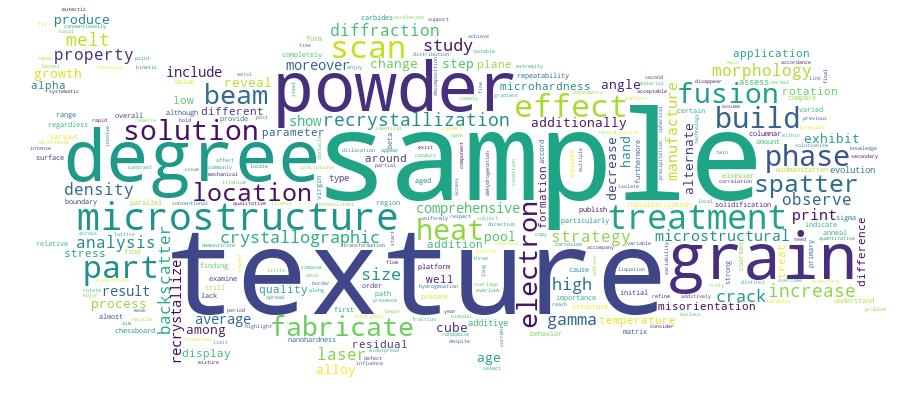
Competency Cloud

GCRIS Competency Cloud

Scholarly Output Search Results

Now showing 1 - 2 of 2
  • Article
    Citation - WoS: 24
    Citation - Scopus: 27
    Effect of Solution Heat Treatment on the Microstructure and Crystallographic Texture of In939 Fabricated by Powder Bed Fusion-Laser Beam
    (Elsevier, 2023) Dogu, Merve Nur; Ozer, Seren; Yalcin, Mustafa Alp; Davut, Kemal; Bilgin, Guney Mert; Obeidi, Muhannad Ahmed; Brabazon, Dermot
    The effect of various solution heat treatment temperatures (i.e., 1120, 1160, 1200 and 1240 & DEG;C) on the microstructure, grain morphology and crystallographic texture of IN939 fabricated by powder bed fusion-laser beam (PBF-LB) was investigated. Microstructural analyses showed that the high-temperature gradient and rapid solidification of the PBF-LB processing caused different resulting microstructures compared to conventionally pro-duced counterparts. The melt pool morphologies and laser scanning paths were examined in the as-fabricated samples in the XZ-and XY-planes, respectively. After the application of solution heat treatment at 1120 & DEG;C, the as-fabricated PBF-LB initial microstructure was still apparent. For solution heat treatments of 1200 & DEG;C and above, the melt pool and scanning path morphologies disappeared and converted into a mixture of columnar grains in the XZ-plane and equiaxed grains in the XY-plane. On the other hand, large equiaxed grains were observed when the samples were solutionized at 1240 & DEG;C. Additionally, g' phase precipitated within the matrix after all solution heat treatment conditions, which led to increase in the microhardness values. According to electron backscatter diffraction (EBSD) analyses, both as-fabricated and solution heat-treated samples had intense texture with {001} plane normal parallel to the building direction. The first recrystallized grains began to appear when the samples were subjected to the solution heat treatment at 1160 & DEG;C and the fraction of the recrystallized grains increased with increasing temperature, as supported by kernel average misorientation (KAM) and grain spread orientation (GOS) analyses.& COPY; 2023 The Author(s). Published by Elsevier B.V. This is an open access article under the CC BY license (http://creativecommons.org/licenses/by/4.0/).
  • Article
    Citation - WoS: 15
    Citation - Scopus: 15
    Effect of Aging Treatment on the Microstructure, Cracking Type and Crystallographic Texture of In939 Fabricated by Powder Bed Fusion-Laser Beam
    (Elsevier, 2024) Ozer, Seren; Dogu, Merve Nur; Ozdemirel, Ceren; Bilgin, Guney Mert; Gunes, Mert; Davut, Kemal; Brabazon, Dermot
    This study aimed to provide a comprehensive understanding of how aging treatments (namely, HT1 and HT2) affect the microstructure, cracking behavior, and crystallographic texture of IN939 fabricated by powder bed fusion-laser beam (PBF-LB) method. Although both aged samples demonstrated similar grain structure and recrystallization behavior according to the electron backscatter diffraction (EBSD) analysis, as well as the precipitation of bimodal gamma ' phase and MC- and M23C6-type carbides, notable differences were observed in the size and morphology, particularly the gamma ' phase. The HT1 sample displayed coarsened primary gamma ' phase, with sizes reaching up to 2 mu m and exhibiting varied morphologies, including irregular and cuboidal shapes. Additionally, this treatment led to the formation of some gamma '-gamma eutectic regions and plate-like eta phase, along with the decomposition of MC-type carbides into M23C6-type carbides. In contrast, the HT2 sample displayed uniformly distributed spherical primary gamma ' phase with sizes ranging from 70 to 120 nm, accompanied by very fine secondary gamma ' phase. Furthermore, it was found that changes in both aged sample microstructures could result in the formation of strain-age cracks due to the gamma ' phase formation and liquation cracks due to the partial remelting of lower melting point phases. The findings also revealed that with the application of aging treatments, the hardness of the as-fabricated sample (339.8 +/- 3.4 HV) increased to 440.2 +/- 5.6 HV and 508.1 +/- 4.8 HV for the heat treatment of HT1 and HT2, respectively.