Saygılı, Dilek Demirtepe

Loading...
Profile Picture
Name Variants
Dilek Demirtepe, Saygili
Saygili,D.D.
D. D. Saygılı
D., Saygili
D. D. Saygili
S.,Dilek Demirtepe
D.D.Saygili
D.,Saygili
Saygılı,D.D.
Saygılı, Dilek Demirtepe
D.D.Saygılı
Dilek Demirtepe, Saygılı
S., Dilek Demirtepe
D.,Saygılı
Saygili, Dilek Demirtepe
Demirtepe-Saygili, Dilek
Demirtepe Saygılı, Dilek
Job Title
Doçent Doktor
Email Address
dilek.saygili@atilim.edu.tr
Main Affiliation
Department of Psychology
Status
Website
ORCID ID
Scopus Author ID
Turkish CoHE Profile ID
Google Scholar ID
WoS Researcher ID

Sustainable Development Goals

2

ZERO HUNGER
ZERO HUNGER Logo

0

Research Products

14

LIFE BELOW WATER
LIFE BELOW WATER Logo

0

Research Products

17

PARTNERSHIPS FOR THE GOALS
PARTNERSHIPS FOR THE GOALS Logo

0

Research Products

5

GENDER EQUALITY
GENDER EQUALITY Logo

0

Research Products

16

PEACE, JUSTICE AND STRONG INSTITUTIONS
PEACE, JUSTICE AND STRONG INSTITUTIONS Logo

0

Research Products

8

DECENT WORK AND ECONOMIC GROWTH
DECENT WORK AND ECONOMIC GROWTH Logo

0

Research Products

4

QUALITY EDUCATION
QUALITY EDUCATION Logo

1

Research Products

6

CLEAN WATER AND SANITATION
CLEAN WATER AND SANITATION Logo

0

Research Products

7

AFFORDABLE AND CLEAN ENERGY
AFFORDABLE AND CLEAN ENERGY Logo

0

Research Products

10

REDUCED INEQUALITIES
REDUCED INEQUALITIES Logo

0

Research Products

11

SUSTAINABLE CITIES AND COMMUNITIES
SUSTAINABLE CITIES AND COMMUNITIES Logo

0

Research Products

9

INDUSTRY, INNOVATION AND INFRASTRUCTURE
INDUSTRY, INNOVATION AND INFRASTRUCTURE Logo

0

Research Products

1

NO POVERTY
NO POVERTY Logo

0

Research Products

3

GOOD HEALTH AND WELL-BEING
GOOD HEALTH AND WELL-BEING Logo

2

Research Products

12

RESPONSIBLE CONSUMPTION AND PRODUCTION
RESPONSIBLE CONSUMPTION AND PRODUCTION Logo

0

Research Products

13

CLIMATE ACTION
CLIMATE ACTION Logo

0

Research Products

15

LIFE ON LAND
LIFE ON LAND Logo

0

Research Products
Documents

9

Citations

149

h-index

7

Documents

0

Citations

0

Scholarly Output

13

Articles

12

Views / Downloads

11/0

Supervised MSc Theses

0

Supervised PhD Theses

0

WoS Citation Count

67

Scopus Citation Count

83

WoS h-index

5

Scopus h-index

5

Patents

0

Projects

0

WoS Citations per Publication

5.15

Scopus Citations per Publication

6.38

Open Access Source

6

Supervised Theses

0

Google Analytics Visitor Traffic

JournalCount
AYNA Klinik Psikoloji Dergisi2
Current Psychology2
Dil ve Tarih-Coğrafya Fakültesi Dergisi1
Journal of Health Psychology1
Nesne Dergisi1
Current Page: 1 / 2

Scopus Quartile Distribution

Competency Cloud

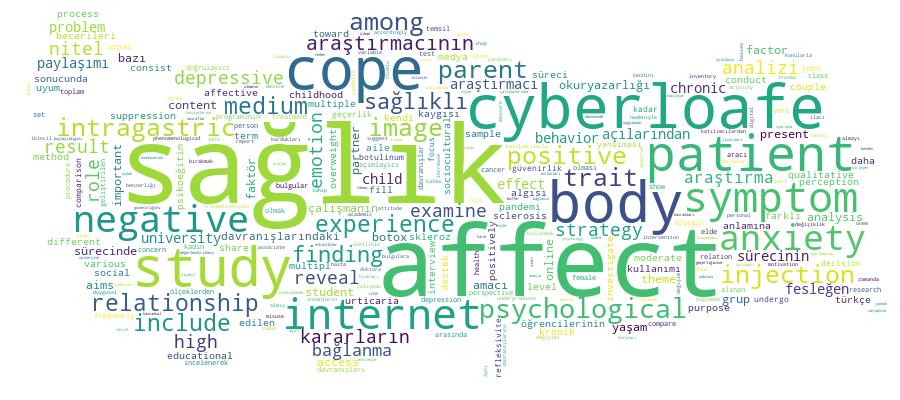
GCRIS Competency Cloud

Scholarly Output Search Results

Now showing 1 - 2 of 2
  • Article
    Citation - WoS: 30
    Citation - Scopus: 35
    Cyberloafing Behaviors Among University Students: Their Relationships With Positive and Negative Affect
    (Springer, 2023) Metin-Orta, Irem; Demirtepe-Saygili, Dilek
    With the technological advances, the use of digital devices, such as laptops, tablets, or smartphones in the educational setting has become prevalent among young people. Accordingly, there has been an increased concern among scholars on students' in-class Internet use for personal purposes; namely, 'cyberloafing'. Considerable research has demonstrated the adverse effects of in-class Internet use on students' learning environment and academic performance. The present study particularly investigates the relationship between cyberloafing behaviors and positive and negative affect among university students. It examines five different online activities including sharing, shopping, real-time updating, accessing online content, and gaming/gambling separately to gain greater insight into students' cyberloafing behaviors. The sample consisted of 267 undergraduate students who filled out questionnaires measuring cyberloafing behaviors, positive and negative affect, and demographical information including the use of the Internet and mobile technologies. The initial analyses showed that male students had higher scores in shopping, accessing online content, and gaming/gambling than females. The latent variable analysis revealed that among different activities of cyberloafing, accessing online content and gaming/gambling were positively correlated with positive affect, while sharing was positively associated with negative affect among students. The findings emphasize the importance of evaluating cyberloafing as a part of students' psychological well-being rather than a variable merely related to academic achievement. The findings of the study also enlighten researchers and educators in developing appropriate policies and interventions to manage misuse of the Internet in class.
  • Article
    Citation - WoS: 14
    Citation - Scopus: 19
    An Investigation of Cyberloafing in Relation To Coping Styles and Psychological Symptoms in an Educational Setting
    (Sage Publications inc, 2021) Demirtepe-Saygili, Dilek; Metin-Orta, Irem
    Cyberloafing, the intentional use of the Internet for personal purposes during class hours, has received the scholars' attention due to the increased access to digital devices in educational settings. Considering the possible negative consequences of misuse of the Internet on health and well-being, the current study aims to investigate the underlying mechanisms of this relationship by examining in detail the role of coping strategies. The sample consisted of 272 undergraduate students. The participants were asked to fill out items measuring cyberloafing behaviors, coping strategies (emotion-focused and problem-focused), and psychological symptoms (depression, anxiety, anger, and somatization). The results revealed that cyberloafing is positively related to psychological symptoms. Furthermore, it is observed that cyberloafing moderates the relationship between emotion-focused coping and psychological symptoms such that at high levels of cyberloafing, emotion-focused coping is associated with higher levels of psychological symptoms. These findings contribute to the existing literature on students' psychological well-being in terms of highlighting its relation with coping strategies and problematic Internet use.