Korkusuz, Süleyman

Loading...
Profile Picture
Name Variants
K., Suleyman
K.,Suleyman
Korkusuz, Suleyman
Korkusuz, Süleyman
K., Süleyman
K.,Süleyman
S.,Korkusuz
S., Korkusuz
Süleyman, Korkusuz
Suleyman, Korkusuz
Korkusuz,S.
Korkusuz S.
Job Title
Araştırma Görevlisi
Email Address
suleyman.korkusuz@atilim.edu.tr
Main Affiliation
Department of Therapy and Rehabilitation
Status
Website
ORCID ID
Scopus Author ID
Turkish CoHE Profile ID
Google Scholar ID
WoS Researcher ID

Sustainable Development Goals

2

ZERO HUNGER
ZERO HUNGER Logo

0

Research Products

11

SUSTAINABLE CITIES AND COMMUNITIES
SUSTAINABLE CITIES AND COMMUNITIES Logo

1

Research Products

14

LIFE BELOW WATER
LIFE BELOW WATER Logo

0

Research Products

6

CLEAN WATER AND SANITATION
CLEAN WATER AND SANITATION Logo

0

Research Products

1

NO POVERTY
NO POVERTY Logo

0

Research Products

5

GENDER EQUALITY
GENDER EQUALITY Logo

0

Research Products

9

INDUSTRY, INNOVATION AND INFRASTRUCTURE
INDUSTRY, INNOVATION AND INFRASTRUCTURE Logo

0

Research Products

16

PEACE, JUSTICE AND STRONG INSTITUTIONS
PEACE, JUSTICE AND STRONG INSTITUTIONS Logo

0

Research Products

17

PARTNERSHIPS FOR THE GOALS
PARTNERSHIPS FOR THE GOALS Logo

0

Research Products

15

LIFE ON LAND
LIFE ON LAND Logo

0

Research Products

10

REDUCED INEQUALITIES
REDUCED INEQUALITIES Logo

0

Research Products

7

AFFORDABLE AND CLEAN ENERGY
AFFORDABLE AND CLEAN ENERGY Logo

0

Research Products

8

DECENT WORK AND ECONOMIC GROWTH
DECENT WORK AND ECONOMIC GROWTH Logo

0

Research Products

4

QUALITY EDUCATION
QUALITY EDUCATION Logo

0

Research Products

12

RESPONSIBLE CONSUMPTION AND PRODUCTION
RESPONSIBLE CONSUMPTION AND PRODUCTION Logo

0

Research Products

3

GOOD HEALTH AND WELL-BEING
GOOD HEALTH AND WELL-BEING Logo

5

Research Products

13

CLIMATE ACTION
CLIMATE ACTION Logo

0

Research Products
Documents

9

Citations

23

h-index

3

Documents

0

Citations

0

Scholarly Output

10

Articles

10

Views / Downloads

33/354

Supervised MSc Theses

0

Supervised PhD Theses

0

WoS Citation Count

18

Scopus Citation Count

16

WoS h-index

3

Scopus h-index

3

Patents

0

Projects

0

WoS Citations per Publication

1.80

Scopus Citations per Publication

1.60

Open Access Source

1

Supervised Theses

0

Google Analytics Visitor Traffic

JournalCount
Journal of the American Podiatric Medical Association2
Neurological Sciences2
Gait & Posture1
American Journal of Physical Medicine & Rehabilitation1
Neurological Research1
Current Page: 1 / 2

Scopus Quartile Distribution

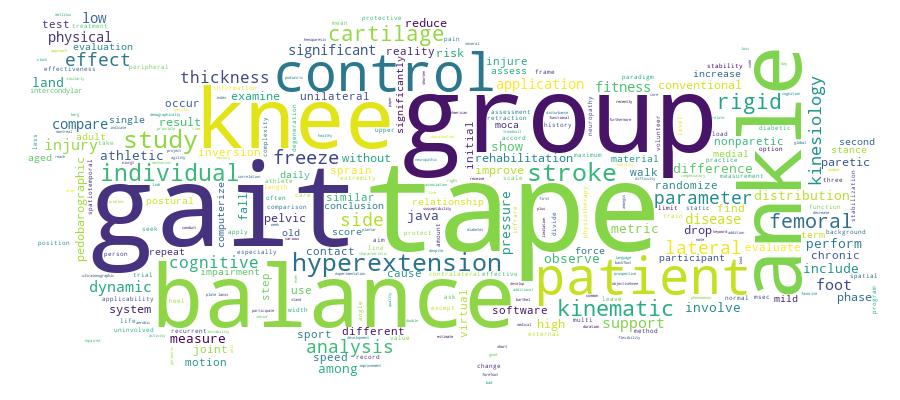
Competency Cloud

GCRIS Competency Cloud

Scholarly Output Search Results

Now showing 1 - 2 of 2
  • Article
    Knee Hyperextension in Chronic Stroke: Associated Biomechanical and Neuromuscular Factors
    (Elsevier Sci Ltd, 2025) Korkusuz, Sueleyman; Korkusuz, Busra Seckinogullari; Ozgoren, Nihat; Aritan, Serdar; Ceren, Ali Naim; Topcuoglu, Mehmet Akif; Balkan, Ayla Fil
    Background: This study aimed to determine the gait phase in which knee hyperextension occurs in stroke patients and to investigate the factors associated with knee hyperextension. Methods: This study included 30 stroke patients aged between 40 and 70 years with maximum knee hyperextension during the stance phase of gait. Muscle strength was evaluated with manual muscle test, and muscle tone was assessed with the Modified Ashworth Scale. Kinematic evaluation of the patients was made using the motion analysis system. Additionally, categorisation was made according to the stance phase of gait, where knee hyperextension was at its highest. Findings: A weak relationship was found between maximum knee hyperextension angle and gastrocnemius spasticity, a moderate relationship between knee flexor muscle strength, and a moderate relationship between ankle dorsiflexor muscle strength. In addition, a weak relationship was found between the maximum knee hyperextension and pelvic retraction angles. According to this clustering, it was observed that 66.67 % of the participants (20 people) showed maximum knee hyperextension in the single support phase. It was observed that the participants who had maximum knee hyperextension, especially after the mid-stance phase, had higher mean gastrocnemius spasticity. It was also observed that participants in Cluster 4, with a greater amount of maximum knee hyperextension, had the worst clinical parameters. Interpretation: Our study observed that the degree of maximum knee hyperextension was related to knee flexor and ankle dorsiflexor muscle strengths, gastrocnemius spasticity and pelvic retraction. As clinical parameters worsened, maximum knee hyperextension was thought to occur late in the stance phase. Clinical Trial code: NCT05679700
  • Article
    Effect of Freezing Phenomenon on Gait Parameters and Pedobarographic Pressure Distribution in Patients with Parkinson's Disease
    (Springer-Verlag Italia Srl, 2025) Korkusuz, Suleyman; Korkusuz, Busra Seckinogullari; Demircan, Emine Nur; Ozcan, Aysenur; Cakmakli, Gul Yalcin; Balkan, Ayla Fil; Elibol, Bulent
    Background This study aimed to examine the gait parameters of individuals with Parkinson's Disease with and without freezing of gait (FoG) on the treadmill, where freezing difficulty decreases. Methods Our study included three groups of demographically similar individuals: 15 patients with Parkinson's disease without freezing of gait, 14 patients with Parkinson's disease with freezing of gait, and 14 healthy controls. Spatiotemporal parameters of gait and static-dynamic pedobarographic pressure distribution analysis were performed using a computerized gait evaluation system (on a treadmill). Results The step length, gait speed and gait phase duration of the freezing of gait group were lower than the other groups (p < 0.05). While pedobarographic pressure distribution during static stance was similar in all groups (p > 0.05), pedobarographic pressure distribution during gait was different between groups (p < 0.05). Conclusion In patients with freezing of gait, gait speed was lower, step length and single support phase were shorter, and double support phase was longer. While the amount of load on the backfoot was lower in both Parkinson's groups, the amount of load on the forefoot was lower only in patients with freezing of gait. Even if freezing of gait did not occur, it was observed that the gait characteristics of Parkinson's disease with freezing of gait were different from those of Parkinson's disease without freezing of gait.