
Gülen, Merter
Loading...
Profile URL
Name Variants
Merter, Gülen
M.,Gülen
Merter, Gulen
M.,Gulen
Gülen,M.
Gulen M.
M., Gulen
Gulen,M.
G., Merter
G.,Merter
Gulen, M
Gulen, Merter
Gülen, Merter
M., Gülen
M.,Gülen
Merter, Gulen
M.,Gulen
Gülen,M.
Gulen M.
M., Gulen
Gulen,M.
G., Merter
G.,Merter
Gulen, M
Gulen, Merter
Gülen, Merter
M., Gülen
Job Title
Doktor Öğretim Üyesi
Email Address
merter.gulen@atilim.edu.tr
Main Affiliation
Surgical Sciences
Status
Website
ORCID ID
Scopus Author ID
Turkish CoHE Profile ID
Google Scholar ID
WoS Researcher ID
Sustainable Development Goals
SDG data is not available

Documents
13
Citations
48
h-index
4

Documents
15
Citations
48

Scholarly Output
10
Articles
7
Views / Downloads
20/0
Supervised MSc Theses
0
Supervised PhD Theses
0
WoS Citation Count
9
Scopus Citation Count
7
Patents
0
Projects
0
WoS Citations per Publication
0.90
Scopus Citations per Publication
0.70
Open Access Source
5
Supervised Theses
0
| Journal | Count |
|---|---|
| Bratislava Medical Journal | 2 |
| Frontiers in Surgery | 1 |
| Journal of medicine and palliative care (Online) | 1 |
| Journal of the College of Physicians and Surgeons Pakistan | 1 |
| Minerals, Metals and Materials Series – 11th International Symposium on High-Temperature Metallurgical Processing, held in conjunction with the 149th Annual Meeting and Exhibition, TMS 2020 – San Diego, CA – 236769 | 1 |
Current Page: 1 / 2
Scopus Quartile Distribution
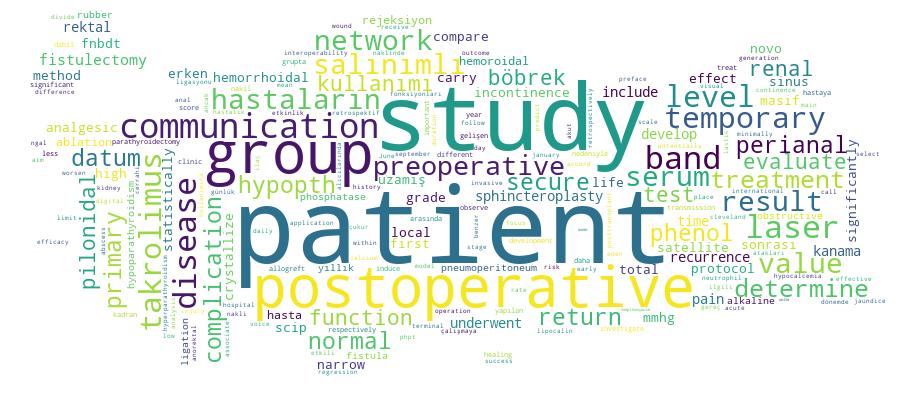
Competency Cloud
5 results
Scholarly Output Search Results
Now showing 1 - 5 of 5
Article Fistulectomy and Primary Sphincteroplasty for Transsphincteric Fistula(Coll Physicians & Surgeons Pakistan, 2025) Emral, Ahmet Cihangir; Gulen, Merter; Ege, BahadirObjective: To evaluate the results of patients treated with fistulectomy and primary sphincteroplasty for uncomplicated perianal fistula. Study Design: Observational study. Place and Duration of the Study: Medicana International Hospital affiliated with Atilim University, Faculty of Medicine, Ankara, Turkiye, from January 2020 to September 2023. Methodology: In this study, patients who were operated on for perianal fistula between 2020 and 2023 were retrospectively examined. Data were obtained retrospectively. All patients underwent preoperative perianal MRI. Clinical notes were evaluated with the Cleveland Clinic Incontinence Score (CCIS) by physical examination. All patients were followed up on the first postoperative day, 1st week, 1st and 3rd postoperative months. Results: A total of 44 patients who underwent fistulectomy with primary sphincteroplasty were included in the study. Twenty-six patients (59.1%) had a history of perianal abscesses. It was observed that 34 (77.3%) of the patients had posterior, 7 (15.9%) anterior, and 3 (6.8%) lateral fistulas. A total of 3 patients (6.8%) were observed to have minor worsening in their incontinence scores. There was no statistically significant difference between the preoperative and postoperative 3rd month Cleveland Clinic Incontinence Score values of the patients (CCIS mean 1.6 vs. 1.7, respectively, p >0.05). Recurrence was observed in 1 patient (2.3%) during follow-ups. Conclusion: Fistulectomy with primary sphincteroplasty is an effective and reliable method to preserve anal continence and improve quality of life.Article Importance of Alkaline Phosphatase as a Predictor of Transient Hypoparathyroidism After Parathyroidectomy(Springernature, 2025) Gulen, Merter; Emral, Ahmet Cihangir; Sariyildiz, Gulcin TurkmenBackgroundThere are insufficient studies that have investigated the relationship between temporary hypoparathyroidism (hypoPTH) and the preoperative serum alkaline phosphatase (ALP) level in patients with no renal function disorder who have undergone isolated parathyroidectomy. The aim of this study was to determine whether or not the preoperative serum ALP level could be a marker which could predict the development of postoperative temporary hypoPTH. MethodsThis cross-sectional study included 158 patients aged > 18 years who were diagnosed with primary hyperparathyroidism (PHPT) between 2017 and 2022. The demographic data of the patients were retrieved from the hospital records. The patients were separated into two groups according to the serum calcium level after the parathyroidectomy, as the normal group and the temporary hypoPTH group. The determinants of temporary hypoPTH developing after parathyroidectomy in PHPT patients were investigated using multivariate logistic regression analysis. ResultsTemporary hypoPTH was determined in 25.3% of patients. The mean age and 25-O-HD level were determined to be lower in the patients who developed temporary hypoPTH compared to those who did not. The preoperative serum ALP, parathormone, and 24-h urine calcium levels were determined to be higher in the cases that developed temporary hypoPTH. As a result of the regression analysis, only the serum ALP level was determined to be an independent risk factor predicting the development of temporary hypoPTH (p: 0.005, OR: 1.021). In the ROC analysis, when a cutoff value of 119.5 pg/mL was taken for ALP, it was determined to have 73% sensitivity and 72% specificity for the prediction of the development of temporary hypoPTH. ConclusionsThe most appropriate treatment for symptomatic PHPT patients selected with positive imaging is minimally invasive parathyroidectomy. The most important postoperative complications are hypocalcemia and hypoPTH. The preoperative serum ALP level may be helpful in determining patients at risk of developing temporary hypoPTH following parathyroidectomy.Article Citation - WoS: 1Hemoroid Lastik Band Ligasyonu Komplikasyonlarının Yönetimi: Masif Rektal Kanama(Galenos Publ House, 2024) Gülen, Merter; Emral, Ahmet Cihangir; Ege, BahadırAmaç: Çalışmanın amacı, hemoroidal hastalıkta cerrahi dışı tedavi seçeneklerinden biri olan lastik band ligasyonunu (RBL) ve buna bağlı gelişen komplikasyonları irdelemektir. Morbiditesi nedeniyle önem arz eden masif rektal kanama komplikasyonunun yönetimini sunmaktır. Gereç ve Yöntem: Evre 1-2 ve 3 internal hemoroidal hastalık nedeniyle 2018-2022 yılları arasında kliniğimizde RBL yapılan 564 hasta retrospektif olarak irdelenmiştir. Gebelik durumu, geçirilmiş anorektal cerrahi, kronik karaciğer hastalığı ve antikoagülan kullanımı nedeniyle 72 hasta çalışma dışında bırakılmıştır. Hastaların 492’si çalışmaya dahil edilmiştir. Tüm hastalara proktoloji ünitesinde detaylı anorektal muayene, 50 yaş üstündekilere ise kolonoskopik değerlendirme yapılmıştır. Hastaların demografik özellikleri, gelişen komplikasyonlar (minör/majör) ve uygulanan band ligasyon sayısı standardize edilmiş formlara kayıt edildi. Bulgular: Hastaların ortalama yaşı 33,4±11 (18-65) yıl olup, 385’i (%78,3) erkek, 107’si (%21,7) kadındı. Hastaların 39’una (%8) tek kadran, 448 hastaya (%91) iki kadran ve 5 hastaya üç kadran RBL uygulandı. RBL sonrası minör komplikasyonlar (anal ağrı, vazovagal semptomlar, minör rektal kanama, üriner retansiyon) yirmi hastada (%4) gelişirken, hastaların 4’ünde (%0,8) masif rektal kanama meydana gelmiştir. Masif rektal kanama gelişen hastaların hepsi acil şartlarda hospitalize edildi ve operasyona alındı. Bu hastaların birine 3 ünite, üç hastaya ise 4 ünite eritrosit transfüzyonu yapıldı. Sonuç: Hemoroidal band ligasyonu, hemoroidal hastalık tedavisinde güvenli ve etkili bir yöntemdir. Ancak hayatı tehdit edecek ciddi kanamalara yol açabileceği göz önünde bulundurulmalıdır.Article Citation - WoS: 6Citation - Scopus: 6Evaluating Efficacy and Outcomes: Comparison of Laser Treatment and Crystallized Phenol in Pilonidal Sinus Disease(Frontiers Media Sa, 2025) Emral, Ahmet Cihangir; Gulen, Merter; Ege, BahadirObjective The aim of this study is to comprehensively evaluate the efficacy of laser ablation and crystallized phenol application in the treatment of pilonidal sinus disease, focusing on treatment success, recurrence rates, complications, and the patients' return to normal life.Material and method Data from patients treated for pilonidal sinus disease with laser ablation and crystallized phenol application at our clinic between January 2020 and September 2023 were retrospectively reviewed. Preoperative data including pit counts, disease stage, preoperative pilonidal abscess history, disease duration (week), treatment success, recurrence/persistent disease, postoperative complications, healing time (days), and visual analogue scale (VAS) scores on postoperative days 1 and 7, as well as return to normal life (days), were analyzed.Results A total of 121 patients were included in the study, with 51 receiving laser ablation and 70 receiving crystallized phenol application. The postoperative outcomes revealed that the wound healing period and postoperative VAS values were statistically significantly better in the laser ablation group.Conclusion Wound healing was faster and postoperative pain was less in the laser group compared to the phenol group. According to this study, both methods can successfully treat the disease in selected cases.Article Which Technique Is Preferable for Grade 2-3 Hemorrhoidal Disease: Laser Vs. Rubber Band Ligation ? A Retrospective Study(Springernature, 2025) Emral, Ahmet Cihangir; Gulen, Merter; Ege, BahadirBackground The aim of this study is to compare the short and long-term results (postoperative pain, complications, return to daily life, recurrence) between patients who underwent laser hemorrhoidoplasty (LH) and rubber band ligation (RBL) due to grade 2-3 hemorrhoidal disease. Methods The results of patients who underwent LH and RBL between June 2020 and June 2023 for grade 2-3 hemorrhoidal disease were evaluated retrospectively. The patient information was examined in terms of operation time, postoperative 1st, 7th and 14th day visual analog scale (VAS) values, the amount of analgesic used in the first 7 postoperative days, return to normal life (days), recurrence within 1 year and other complications (postoperative bleeding, thrombosis, urinary retention, infection/abscess, anal stenosis, deterioration in continence). Results A total of 260 patients were included in the study, 166 of whom underwent RBL and 94 LH. Operation time, VAS values, postoperative 7-day analgesic use (mg), worsening of incontinence, time to return to normal life (days), complications and recurrence within 1 year evaluated. LH has statistically significant lower postoperative 1st day pain and less analgesic use (mg) than RBL (p < 0.001). Conclus & imath;ons LH and RBL both offer effective treatment options for grade 2-3 hemorrhoidal disease, with comparable recurrence rates and time to return to normal life. However, LH is associated with significantly less postoperative pain and analgesic use on the first postoperative day, potentially enhancing patient satisfaction.
