Tokdemir, Gül

Loading...
Profile Picture
Name Variants
G., Tokdemir
Gül, Tokdemir
Tokdemir, Gül
Tokdemir, Gul
G.,Tokdemir
T.,Gul
Tokdemir,G.
Gul, Tokdemir
T., Gul
T.,Gül
Job Title
Öğretim Görevlisi
Email Address
Main Affiliation
Computer Engineering
Status
Former Staff
Website
ORCID ID
Scopus Author ID
Turkish CoHE Profile ID
Google Scholar ID
WoS Researcher ID

Sustainable Development Goals

NO POVERTY1
NO POVERTY
0
Research Products
ZERO HUNGER2
ZERO HUNGER
0
Research Products
GOOD HEALTH AND WELL-BEING3
GOOD HEALTH AND WELL-BEING
0
Research Products
QUALITY EDUCATION4
QUALITY EDUCATION
4
Research Products
GENDER EQUALITY5
GENDER EQUALITY
0
Research Products
CLEAN WATER AND SANITATION6
CLEAN WATER AND SANITATION
0
Research Products
AFFORDABLE AND CLEAN ENERGY7
AFFORDABLE AND CLEAN ENERGY
0
Research Products
DECENT WORK AND ECONOMIC GROWTH8
DECENT WORK AND ECONOMIC GROWTH
0
Research Products
INDUSTRY, INNOVATION AND INFRASTRUCTURE9
INDUSTRY, INNOVATION AND INFRASTRUCTURE
0
Research Products
REDUCED INEQUALITIES10
REDUCED INEQUALITIES
0
Research Products
SUSTAINABLE CITIES AND COMMUNITIES11
SUSTAINABLE CITIES AND COMMUNITIES
0
Research Products
RESPONSIBLE CONSUMPTION AND PRODUCTION12
RESPONSIBLE CONSUMPTION AND PRODUCTION
0
Research Products
CLIMATE ACTION13
CLIMATE ACTION
0
Research Products
LIFE BELOW WATER14
LIFE BELOW WATER
0
Research Products
LIFE ON LAND15
LIFE ON LAND
0
Research Products
PEACE, JUSTICE AND STRONG INSTITUTIONS16
PEACE, JUSTICE AND STRONG INSTITUTIONS
0
Research Products
PARTNERSHIPS FOR THE GOALS17
PARTNERSHIPS FOR THE GOALS
0
Research Products
This researcher does not have a Scopus ID.
This researcher does not have a WoS ID.
Scholarly Output

23

Articles

8

Views / Downloads

15/0

Supervised MSc Theses

0

Supervised PhD Theses

0

WoS Citation Count

26

Scopus Citation Count

91

Patents

0

Projects

0

WoS Citations per Publication

1.13

Scopus Citations per Publication

3.96

Open Access Source

4

Supervised Theses

0

JournalCount
PeerJ Computer Science2
IEEE International Symposium on Personal, Indoor and Mobile Radio Communications, PIMRC -- 18th Annual IEEE International Symposium on Personal, Indoor and Mobile Radio Communications, PIMRC'07 -- 3 September 2007 through 7 September 2007 -- Athens -- 721052
Lecture Notes in Computer Science (including subseries Lecture Notes in Artificial Intelligence and Lecture Notes in Bioinformatics) -- 17th International Conference on Human-Computer Interaction, HCI International 2015 -- 2 August 2015 through 7 August 2015 -- Los Angeles -- 1238292
7th ACM International Conference on Bioinformatics, Computational Biology, and Health Informatics (ACM-BCB) -- OCT 02-05, 2016 -- Seattle, WA1
E-Health And Bioengineering Conference (EHB) -- NOV 19-21, 2015 -- Iasi, ROMANIA1
Current Page: 1 / 4

Scopus Quartile Distribution

Competency Cloud

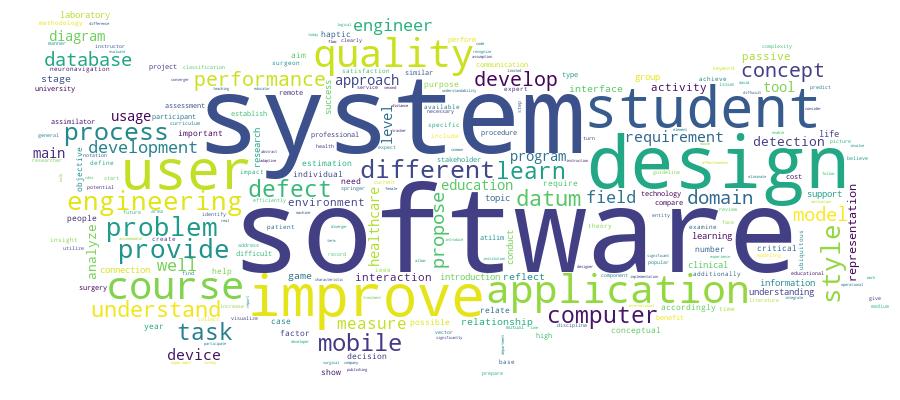
GCRIS Competency Cloud

Scholarly Output Search Results

Now showing 1 - 4 of 4
  • Article
    Remote Laboratory Development as an Action Research: a Case Study
    (2012) Çağıltay, Nergiz; Tokdemir, Gül; Aydın, Elif; Kara, Ali
    This work presents a case study about how action research (AR) has been conducted in developing a real-life educational system. An explanation is given of the modified implementation of the classical AR methodology, based on the requirements of a remote laboratory system developed for the vocational training of students in higher education. This study reports a successful implementation of AR stages which established for the development process of a remote laboratory system along with the design of several research questions explored in each step of the system development process. It is believed that the outcomes of the study will help AR implementers to organize their research objectives, more appropriately, by addressing the organizational problems. The results of this study are also expected to guide the AR implementers to better integrate their research in solving domain specific practical problems.
  • Article
    A Concept Map Approach for Introduction To Computer Engineering Course Curriculum
    (IEEE EDUCON Education Engineering 2010, 2010) Tokdemir, Gül; Çağıltay, Nergiz
    As in any discipline, in Computer Engineering, students start learning the basic concepts of the discipline in their first year through an Introduction to Computer Engineering course. The topics toughed in this course can be grouped into two. The first group includes simple concepts like binary numbering system, hard disk, memory, and I/O devices. In the second group, and introduction to the courses that they will take in the next semesters of the program which includes programming, networking, software engineering, artificial intelligence and database systems. The main objective of this course is to give an introduction about the general concepts of the field to the first year Computer Engineering students and prepare them to understand the connections between them for their future studies. However, students and instructors face with many problems in this course. First, because of the diversity of the concepts given in the course, it is very diffucult for the students to see the big picture of the Computer Engineering domain. Similarly, it is diffucult for the instructors to prepare the course content in an integrated manner at the students' level. Additionally, the perception of the theory and practice behind the hardware and software topics and their connections is not an easy task for the beginners. Moreover, the topics are mostly abstract topics, which do not allow application of any laboratory sessions. Students usually find this course diffucult to understand, which decreases their motivation about the department and success of the course. This study is established to propose a concept map approach to better visualize and discover all the connections between the concepts of Computer Engineering field which can be used in the curriculum of the programs and introductory courses of the field addressing the above problems. The proposed concept map helps to visualize the general picture of the field.
  • Article
    A Mobile Application Flow Representation for Mutual Understanding of It and Healthcare Professionals
    (2013) Erturan, Yusuf Nasuh; Bilgen, Semih; Tokdemir, Gül; Çağıltay, Nergiz; Yıldız, Ekrem; Özcebe, Esra
    Ever since mobile applications were developed and became popular, they have started to take part in almost every field of our lives. Healthcare is one of the most popular fields that mobile applications have become a part of. However, development of mobile healthcare applications requires an inter disciplinary work on which people from different domains should communi cate. To do so efficiently, mobile application instructions should be provided as clearly as possible so that mutual understanding can be achieved. This study, aims to provide a methodology to provide the common grounds for healthcare and IT specialists so that to improve the satisfaction level of all the stakeholders of the system from the provided IT services and the end-user interfaces. In other words, by providing a better communication medium for the stakeholders dur ing the design phase, we believe that software development process will be improved, so do their satisfaction from the developed system.
  • Article
    Using Learning Style Theory in Remote Laboratory Applications
    (IEEE, 2007) Tokdemir, Gül; Çağıltay, Nergiz
    Studies have shown that, while learning different concepts, people sometimes use different approaches. These different approaches define individual learning styles. Understanding learning style differences is thus an important step in improving performance of the individuals and educational institutions. In this study, a learning style assessment tool was used to examine the relationship between students’ learning styles and their performance in engineering education programs of Atilim University. 329 students (55 female) participated in this study. At their first year in the program, students’ learning styles are measured by a learning style assessment tool developed by David Kolb. The results show that, at the Atilim University’s engineering education program, most of the students are having assimilator type of learning style (45%). Convergers (27%) and divergers (22%) follow the assimilators. The number of accommodators is very limited (5%). This information can be used to create adaptive teaching environments in distance education courses.