
Akbaş Uslu, Gülçin
Loading...
Profile URL
Name Variants
Gulcin, Akbas Uslu
G.,Akbas Uslu
G., Akbaş Uslu
Akbas Uslu,G.
A., Gülçin
Akbaş Uslu, Gülçin
A.,Gulcin
A.U.Gülçin
Akbas Uslu, Gulcin
A.,Gülçin
G., Akbas Uslu
Gülçin, Akbaş Uslu
A. U. Gülçin
Akbaş Uslu,G.
G.,Akbaş Uslu
Gülçin Akbaş Uslu
A., Gulcin
Akbas Uslu,Gulcin
A. U. Gulcin
Akbaş,G.
Akbas, Gulcin
Akbaş, Gülçin
G.,Akbas Uslu
G., Akbaş Uslu
Akbas Uslu,G.
A., Gülçin
Akbaş Uslu, Gülçin
A.,Gulcin
A.U.Gülçin
Akbas Uslu, Gulcin
A.,Gülçin
G., Akbas Uslu
Gülçin, Akbaş Uslu
A. U. Gülçin
Akbaş Uslu,G.
G.,Akbaş Uslu
Gülçin Akbaş Uslu
A., Gulcin
Akbas Uslu,Gulcin
A. U. Gulcin
Akbaş,G.
Akbas, Gulcin
Akbaş, Gülçin
Job Title
Doktor Öğretim Üyesi
Email Address
gulcin.akbasuslu@atilim.edu.tr
Main Affiliation
Department of Psychology
Status
Website
ORCID ID
Scopus Author ID
Turkish CoHE Profile ID
Google Scholar ID
WoS Researcher ID
Sustainable Development Goals
 1
1NO POVERTY
0
Research Products
 2
2ZERO HUNGER
0
Research Products
 3
3GOOD HEALTH AND WELL-BEING
0
Research Products
 4
4QUALITY EDUCATION
0
Research Products
 5
5GENDER EQUALITY
4
Research Products
 6
6CLEAN WATER AND SANITATION
0
Research Products
 7
7AFFORDABLE AND CLEAN ENERGY
0
Research Products
 8
8DECENT WORK AND ECONOMIC GROWTH
0
Research Products
 9
9INDUSTRY, INNOVATION AND INFRASTRUCTURE
0
Research Products
 10
10REDUCED INEQUALITIES
2
Research Products
 11
11SUSTAINABLE CITIES AND COMMUNITIES
0
Research Products
 12
12RESPONSIBLE CONSUMPTION AND PRODUCTION
0
Research Products
 13
13CLIMATE ACTION
0
Research Products
 14
14LIFE BELOW WATER
0
Research Products
 15
15LIFE ON LAND
0
Research Products
 16
16PEACE, JUSTICE AND STRONG INSTITUTIONS
2
Research Products
 17
17PARTNERSHIPS FOR THE GOALS
3
Research Products

This researcher does not have a Scopus ID.

Documents
16
Citations
294

Scholarly Output
12
Articles
10
Views / Downloads
11/0
Supervised MSc Theses
0
Supervised PhD Theses
0
WoS Citation Count
100
Scopus Citation Count
110
Patents
0
Projects
0
WoS Citations per Publication
8.33
Scopus Citations per Publication
9.17
Open Access Source
7
Supervised Theses
0
| Journal | Count |
|---|---|
| Sex Roles | 2 |
| Cyberfeminism and Gender Violence in Social Media | 1 |
| Examining Complex Intergroup Relations: Through the Lens of Turkey | 1 |
| İstanbul Gelişim Üniversitesi Sosyal Bilimler Dergisi | 1 |
| Journal of Adult Development | 1 |
Current Page: 1 / 3
Scopus Quartile Distribution
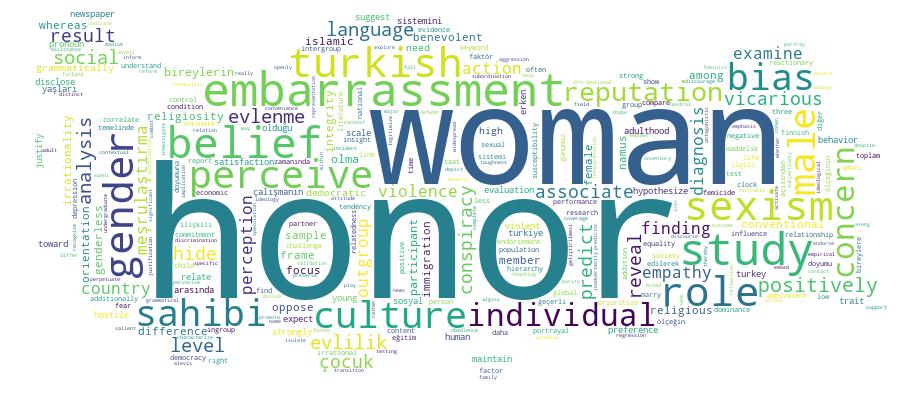
Competency Cloud
5 results
Scholarly Output Search Results
Now showing 1 - 5 of 5
Article Citation - WoS: 1Liking Low-Status? Contextual and Individual Differences in Attributional Biases of Low-Status Outgroup Members(Psychopen, 2019) Besta, Tomasz; Akbas, Gulcin; Renstrom, Emma A.; Kosakowska-Berezecka, Natasza; Vazquez, AlexandraPrevious studies on biased intergroup perceptions of outgroups' irrationality mostly treated the target groups as opponents and rivals. In three studies, we extended this line of research and tested the hypothesis that individuals who challenge the existing social hierarchy exhibit more positive biases toward low-status outgroup members. We also hypothesized that when irrational thinking is framed as an important human trait, this bias is reduced among low social dominance orientation (SDO) individuals. In three studies (N = 169, N = 450, and N = 161), conducted in countries that vary in power distance levels (Poland, Spain, Sweden and Turkey), we examined under which conditions low-status outgroups are perceived as more rational than ingroup members. The results show that in a condition without irrationality framed as a human trait, psychology students (Study 1 and Study 2) and nonstudents low in group-based dominance orientation (Study 3) perceive outgroup members as less irrational than ingroup members. However, when participants were reminded that irrationality is a human trait, the perceived differences between in- and outgroup members were reduced. This effect was observed in all four countries (Study 1 and Study 2) and held when variables related to the tendency to behave in a socially desirable way were controlled for (Study 3).Article Citation - WoS: 6Citation - Scopus: 8Validation and Correlates of the Vicarious Embarrassment Scale(Pergamon-elsevier Science Ltd, 2014) Uysal, Ahmet; Akbas, Gulcin; Helvaci, Elif; Metin, IremVicarious embarrassment can be defined as embarrassment resulting from witnessing embarrassing behaviors of strangers. We developed a scale to measure individual differences in the tendency to experience vicarious embarrassment, and examined its association with related constructs. In Study 1, we found that vicarious embarrassment is associated positively with susceptibility to embarrassment, empathy, perspective-taking, and fear of negative evaluation, while it is associated negatively with self-esteem. In Study 2, we found that vicarious embarrassment is uniquely associated with embarrassment in response to a poor performance of a stranger on a TV show, independent of susceptibility to embarrassment, empathy, perspective-taking, and fear of negative evaluation. Although the limited literature on this topic focused on the role of empathy in this type of embarrassment, these findings suggest that there is more to vicarious embarrassment than empathy or perspective-taking. (C) 2013 Elsevier Ltd. All rights reserved.Article Citation - WoS: 68Citation - Scopus: 76Why Do Women Endorse Honor Beliefs? Ambivalent Sexism and Religiosity as Predictors(Springer/plenum Publishers, 2016) Glick, Peter; Sakalli-Ugurlu, Nuray; Akbas, Gulcin; Orta, Irem Metin; Ceylan, SuzanCultures of honor, such as Turkey, prioritize defending individual and family reputations, but in gender-specific ways (Nisbett and Cohen 1996). Men maintain honor via reputations for toughness, aggression, control over women, and avenging insults. Women maintain honor through obedience to men, sexual modesty, and religious piety. Honor beliefs support women's subordination, justifying violence against them (Sev'er and Yurdakul, Violence against Women, 7, 964-998, 2001) and therefore should be challenged. Understanding honor beliefs' ideological correlates may inform such efforts. We hypothesized that benevolent sexism, a subjectively favorable system-justifying ideology, would more strongly, positively predict Turkish women's (versus men's) honor beliefs; whereas hostile sexism, which is openly antagonistic toward women, would more strongly, positively predict Turkish men's (versus women's) honor beliefs. Additionally, due to justifications for gender inequality embedded in Islamic religious teachings, we expected Islamic religiosity to positively predict honor beliefs for both genders. A convenience sample of Turkish undergraduates (313 women and 122 men) in Ankara completed the Ambivalent Sexism Inventory, Religious Orientation Scale, and Honor Endorsement Index. Regression analyses revealed that benevolent (but not hostile) sexism positively predicted women's honor beliefs, whereas hostile (but not benevolent) sexism positively predicted men's honor beliefs. Islamic religiosity positively predicted honor beliefs for both genders, but (unexpectedly) did so more strongly for men than women. We suggest that combating benevolent sexism and promoting feminist interpretations of Islamic religiosity may help to empower Turkish women to challenge honor beliefs.Article Citation - WoS: 7Citation - Scopus: 8Young Adults' Perceptions of Social Clock and Adulthood Roles in the Turkish Population(Springer/plenum Publishers, 2019) Pekel-Uludagli, Nilay; Akbas, GulcinThe aim of this study was to examine how adulthood roles (marriage and parenthood) and the perceived timing of the achievement of these roles (early, on-time, late) were related to well-being (depression and life satisfaction) and need satisfaction (autonomy, competence, and relatedness) in young adults. The sample consisted of 433 female and 244 male (N = 685) participants. Results revealed that individuals who perceived themselves as on-time for marriage reported higher levels of well-being and need satisfaction compared with individuals who perceived themselves as early or late. In addition, individuals who perceived themselves as having children on-time reported lower levels of depression and higher levels of need satisfaction compared with individuals who perceived themselves as early. For female participants, employed women have higher relatedness than non-employed women. In addition, married participants have more relatedness and life-satisfaction, and less depression than unmarried participants. The results suggest that fulfilling adulthood roles and the perceived timing of these roles affects well-being and need satisfaction.Article Evlilik İle Çocuk Sahibi Olmaya İlişkin Sosyal Saat Algısı ve Evlilik Doyumu(2019) Pekel, Nilay Uludağlı; Akbaş, GülçinGünümüz toplumlarında bireylerin evlenme ve çocuk sahibi olma yaşlarının giderek arttığıgörülmektedir. İlgili yazında ise bireylerin evlenme ve çocuk sahibi olma zamanlamalarındakifarklılıkların, evlilik yaşantılarının kalitesiyle ilişkili olduğu ortaya konmuştur. Bu kapsamdayapılan bu çalışmanın amacı, günümüz Türkiye’sindeki genç yetişkinlerin, evlenme ve ilk kezçocuk sahibi olmalarındaki zamanlamalarının, evlilik doyumlarıyla ilişkisini incelemektir.Çalışmaya 24-41 yaşları arasında 445 evli birey katılmıştır. Katılımcılar, kendi evlenme veçocuk sahibi olma yaşları ile ideal gördükleri evlenme ve çocuk sahibi olma yaşları temelinde;erken, zamanında ve geç olarak gruplandırılarak karşılaştırılmıştır. Eğitim ve gelirin olası etkisikontrol edilerek yapılan kovaryans analizlerinde evlenme açısından sosyal saatini zamanındaalgılayan bireylerin, erken ve geç algılayan bireylere göre daha yüksek evlilik doyumuna sahipoldukları bulunmuştur. Çocuk sahibi olma açısından sosyal saat grupları, eğitim ve gelirinolası etkisi kontrol edilerek karşılaştırıldığında, erken gruptaki bireylerin, zamanında ve geçgruptaki bireylere göre daha düşük evlilik doyumuna sahip oldukları görülmüştür. Araştırmabulguları evlenme ve çocuk sahibi olmadaki zamanlamanın evlilik doyumu ile ilişkili olduğunugöstermiştir.
