Topal, Cansu Akdağ

Loading...
Profile Picture
Name Variants
Topal,C.A.
T.,Cansu Akdag
C.A.Topal
C., Topal
Topal, Cansu Akdağ
Cansu Akdag, Topal
T., Cansu Akdag
T.,Cansu Akdağ
Cansu Akdağ, Topal
C.,Topal
Topal, Cansu Akdag
Job Title
Doktor Öğretim Üyesi
Email Address
cansu.akdag@atilim.edu.tr
Main Affiliation
Nursing
Status
Former Staff
Website
ORCID ID
Scopus Author ID
Turkish CoHE Profile ID
Google Scholar ID
WoS Researcher ID

Sustainable Development Goals

14

LIFE BELOW WATER
LIFE BELOW WATER Logo

0

Research Products

2

ZERO HUNGER
ZERO HUNGER Logo

0

Research Products

11

SUSTAINABLE CITIES AND COMMUNITIES
SUSTAINABLE CITIES AND COMMUNITIES Logo

0

Research Products

1

NO POVERTY
NO POVERTY Logo

0

Research Products

12

RESPONSIBLE CONSUMPTION AND PRODUCTION
RESPONSIBLE CONSUMPTION AND PRODUCTION Logo

0

Research Products

7

AFFORDABLE AND CLEAN ENERGY
AFFORDABLE AND CLEAN ENERGY Logo

0

Research Products

5

GENDER EQUALITY
GENDER EQUALITY Logo

1

Research Products

3

GOOD HEALTH AND WELL-BEING
GOOD HEALTH AND WELL-BEING Logo

2

Research Products

9

INDUSTRY, INNOVATION AND INFRASTRUCTURE
INDUSTRY, INNOVATION AND INFRASTRUCTURE Logo

0

Research Products

13

CLIMATE ACTION
CLIMATE ACTION Logo

0

Research Products

6

CLEAN WATER AND SANITATION
CLEAN WATER AND SANITATION Logo

0

Research Products

10

REDUCED INEQUALITIES
REDUCED INEQUALITIES Logo

0

Research Products

4

QUALITY EDUCATION
QUALITY EDUCATION Logo

1

Research Products

15

LIFE ON LAND
LIFE ON LAND Logo

0

Research Products

16

PEACE, JUSTICE AND STRONG INSTITUTIONS
PEACE, JUSTICE AND STRONG INSTITUTIONS Logo

1

Research Products

17

PARTNERSHIPS FOR THE GOALS
PARTNERSHIPS FOR THE GOALS Logo

1

Research Products

8

DECENT WORK AND ECONOMIC GROWTH
DECENT WORK AND ECONOMIC GROWTH Logo

0

Research Products
This researcher does not have a Scopus ID.
This researcher does not have a WoS ID.
Scholarly Output

11

Articles

7

Views / Downloads

1/0

Supervised MSc Theses

4

Supervised PhD Theses

0

WoS Citation Count

24

Scopus Citation Count

27

WoS h-index

2

Scopus h-index

2

Patents

0

Projects

0

WoS Citations per Publication

2.18

Scopus Citations per Publication

2.45

Open Access Source

4

Supervised Theses

4

Google Analytics Visitor Traffic

JournalCount
Women & Health2
Archives of Psychiatric Nursing1
Balıkesir Sağlık Bilimleri Dergisi (BSBD)1
Journal of Health Psychology1
Nurse Education in Practice1
Current Page: 1 / 2

Scopus Quartile Distribution

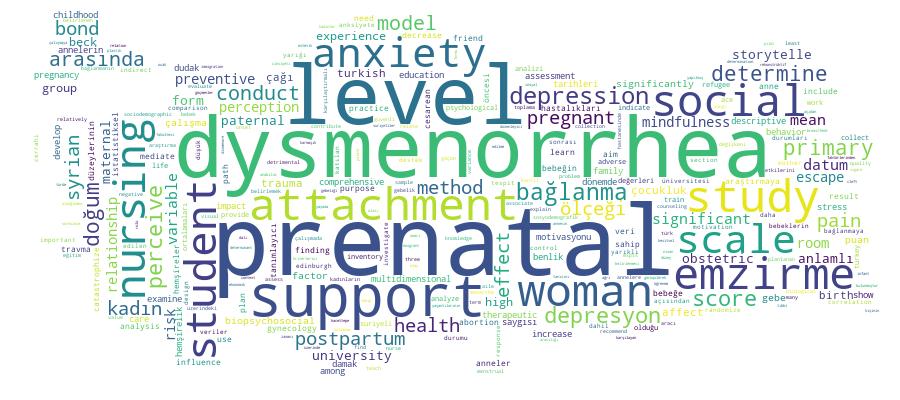
Competency Cloud

GCRIS Competency Cloud

Scholarly Output Search Results

Now showing 1 - 2 of 2
  • Master Thesis
    Üniversite Öğrencilerinde Primer Dismenoreyi Belirleyen Biyopsikososyal Faktörlerin İncelenmesi
    (2023) Öksüz, Canan; Topal, Cansu Akdağ; Boztepe, Handan
    Dysmenorrhea is a widespread problem in women's health that has a detrimental impact on many facets of life and quality of life. In addition to being one of the most prevalent gynecological problems in women, dysmenorrhea is affected by many factors. This study, conducted on university students, aimed to examine the biopsychosocial factors determining primary dysmenorrhea, the nature of which is quite complex. This descriptive cross-sectional study was conducted at Atılım University between 01.11.2022 and 20.12.2022. The sample size was determined using the sampling calculation formula, and a totl of 339 students participated in the study. Dysmenorrhea Data Collection Form, Beck Anxiety Inventory (BAI), Beck Depression Inventory (BDI), Multidimensional Scale of Perceived Social Support (MSPSS), Adverse Childhood Experience Questionnaire (ACEs), PainCatastrophizing Scale (PCS), and Visual Analog Scale (VAS) were used as data collection tools. The mean VAS score on which the students indicated the severity ofdysmenorrhea they have experienced between 0-10 was found to be 6.2±2.3. BAI mean score was 20.5±13.5, BDI mean score was 18.6±11.2, MSPSS mean score was 65.9±16.2, ACEs mean value was 1.5±1.1, and PCS mean value was 19.3±13.9. When the findings were analyzed, it was determined that onset of pain (t=3.37, p<0.001), age at menarche (t=- 3.21, p<0.05), PCS (t=16.98, p<0.001), BDI (t=5.13, p<0.05) and BAI (t=7.53, p<0.001) variables showed a significant relationship with iv primary dysmenorrhea. Age, grade, smoking status, alcohol consumption, body mass index, menstrual cycle, number of menstrual days, MSPSS, and ACEs variables in the model were found to have no significant relationship with primary dysmenorrhea (p>0.05). The data appears to suggest that primary dysmenorrhea could be related to biological and psychological factors. It is thought that the lack of a relationship between negative childhood experiences and perceived social support, which are among the social factors included in our model, and primary dysmenorrhea is due to the relatively high Multidimensional Scale of Perceived Social Support scores of the students and the relatively low scores of the Adverse Childhood Experience Questionnaire. Nurses should be aware of the biopsychosocial dimensions of primary dysmenorrhea in order to provide comprehensive assessment, education and counseling to women. Keywords: Anxiety, depression, dysmenorrhea, obstetric nursing, pain catastrophizing, social support
  • Article
    A comprehensive investigation of biopsychosocial determinants influencing primary dysmenorrhea among university students
    (Routledge Journals, Taylor & Francis Ltd, 2024) Yalvac, Canan Oksuz; Topal, Cansu Akdag; Boztepe, Handan
    Dysmenorrhea, characterized by pain and related symptoms, significantly impacts women's quality of life in work and education, prompting a comprehensive evaluation of associated factors. The objective of this study was to utilize structural equation modeling (SEM) to analyze and assess the biopsychosocial factors influencing dysmenorrhea among university students. Three hundred and thirty-nine university students were included in this cross-sectional descriptive study. Data were collected using the Participant Information Form, the Beck Anxiety Scale (BAS), the Beck Depression Scale (BDS), the Multidimensional Scale of Perceived Social Support (MSPSS), the Adverse Childhood Experiences Scale (ACES), the Pain Catastrophizing Scale (PCS) and the Visual Analogue Scale (VAS). It was determined that the variables of pain onset (t = 3.24, p < .05) and age at menarche (t = -2.16, p < .05) showed a significant relationship with the model. The variables of the PCS (t = 16.87, p < .001), BDS (t = 3.06, p < .05), and BAS (t = 5.13, p < .001) showed a significant relationship with the model. Social factors in the model were examined, and a family history of dysmenorrhea and the ACES variables did not contribute significantly to the model (p > .05). The study indicates primary dysmenorrhea influenced by biological and psychological factors. Nurses should conduct holistic assessments and provide comprehensive care for affected women.