Karakaya, Ziya

Loading...
Profile Picture
Name Variants
Karakaya, Z
K.,Ziya
Ziya, Karakaya
K., Ziya
Z., Karakaya
Karakaya,Z.
Karakaya, Ziya
Z.,Karakaya
Job Title
Doktor Öğretim Üyesi
Email Address
ziya.karakaya@atilim.edu.tr
Main Affiliation
Computer Engineering
Status
Former Staff
Website
ORCID ID
Scopus Author ID
Turkish CoHE Profile ID
Google Scholar ID
WoS Researcher ID

Sustainable Development Goals

NO POVERTY1
NO POVERTY
0
Research Products
ZERO HUNGER2
ZERO HUNGER
0
Research Products
GOOD HEALTH AND WELL-BEING3
GOOD HEALTH AND WELL-BEING
1
Research Products
QUALITY EDUCATION4
QUALITY EDUCATION
0
Research Products
GENDER EQUALITY5
GENDER EQUALITY
0
Research Products
CLEAN WATER AND SANITATION6
CLEAN WATER AND SANITATION
0
Research Products
AFFORDABLE AND CLEAN ENERGY7
AFFORDABLE AND CLEAN ENERGY
0
Research Products
DECENT WORK AND ECONOMIC GROWTH8
DECENT WORK AND ECONOMIC GROWTH
0
Research Products
INDUSTRY, INNOVATION AND INFRASTRUCTURE9
INDUSTRY, INNOVATION AND INFRASTRUCTURE
2
Research Products
REDUCED INEQUALITIES10
REDUCED INEQUALITIES
0
Research Products
SUSTAINABLE CITIES AND COMMUNITIES11
SUSTAINABLE CITIES AND COMMUNITIES
0
Research Products
RESPONSIBLE CONSUMPTION AND PRODUCTION12
RESPONSIBLE CONSUMPTION AND PRODUCTION
0
Research Products
CLIMATE ACTION13
CLIMATE ACTION
0
Research Products
LIFE BELOW WATER14
LIFE BELOW WATER
1
Research Products
LIFE ON LAND15
LIFE ON LAND
0
Research Products
PEACE, JUSTICE AND STRONG INSTITUTIONS16
PEACE, JUSTICE AND STRONG INSTITUTIONS
0
Research Products
PARTNERSHIPS FOR THE GOALS17
PARTNERSHIPS FOR THE GOALS
0
Research Products
This researcher does not have a Scopus ID.
This researcher does not have a WoS ID.
Scholarly Output

41

Articles

3

Views / Downloads

12/0

Supervised MSc Theses

13

Supervised PhD Theses

2

WoS Citation Count

78

Scopus Citation Count

98

Patents

0

Projects

0

WoS Citations per Publication

1.90

Scopus Citations per Publication

2.39

Open Access Source

4

Supervised Theses

15

JournalCount
UBMK 2018 - 3rd International Conference on Computer Science and Engineering -- 3rd International Conference on Computer Science and Engineering, UBMK 2018 -- 20 September 2018 through 23 September 2018 -- Sarajevo -- 1435604
3rd International Conference on Computer Science and Engineering (UBMK) -- SEP 20-23, 2018 -- Sarajevo, BOSNIA & HERCEG3
2017 International Conference on Computer and Applications, ICCA 2017 -- 2017 International Conference on Computer and Applications, ICCA 2017 -- 6 September 2017 through 7 September 2017 -- Doha -- 1315022
Lecture Notes in Computer Science (including subseries Lecture Notes in Artificial Intelligence and Lecture Notes in Bioinformatics) -- 7th International Conference on Computational Science, ICCS 2007 -- 27 May 2007 through 30 May 2007 -- Beijing -- 708232
2017 International Conference on Computer Science and Engineering (UBMK) -- OCT 05-08, 2017 -- Antalya, TURKEY1
Current Page: 1 / 4

Scopus Quartile Distribution

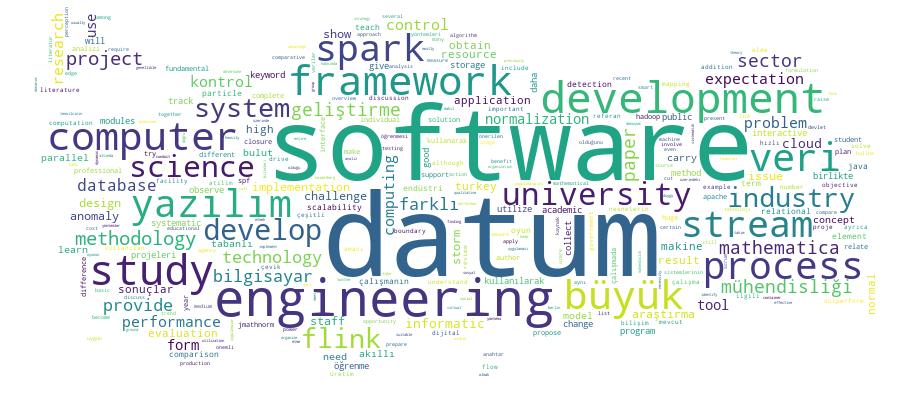
Competency Cloud

GCRIS Competency Cloud

Scholarly Output Search Results

Now showing 1 - 3 of 3
  • Article
    Citation - WoS: 15
    Citation - Scopus: 17
    A Parallel Boundary Element Formulation for Tracking Multiple Particle Trajectories in Stoke's Flow for Microfluidic Applications
    (Tech Science Press, 2015) Karakaya, Z.; Baranoglu, B.; Cetin, B.; Yazici, A.; Baranoğlu, B.; Computer Engineering; Software Engineering
    A new formulation for tracking multiple particles in slow viscous flow for microfluidic applications is presented. The method employs the manipulation of the boundary element matrices so that finally a system of equations is obtained relating the rigid body velocities of the particle to the forces applied on the particle. The formulation is specially designed for particle trajectory tracking and involves successive matrix multiplications for which SMP (Symmetric multiprocessing) parallelisation is applied. It is observed that present formulation offers an efficient numerical model to be used for particle tracking and can easily be extended for multiphysics simulations in which several physics involved.
  • Article
    Citation - WoS: 12
    Citation - Scopus: 16
    Teaching Parallel Computing Concepts Using Real-Life Applications
    (Tempus Publications, 2016) Yazici, Ali; Mishra, Alok; Karakaya, Ziya; Computer Engineering; Software Engineering
    The need to promote parallel computing concepts is an important issue due to a rapid advance in multi-core architectures. This paper reports experiences in teaching parallel computing concepts to computer and software engineering undergraduates. By taking a practical approach in delivering the material, students are shown to grasp the essential concepts in an effective way. This has been demonstrated by implementing small projects during the course, such as computing the sum of the terms of a geometric series using pipelines, solving linear systems by parallel iterative methods, and computing Mandelbrot set (fractal). This study shows that, it is useful to provide real-life analogies to facilitate general understanding and to motivate students in their studies as early as possible via small project implementations. The paper also describes an overall approach used to develop students' parallel computing skills and provides examples of the analogies employed in conjunction with the approach described. This approach is also assessed by collecting questionnaires and learning outcome surveys.
  • Article
    Citation - WoS: 3
    Citation - Scopus: 5
    Real-Time Anomaly Detection System Within the Scope of Smart Factories
    (Springer, 2023) Bayraktar, Cihan; Karakaya, Ziya; Gokcen, Hadi
    Anomaly detection is the process of identifying patterns that move differently from normal in a certain order. This process is considered one of the necessary measures for the safety of intelligent production systems. This study proposes a real-time anomaly detection system capable of using and analyzing data in smart production systems consisting of interconnected devices. Synthetic data were preferred in the study because it has difficulties such as high cost and a long time to obtain real anomaly data naturally for learning and testing processes. In order to obtain the necessary synthetic data, a simulation was developed by taking the popcorn production systems as an example. Multi-class anomalies were defined in the obtained data set, and the analysis performances were tested by creating learning models with AutoML libraries. In the field of production systems, while studies on anomaly detection generally focus on whether there is an anomaly in the system, it is aimed to determine which type of anomaly occurs in which device, together with the detection of anomaly by using multi-class tags in the data of this study. As a result of the tests, the Auto-Sklearn library presented the learning models with the highest performance on all data sets. As a result of the study, a real-time anomaly detection system was developed on dynamic data by using the obtained learning models.