
Karakaya, Ziya
Loading...

Profile URL
Name Variants
Karakaya, Z
K.,Ziya
Ziya, Karakaya
K., Ziya
Z., Karakaya
Karakaya,Z.
Karakaya, Ziya
Z.,Karakaya
K.,Ziya
Ziya, Karakaya
K., Ziya
Z., Karakaya
Karakaya,Z.
Karakaya, Ziya
Z.,Karakaya
Job Title
Doktor Öğretim Üyesi
Email Address
ziya.karakaya@atilim.edu.tr
Main Affiliation
Computer Engineering
Status
Former Staff
Website
ORCID ID
Scopus Author ID
Turkish CoHE Profile ID
Google Scholar ID
WoS Researcher ID
Sustainable Development Goals
 1
1NO POVERTY
0
Research Products
 2
2ZERO HUNGER
0
Research Products
 3
3GOOD HEALTH AND WELL-BEING
1
Research Products
 4
4QUALITY EDUCATION
0
Research Products
 5
5GENDER EQUALITY
0
Research Products
 6
6CLEAN WATER AND SANITATION
0
Research Products
 7
7AFFORDABLE AND CLEAN ENERGY
0
Research Products
 8
8DECENT WORK AND ECONOMIC GROWTH
0
Research Products
 9
9INDUSTRY, INNOVATION AND INFRASTRUCTURE
2
Research Products
 10
10REDUCED INEQUALITIES
0
Research Products
 11
11SUSTAINABLE CITIES AND COMMUNITIES
0
Research Products
 12
12RESPONSIBLE CONSUMPTION AND PRODUCTION
0
Research Products
 13
13CLIMATE ACTION
0
Research Products
 14
14LIFE BELOW WATER
1
Research Products
 15
15LIFE ON LAND
0
Research Products
 16
16PEACE, JUSTICE AND STRONG INSTITUTIONS
0
Research Products
 17
17PARTNERSHIPS FOR THE GOALS
0
Research Products

This researcher does not have a Scopus ID.

This researcher does not have a WoS ID.

Scholarly Output
41
Articles
3
Views / Downloads
267/2090
Supervised MSc Theses
13
Supervised PhD Theses
2
WoS Citation Count
78
Scopus Citation Count
98
Patents
0
Projects
0
WoS Citations per Publication
1.90
Scopus Citations per Publication
2.39
Open Access Source
4
Supervised Theses
15
| Journal | Count |
|---|---|
| UBMK 2018 - 3rd International Conference on Computer Science and Engineering -- 3rd International Conference on Computer Science and Engineering, UBMK 2018 -- 20 September 2018 through 23 September 2018 -- Sarajevo -- 143560 | 4 |
| 3rd International Conference on Computer Science and Engineering (UBMK) -- SEP 20-23, 2018 -- Sarajevo, BOSNIA & HERCEG | 3 |
| 2017 International Conference on Computer and Applications, ICCA 2017 -- 2017 International Conference on Computer and Applications, ICCA 2017 -- 6 September 2017 through 7 September 2017 -- Doha -- 131502 | 2 |
| Lecture Notes in Computer Science (including subseries Lecture Notes in Artificial Intelligence and Lecture Notes in Bioinformatics) -- 7th International Conference on Computational Science, ICCS 2007 -- 27 May 2007 through 30 May 2007 -- Beijing -- 70823 | 2 |
| 2017 International Conference on Computer Science and Engineering (UBMK) -- OCT 05-08, 2017 -- Antalya, TURKEY | 1 |
Current Page: 1 / 4
Scopus Quartile Distribution
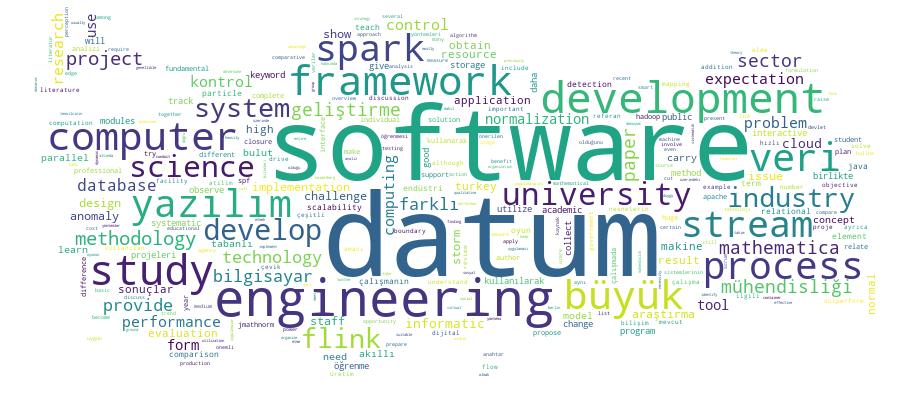
Competency Cloud
19 results
Scholarly Output Search Results
Now showing 1 - 10 of 19
Conference Object Citation - Scopus: 2Big Data on Cloud for Government Agencies: Benefits, Challenges, and Solutions(Assoc Computing Machinery, 2018) Rashed, Alaa Hussain; Karakaya, Ziya; Yazici, AliBig Data and Cloud computing are the most important technologies that give the opportunity for government agencies to gain a competitive advantage and improve their organizations. On one hand, Big Data implementation requires investing a significant amount of money in hardware, software, and workforce. On the other hand, Cloud Computing offers an unlimited, scalable and on-demand pool of resources which provide the ability to adopt Big Data technology without wasting on the financial resources of the organization and make the implementation of Big Data faster and easier. The aim of this study is to conduct a systematic literature review in order to collect data to identify the benefits and challenges of Big Data on Cloud for government agencies and to make a clear understanding of how combining Big Data and Cloud Computing help to overcome some of these challenges. The last objective of this study is to identify the solutions for related challenges of Big Data. Four research questions were designed to determine the information that is related to the objectives of this study. Data is collected using literature review method and the results are deduced from there.Conference Object Citation - Scopus: 4Need for a Software Development Methodology for Research-Based Software Projects(Institute of Electrical and Electronics Engineers Inc., 2018) Cereci,I.; Karakaya,Z.Software development is mostly carried by a group of individuals. Software development methodologies are heavily utilized to organize these individuals and keep track of the entire software development process. Although previously proposed software development methodologies meet the needs of the industry and the firms, they are not usually suitable for research-based software projects that are carried by universities and individual researchers. In this paper, we aim to show the necessity of a new software development methodology for research-based problems carried by universities. The literature review will show the differences between industry and university software projects from certain aspects. These findings will be supported by the authors own research on the area. This qualitative research involves collecting data through interviews and applying Grounded Theory to better understand the development process. © 2018 IEEE.Article Citation - WoS: 15Citation - Scopus: 17A Parallel Boundary Element Formulation for Tracking Multiple Particle Trajectories in Stoke's Flow for Microfluidic Applications(Tech Science Press, 2015) Karakaya, Z.; Baranoglu, B.; Cetin, B.; Yazici, A.; Baranoğlu, B.; Computer Engineering; Software EngineeringA new formulation for tracking multiple particles in slow viscous flow for microfluidic applications is presented. The method employs the manipulation of the boundary element matrices so that finally a system of equations is obtained relating the rigid body velocities of the particle to the forces applied on the particle. The formulation is specially designed for particle trajectory tracking and involves successive matrix multiplications for which SMP (Symmetric multiprocessing) parallelisation is applied. It is observed that present formulation offers an efficient numerical model to be used for particle tracking and can easily be extended for multiphysics simulations in which several physics involved.Conference Object Informatics Engineering Education in Turkey and Expectations of Software Industry(Ieee, 2018) Yazici, Ali; Mishra, Alok; Karakaya, Ziya; Ustunkok, TolgaIn this study, using the OSYM data, the number of intakes in Informatics Engineering programs in Turkey, accreditation data and the medium of instruction of the program are summarized for the years 2016 and 2017. In addition, the software sector's expectations from the informatics engineering graduates are reassessed based on the academic studies. The developed knowledge-skill gap set was used to evaluate the situation in Turkish informatics engineering programs. Sector expectations are discussed in the context of 2017-2019 Turkey Software Sector Strategy and Action Plan prepared by the Ministry of Science, Industry and Technology of Turkey and some proposals are made for the academia. As a result, it was observed that the expectations of the software industry were similar in all studies. Additionally, the expectations were changed in the direction of developing technologies and this change should be reflected in the informatics engineering programs.Conference Object Citation - WoS: 2Need for a Software Development Methodology for Research-Based Software Projects(Ieee, 2018) Cereci, Ibrahim; Karakaya, ZiyaSoftware development is mostly carried by a group of individuals. Software development methodologies are heavily utilized to organize these individuals and keep track of the entire software development process. Although previously proposed software development methodologies meet the needs of the industry and the firms, they are not usually suitable for research-based software projects that are carried by universities and individual researchers. In this paper, we aim to show the necessity of a new software development methodology for research-based problems carried by universities. The literature review will show the differences between industry and university software projects from certain aspects. These findings will be supported by the authors own research on the area. This qualitative research involves collecting data through interviews and applying Grounded Theory to better understand the development process.Conference Object Informatics Engineering Education in Turkey and Expectations of Software Industry;(Institute of Electrical and Electronics Engineers Inc., 2018) Yazici,A.; Mishra,A.; Karakaya,Z.; Ustunkok,T.In this study, using the ÖSYM data, the number of intakes in Informatics Engineering programs in Turkey, accreditation data and the medium of instruction of the program are summarized for the years 2016 and 2017. In addition, the software sector's expectations from the informatics engineering graduates are reassessed based on the academic studies. The developed knowledge-skill gap set was used to evaluate the situation in Turkish informatics engineering programs. Sector expectations are discussed in the context of 2017-2019 Turkey Software Sector Strategy and Action Plan prepared by the Ministry of Science, Industry and Technology of Turkey and some proposals are made for the academia. As a result, it was observed that the expectations of the software industry were similar in all studies. Additionally, the expectations were changed in the direction of developing technologies and this change should be reflected in the informatics engineering programs. © 2018 IEEE.Conference Object Need for a Software Development Methodology for Research-Based Software Projects(Institute of Electrical and Electronics Engineers Inc., 2018) Cereci,I.; Karakaya,Z.Software development is mostly carried by a group of individuals. Software development methodologies are heavily utilized to organize these individuals and keep track of the entire software development process. Although previously proposed software development methodologies meet the needs of the industry and the firms, they are not usually suitable for research-based software projects that are carried by universities and individual researchers. In this paper, we aim to show the necessity of a new software development methodology for research-based problems carried by universities. The literature review will show the differences between industry and university software projects from certain aspects. These findings will be supported by the authors own research on the area. This qualitative research involves collecting data through interviews and applying Grounded Theory to better understand the development process. © 2018 IEEE.Conference Object Perceptions, Expectations and Implementations of Big Data in Public Sector : Kamuda Buÿük Veri: Alglar, Beklentiler Ve Uygulamalar(Institute of Electrical and Electronics Engineers Inc., 2018) Dogdu,E.; Ozbayoglu,M.; Yazici,A.; Karakaya,Z.Big Data is one of the most commonly encountered buzzwords among IT professionals nowadays. Technological advancements in data acquisition, storage, telecommunications, embedded systems and sensor technologies resulted in huge inflows of streaming data coming from variety of sources, ranging from financial streaming data to social media tweets, or wearable health gadgets to drone flight logs. The processing and analysis of such data is a difficult task, but as appointed by many IT experts, it is crucial to have a Big Data Implementation plan in today's challenging industry standards. In this study, we performed a survey among IT professionals working in the public sector and tried to address some of their implementation issues and their perception of Big Data today and their expectations about how the industry will evolve. The results indicate that most of the public sector professionals are aware of the current Big Data requirements, embrace the Big Data challenge and are optimistic about the future. © 2018 IEEE.Conference Object Citation - WoS: 3Software Engineering Issues in Big Data Application Development(Ieee, 2017) Karakaya, ZiyaBig Data has become one of the most important concepts that is being studied in Computer/Software Engineering. The data produced in recent years have increased rapidly and exponentially, necessitating the solution of major problems such as the collection, processing and storage of huge volume of data. Big Data Frameworks are developed specifically to solve these problems that facilitates application developers by providing opportunities to collect, process, manage, monitor and analyze these data. A few examples of these frameworks are Hadoop, Spark, Storm, and Flink, which are developed by Software Engineers as open source projects. Although the challenges raised from coordination of IT resources such as huge amounts of computation power, storage area, memory, and network bandwidth in a distributed manner solved by these frameworks, there still remains many Software Engineering problems in application development phase, even if they based on these frameworks. High scalability, fault tolerance, flexibility, reliability and testability can be listed as the main issues need to be carefully considered in terms of Software Engineering. In this paper, we first clarify the terms Framework-Application, and then the overview information about Big Data and related frameworks are given before emphasizing the problems arising in terms of Software Engineering. Nevertheless, we tried to provide guidance to the people who would develop software for Big Data and tried to give the further research guidance.Conference Object Perceptions, Expectations and Implementations of Big Data in Public Sector(Ieee, 2018) Dogdu, Erdogan; Ozbayoglu, Murat; Yazici, Ali; Karakaya, ZiyaBig Data is one of the most commonly encountered buzzwords among IT professionals nowadays. Technological advancements in data acquisition, storage, telecommunications, embedded systems and sensor technologies resulted in huge inflows of streaming data coming from variety of sources, ranging from financial streaming data to social media tweets, or wearable health gadgets to drone flight logs. The processing and analysis of such data is a difficult task, but as appointed by many IT experts, it is crucial to have a Big Data Implementation plan in today's challenging industry standards. In this study, we performed a survey among IT professionals working in the public sector and tried to address some of their implementation issues and their perception of Big Data today and their expectations about how the industry will evolve. The results indicate that most of the public sector professionals are aware of the current Big Data requirements, embrace the Big Data challenge and are optimistic about the future.
