Doruk, Reşat Özgür

Loading...
Profile Picture
Name Variants
R.Ö.Doruk
Reşat Özgür Doruk
D.,Resat Ozgur
R. Ö. Doruk
R., Doruk
Doruk, Resat Ozgur
Doruk,R.O.
R.,Doruk
Doruk R.
D.,Reşat Özgür
özgür Doruk R.
Reşat Özgür, Doruk
R. O. Doruk
Özgür Doruk R.
R.O.Doruk
Doruk,R.Ö.
D., Reşat Özgür
D., Resat Ozgur
Resat Ozgur, Doruk
Doruk,Resat Ozgur
Doruk, Reşat Özgür
Doruk, R. Ozgur
Job Title
Profesör Doktor
Email Address
resat.doruk@atilim.edu.tr
Main Affiliation
Electrical-Electronics Engineering
Status
Website
Scopus Author ID
Turkish CoHE Profile ID
Google Scholar ID
WoS Researcher ID

Sustainable Development Goals

NO POVERTY1
NO POVERTY
0
Research Products
ZERO HUNGER2
ZERO HUNGER
0
Research Products
GOOD HEALTH AND WELL-BEING3
GOOD HEALTH AND WELL-BEING
0
Research Products
QUALITY EDUCATION4
QUALITY EDUCATION
0
Research Products
GENDER EQUALITY5
GENDER EQUALITY
0
Research Products
CLEAN WATER AND SANITATION6
CLEAN WATER AND SANITATION
0
Research Products
AFFORDABLE AND CLEAN ENERGY7
AFFORDABLE AND CLEAN ENERGY
2
Research Products
DECENT WORK AND ECONOMIC GROWTH8
DECENT WORK AND ECONOMIC GROWTH
0
Research Products
INDUSTRY, INNOVATION AND INFRASTRUCTURE9
INDUSTRY, INNOVATION AND INFRASTRUCTURE
0
Research Products
REDUCED INEQUALITIES10
REDUCED INEQUALITIES
0
Research Products
SUSTAINABLE CITIES AND COMMUNITIES11
SUSTAINABLE CITIES AND COMMUNITIES
0
Research Products
RESPONSIBLE CONSUMPTION AND PRODUCTION12
RESPONSIBLE CONSUMPTION AND PRODUCTION
0
Research Products
CLIMATE ACTION13
CLIMATE ACTION
1
Research Products
LIFE BELOW WATER14
LIFE BELOW WATER
0
Research Products
LIFE ON LAND15
LIFE ON LAND
0
Research Products
PEACE, JUSTICE AND STRONG INSTITUTIONS16
PEACE, JUSTICE AND STRONG INSTITUTIONS
0
Research Products
PARTNERSHIPS FOR THE GOALS17
PARTNERSHIPS FOR THE GOALS
0
Research Products
Scopus data could not be loaded because of an error. Please refresh the page or try again later.
Documents

21

Citations

87

Scholarly Output

37

Articles

19

Views / Downloads

84/237

Supervised MSc Theses

11

Supervised PhD Theses

7

WoS Citation Count

52

Scopus Citation Count

64

Patents

0

Projects

0

WoS Citations per Publication

1.41

Scopus Citations per Publication

1.73

Open Access Source

14

Supervised Theses

18

JournalCount
Süleyman Demirel Üniversitesi Fen Bilimleri Enstitüsü Dergisi3
Journal of Biological Physics2
Computer Methods and Programs in Biomedicine2
Turkish Journal of Electrical Engineering and Computer Sciences2
Frontiers in Neural Circuits1
Current Page: 1 / 3

Scopus Quartile Distribution

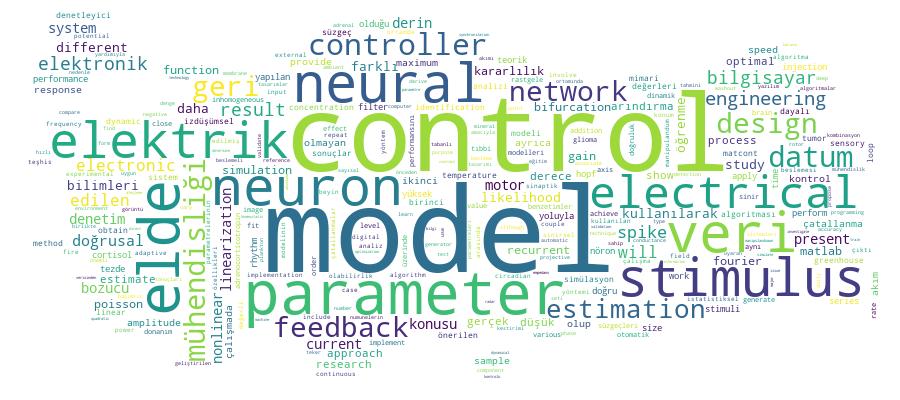
Competency Cloud

GCRIS Competency Cloud

Scholarly Output Search Results

Now showing 1 - 1 of 1
  • Article
    Citation - WoS: 4
    Citation - Scopus: 7
    Investigating the Impact of Two Major Programming Environments on the Accuracy of Deep Learning-Based Glioma Detection From Mri Images
    (Mdpi, 2023) Yilmaz, Vadi Su; Akdag, Metehan; Dalveren, Yaser; Doruk, Resat Ozgur; Kara, Ali; Soylu, Ahmet
    Brain tumors have been the subject of research for many years. Brain tumors are typically classified into two main groups: benign and malignant tumors. The most common tumor type among malignant brain tumors is known as glioma. In the diagnosis of glioma, different imaging technologies could be used. Among these techniques, MRI is the most preferred imaging technology due to its high-resolution image data. However, the detection of gliomas from a huge set of MRI data could be challenging for the practitioners. In order to solve this concern, many Deep Learning (DL) models based on Convolutional Neural Networks (CNNs) have been proposed to be used in detecting glioma. However, understanding which CNN architecture would work efficiently under various conditions including development environment or programming aspects as well as performance analysis has not been studied so far. In this research work, therefore, the purpose is to investigate the impact of two major programming environments (namely, MATLAB and Python) on the accuracy of CNN-based glioma detection from Magnetic Resonance Imaging (MRI) images. To this end, experiments on the Brain Tumor Segmentation (BraTS) dataset (2016 and 2017) consisting of multiparametric magnetic MRI images are performed by implementing two popular CNN architectures, the three-dimensional (3D) U-Net and the V-Net in the programming environments. From the results, it is concluded that the use of Python with Google Colaboratory (Colab) might be highly useful in the implementation of CNN-based models for glioma detection. Moreover, the 3D U-Net model is found to perform better, attaining a high accuracy on the dataset. The authors believe that the results achieved from this study would provide useful information to the research community in their appropriate implementation of DL approaches for brain tumor detection.