Kılıç, Nedret

Loading...
Profile Picture
Name Variants
Kılıç, Nedret
K., Nedret
Kılıç,N.
Nedret, Kılıç
N., Kılıç
Kilic, Nedret
N.,Kilic
Nedret Kılıç
Kilic,N.
Kiliç N.
Kilic N.
Kilic,Nedret
N., Kilic
Nedret, Kilic
Kılıç N.
N.,Kılıç
K.,Nedret
Kılıc N.
KŞişl.c N.
Job Title
Profesör Doktor
Email Address
nedret.kilic@atilim.edu.tr
Main Affiliation
Basic Sciences
Status
Scopus Author ID
Turkish CoHE Profile ID
Google Scholar ID
WoS Researcher ID

Sustainable Development Goals

3

GOOD HEALTH AND WELL-BEING
GOOD HEALTH AND WELL-BEING Logo

4

Research Products

7

AFFORDABLE AND CLEAN ENERGY
AFFORDABLE AND CLEAN ENERGY Logo

1

Research Products
Documents

42

Citations

518

h-index

12

Documents

73

Citations

1061

Scholarly Output

5

Articles

4

Views / Downloads

19/103

Supervised MSc Theses

0

Supervised PhD Theses

0

WoS Citation Count

7

Scopus Citation Count

8

WoS h-index

2

Scopus h-index

2

Patents

0

Projects

0

WoS Citations per Publication

1.40

Scopus Citations per Publication

1.60

Open Access Source

3

Supervised Theses

0

Google Analytics Visitor Traffic

JournalCount
Annals of Surgical Oncology1
Celal Bayar Üniversitesi Sağlık Bilimleri Enstitüsü Dergisi1
International Journal of Pharmaceutics1
Scientific Reports1
World Neurosurgery1
Current Page: 1 / 1

Scopus Quartile Distribution

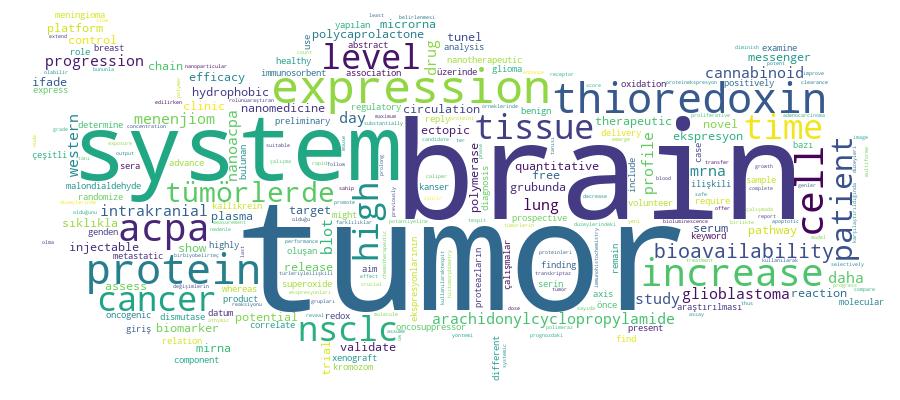
Competency Cloud

GCRIS Competency Cloud

Scholarly Output Search Results

Now showing 1 - 1 of 1
  • Article
    ACPA Prevents Lung Fibroblast-to Transformation by Reprogramming the Tumor Microenvironment through NSCLC-Derived Exosomes
    (Nature Portfolio, 2025) Boyacioglu, Ozge; Kalali, Berfin Deniz; Recber, Tuba; Gelen-Gungor, Dilek; Nemutlu, Emirhan; Eroglu, Ipek; Korkusuz, Petek; Kilic, Nedret
    Non-small cell lung cancer (NSCLC) accounts for most lung cancer cases. Current treatments often cause systemic side effects or lead to drug resistance, prompting the development of new therapies targeting tumors and related cells simultaneously. Cancer-associated fibroblasts (CAFs) are crucial stromal cells within the tumor microenvironment (TME), making them potential targets for therapy. Previously, we found that the CB1 receptor agonist ACPA has anti-tumor effects on NSCLC, inhibiting pathways such as Akt/PI3K, JNK, glycolysis, the citric acid cycle, and the urea cycle both in vitro and in vivo. We hypothesize that ACPA could enhance therapy by inhibiting the transformation of lung fibroblasts into CAFs via exosomes. Control and ACPA-treated NSCLC cell exosomes exhibited similar size, PDI, ZP, and high expression of CD9, CD63, and CD81. ACPA-treated exosomes showed reduced levels of miR-21 and miR-23. These exosomes decreased fibroblast viability within 12 h by disrupting pentose phosphate, lipid, and amino acid metabolism, and by lowering PDPN, alpha-SMA, and FAP expressions. This research highlights ACPA as a promising chemotherapeutic agent, capable of improving NSCLC treatment and reprogramming the TME with more targeted therapies.