Pars, Hatice

Loading...
Profile Picture
Name Variants
P.,Hatice
Pars, Hatice
Pars, H.
P., H.
Job Title
Doçent Doktor
Email Address
hatice.pars@atilim.edu.tr
Main Affiliation
Nursing
Status
Former Staff
Website
Scopus Author ID
Turkish CoHE Profile ID
Google Scholar ID
WoS Researcher ID

Sustainable Development Goals

NO POVERTY1
NO POVERTY
0
Research Products
ZERO HUNGER2
ZERO HUNGER
0
Research Products
GOOD HEALTH AND WELL-BEING3
GOOD HEALTH AND WELL-BEING
1
Research Products
QUALITY EDUCATION4
QUALITY EDUCATION
0
Research Products
GENDER EQUALITY5
GENDER EQUALITY
0
Research Products
CLEAN WATER AND SANITATION6
CLEAN WATER AND SANITATION
0
Research Products
AFFORDABLE AND CLEAN ENERGY7
AFFORDABLE AND CLEAN ENERGY
0
Research Products
DECENT WORK AND ECONOMIC GROWTH8
DECENT WORK AND ECONOMIC GROWTH
0
Research Products
INDUSTRY, INNOVATION AND INFRASTRUCTURE9
INDUSTRY, INNOVATION AND INFRASTRUCTURE
0
Research Products
REDUCED INEQUALITIES10
REDUCED INEQUALITIES
0
Research Products
SUSTAINABLE CITIES AND COMMUNITIES11
SUSTAINABLE CITIES AND COMMUNITIES
0
Research Products
RESPONSIBLE CONSUMPTION AND PRODUCTION12
RESPONSIBLE CONSUMPTION AND PRODUCTION
0
Research Products
CLIMATE ACTION13
CLIMATE ACTION
0
Research Products
LIFE BELOW WATER14
LIFE BELOW WATER
0
Research Products
LIFE ON LAND15
LIFE ON LAND
0
Research Products
PEACE, JUSTICE AND STRONG INSTITUTIONS16
PEACE, JUSTICE AND STRONG INSTITUTIONS
1
Research Products
PARTNERSHIPS FOR THE GOALS17
PARTNERSHIPS FOR THE GOALS
0
Research Products
Documents

12

Citations

164

h-index

7

Documents

0

Citations

0

Scholarly Output

4

Articles

2

Views / Downloads

27/82

Supervised MSc Theses

0

Supervised PhD Theses

0

WoS Citation Count

0

Scopus Citation Count

0

Patents

0

Projects

0

WoS Citations per Publication

0.00

Scopus Citations per Publication

0.00

Open Access Source

0

Supervised Theses

0

JournalCount
Annals of Oncology1
European Journal of Oncology Nursing1
Journal of Pediatric Nursing1
Pediatric Blood & Cancer1
Current Page: 1 / 1

Scopus Quartile Distribution

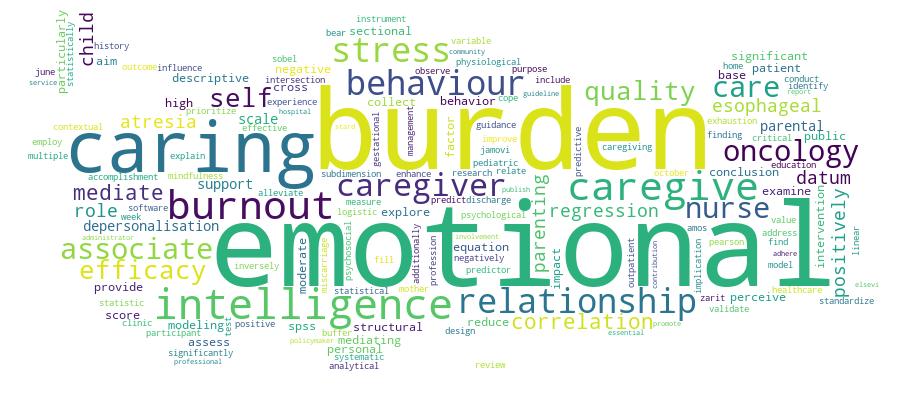
Competency Cloud

GCRIS Competency Cloud

Scholarly Output Search Results

Now showing 1 - 1 of 1
  • Article
    The Role of Emotional Intelligence in the Relationship between Burnout and Perceived Quality of Care Among Oncology Nurses
    (Elsevier Sci Ltd, 2026) Sari, Tugba; Calis, Behice Belkis; Pars, Hatice; Guner, Perihan; Çalışkan, Behice Belkıs
    Purpose: This study aimed to examine the relationships between burnout, emotional intelligence, and perceived caring behaviours among oncology nurses and to assess the predictive and mediating roles of these variables in explaining caring behaviours. Methods: A descriptive, cross-sectional study was conducted with 202 oncology nurses in T & uuml;rkiye. Data were collected using validated instruments measuring burnout, emotional intelligence, and caring behaviors. Data analysis employed descriptive statistics, Pearson correlation analyses, multiple linear regression, and structural equation modeling. Results: Emotional intelligence was positively associated with caring behaviours (r = .359, p < .001) and negatively associated with burnout subdimensions. Caring behaviours were inversely related to emotional exhaustion (r = -.258, p < .001), depersonalisation (r = -.397, p < .001), and reduced personal accomplishment (r = -.214, p = .002). In the regression model (R2 = .214, p < .001), emotional intelligence significantly predicted caring behaviours positively ((3 = .218, p = .002), while depersonalisation was a significant negative predictor ((3 = -.288, p < .001). However, emotional intelligence did not mediate the relationship between burnout and caring behaviours (Sobel test p = .332). Conclusion: While emotional intelligence was positively associated with caring behaviours and buffered the impact of burnout-particularly depersonalisation-it did not mediate the relationship between burnout and caring. These findings support the value of enhancing emotional intelligence to improve care quality and nurse well-being, though contextual factors may influence its mediating role.