Yığman, Zeynep

Loading...
Profile Picture
Name Variants
Yigman, Zeynep
Z.,Yığman
Y.,Zeynep
Zeynep, Yigman
Zeynep, Yığman
Yigman,Z.
Yığman,Z.
Z.,Yigman
Y., Zeynep
Z., Yigman
Yığman, Zeynep
Job Title
Doktor Öğretim Üyesi
Email Address
zeynep.yigman@atilim.edu.tr
Main Affiliation
Basic Sciences
Status
Former Staff
Website
ORCID ID
Scopus Author ID
Turkish CoHE Profile ID
Google Scholar ID
WoS Researcher ID

Sustainable Development Goals

2

ZERO HUNGER
ZERO HUNGER Logo

0

Research Products

14

LIFE BELOW WATER
LIFE BELOW WATER Logo

2

Research Products

17

PARTNERSHIPS FOR THE GOALS
PARTNERSHIPS FOR THE GOALS Logo

0

Research Products

5

GENDER EQUALITY
GENDER EQUALITY Logo

0

Research Products

16

PEACE, JUSTICE AND STRONG INSTITUTIONS
PEACE, JUSTICE AND STRONG INSTITUTIONS Logo

0

Research Products

8

DECENT WORK AND ECONOMIC GROWTH
DECENT WORK AND ECONOMIC GROWTH Logo

0

Research Products

4

QUALITY EDUCATION
QUALITY EDUCATION Logo

0

Research Products

6

CLEAN WATER AND SANITATION
CLEAN WATER AND SANITATION Logo

0

Research Products

7

AFFORDABLE AND CLEAN ENERGY
AFFORDABLE AND CLEAN ENERGY Logo

0

Research Products

10

REDUCED INEQUALITIES
REDUCED INEQUALITIES Logo

0

Research Products

11

SUSTAINABLE CITIES AND COMMUNITIES
SUSTAINABLE CITIES AND COMMUNITIES Logo

0

Research Products

9

INDUSTRY, INNOVATION AND INFRASTRUCTURE
INDUSTRY, INNOVATION AND INFRASTRUCTURE Logo

0

Research Products

1

NO POVERTY
NO POVERTY Logo

0

Research Products

3

GOOD HEALTH AND WELL-BEING
GOOD HEALTH AND WELL-BEING Logo

4

Research Products

12

RESPONSIBLE CONSUMPTION AND PRODUCTION
RESPONSIBLE CONSUMPTION AND PRODUCTION Logo

0

Research Products

13

CLIMATE ACTION
CLIMATE ACTION Logo

0

Research Products

15

LIFE ON LAND
LIFE ON LAND Logo

0

Research Products
This researcher does not have a Scopus ID.
This researcher does not have a WoS ID.
Scholarly Output

12

Articles

12

Views / Downloads

2/0

Supervised MSc Theses

0

Supervised PhD Theses

0

WoS Citation Count

48

Scopus Citation Count

45

WoS h-index

5

Scopus h-index

4

Patents

0

Projects

0

WoS Citations per Publication

4.00

Scopus Citations per Publication

3.75

Open Access Source

9

Supervised Theses

0

Google Analytics Visitor Traffic

JournalCount
Drug Design, Development and Therapy2
Journal of Updates in Cardiovascular Medicine2
Medicina2
Medicina (Lithuania)1
Scientific Reports1
Current Page: 1 / 2

Scopus Quartile Distribution

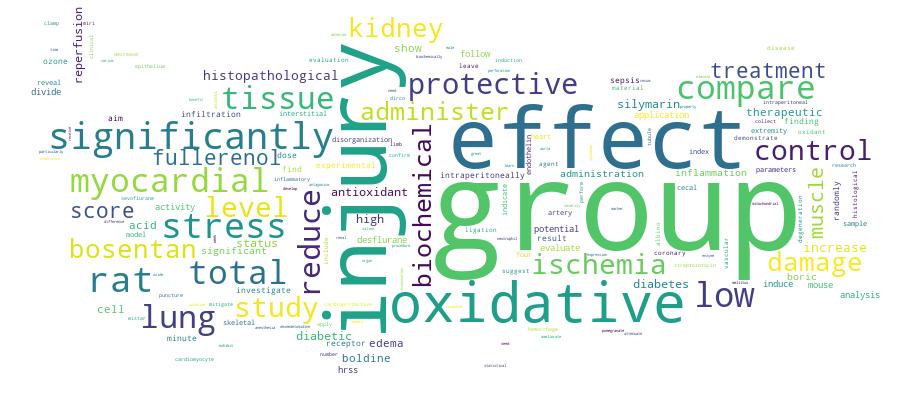
Competency Cloud

GCRIS Competency Cloud

Scholarly Output Search Results

Now showing 1 - 2 of 2
  • Article
    Citation - WoS: 8
    Ozone Administration Reduces Myocardial Ischemia Reperfusion Injury in Streptozotocin-Induced Diabetes Mellitus Rat Model
    (Baycinar Medical Publishing, 2024) Gulcan, M.B.; Demirtas, H.; Ozer, A.; Yıgman, Z.; Dursun, A.D.; Arslan, M.; Oktar, G.L.
    Objective: This study aimed to investigate the effects of ozone therapy on myocardial ischemia/reperfusion injury in a diabetic rat model. Methods: The experimental study included 38 male Wistar Albino rats weighing between 200 and 250 g. The rats were randomly assigned to five groups. The sham group included six rats, while the other groups had eight rats each. The other groups were the diabetic ozone group, the diabetic group, the diabetic ischemia/reperfusion group (DIR), and the diabetic ischemia/reperfusion ozone group (DIRO). A total of 32 rats received 65 mg/kg streptozotocin, and a week after the administration, diabetes was confirmed by measuring blood sugar. The rats were fed ad libitum for 40 days to reveal macrovascular complications of diabetes. Malondialdehyde, catalase, superoxide dismutase, paraoxonase-1, total oxidative status, total antioxidant status, and oxidative stress index were assessed. A TUNEL (terminal deoxynucleotidyl transferase dUTP nick end labeling) assay was employed to assess apoptosis. Results: Histologic and biochemical assessments showed the benefits of ozone in myocardial ischemia/reperfusion injury in diabetic rats. The DIRO group was found to be superior to the DIR group. Conclusion: Ozone has cardioprotective effects in streptozotocin-induced diabetic rats through its antioxidant properties against oxidative stress. The study is unique in terms of ozone’s protective effects in diabetic rats against myocardial ischemia/reperfusion injury. However, further studies are needed to confirm our findings. © (2024), (Baycinar Medical Publishing). All rights reserved.
  • Article
    Citation - WoS: 5
    Citation - Scopus: 8
    Protective Effects of Bosentan Via Endothelin Receptor Antagonism in Experimental Ischemia-Reperfusion Injury in the Lower Limb of Rats
    (Dove Medical Press Ltd, 2025) Demirtas, Hueseyin; Oezer, Abdullah; Guelcan, Mehmet Burak; Yigman, Zeynep; Kuecuek, Ayseguel; Tekin, Esra; Arslan, Mustafa
    Objective: This study aimed to evaluate the protective effects of bosentan, a dual endothelin receptor antagonist, against skeletal muscle ischemia-reperfusion injury (IRI) in rats. Methods: A total of 24 male Wistar Albino rats were divided into four groups: control (C, n=6), bosentan-treated (B, n=6), ischemiareperfusion (IR, n=6), and bosentan plus ischemia-reperfusion (B+IR, n=6). Bosentan (10 mg/kg) was administered 30 minutes prior to reperfusion. In the IR and B+IR groups, ischemia was induced using vascular bulldog clamps for 45 minutes, followed by 120 minutes of reperfusion. Results: Histological and biochemical assessments revealed significant differences among the groups. The disorganization and degeneration scores of the muscle cells in the B+IR group were significantly lower than those in the IR group (P = 0.001). The degree of interstitial edema in the IR group was markedly more severe than in the C and B groups (all P < 0.001), while the interstitial edema score in the B+IR group was significantly lower than that in the IR group (P < 0.001). The total muscle injury scores were markedly reduced in the B+IR group compared to the IR group (P < 0.001). Biochemically, TAS levels were significantly higher in the B+IR group compared to the IR group (1.03 f 0.18 vs 0.59 f 0.10 mmol/L, P = 0.016). Conversely, TOS (1.97 f 0.39 vs 2.86 f 0.43 IU/mg, P < 0.001) and OSI levels (P < 0.001) were significantly lower in the B+IR group. Additionally, paraoxonase (PON-1) enzyme activity was significantly reduced in the B+IR group compared to the IR group (P < 0.001). These findings suggest that bosentan exerts its protective effects by antagonizing endothelin-1 receptors, thereby mitigating vasoconstriction, oxidative stress, and inflammation. The observed reductions in muscle cell disorganization, interstitial edema, hemorrhage, neutrophil infiltration and oxidative stress markers underscore bosentan's potential as a therapeutic agent for managing ischemia-reperfusion injury. Conclusion: Bosentan demonstrates significant protective effects against skeletal muscle IRI by reducing oxidative stress and inflammation through endothelin receptor antagonism. These findings underscore bosentan's potential as a therapeutic agent for mitigating ischemia-reperfusion injury in vascular surgeries and managing critical limb ischemia in clinical settings. Further research is warranted to explore the long-term effects of bosentan on muscle recovery and systemic health following ischemia-reperfusion injury.