Emin, Ali

Loading...
Profile Picture
Name Variants
E., Ali
Ali, Emin
A.,Emin
E.,Ali
Emin,A.
Ali Emin
A., Emin
Emin,Ali
Emin, Ali
Job Title
Doktor Öğretim Üyesi
Email Address
ali.amini@atilim.edu.tr
Main Affiliation
Automotive Engineering
Status
Website
Scopus Author ID
Turkish CoHE Profile ID
Google Scholar ID
WoS Researcher ID

Sustainable Development Goals

2

ZERO HUNGER
ZERO HUNGER Logo

0

Research Products

11

SUSTAINABLE CITIES AND COMMUNITIES
SUSTAINABLE CITIES AND COMMUNITIES Logo

0

Research Products

14

LIFE BELOW WATER
LIFE BELOW WATER Logo

0

Research Products

6

CLEAN WATER AND SANITATION
CLEAN WATER AND SANITATION Logo

0

Research Products

1

NO POVERTY
NO POVERTY Logo

0

Research Products

5

GENDER EQUALITY
GENDER EQUALITY Logo

0

Research Products

9

INDUSTRY, INNOVATION AND INFRASTRUCTURE
INDUSTRY, INNOVATION AND INFRASTRUCTURE Logo

0

Research Products

16

PEACE, JUSTICE AND STRONG INSTITUTIONS
PEACE, JUSTICE AND STRONG INSTITUTIONS Logo

0

Research Products

17

PARTNERSHIPS FOR THE GOALS
PARTNERSHIPS FOR THE GOALS Logo

0

Research Products

15

LIFE ON LAND
LIFE ON LAND Logo

0

Research Products

10

REDUCED INEQUALITIES
REDUCED INEQUALITIES Logo

0

Research Products

7

AFFORDABLE AND CLEAN ENERGY
AFFORDABLE AND CLEAN ENERGY Logo

4

Research Products

8

DECENT WORK AND ECONOMIC GROWTH
DECENT WORK AND ECONOMIC GROWTH Logo

0

Research Products

4

QUALITY EDUCATION
QUALITY EDUCATION Logo

0

Research Products

12

RESPONSIBLE CONSUMPTION AND PRODUCTION
RESPONSIBLE CONSUMPTION AND PRODUCTION Logo

0

Research Products

3

GOOD HEALTH AND WELL-BEING
GOOD HEALTH AND WELL-BEING Logo

0

Research Products

13

CLIMATE ACTION
CLIMATE ACTION Logo

0

Research Products
Documents

21

Citations

610

h-index

11

Documents

19

Citations

527

Scholarly Output

8

Articles

6

Views / Downloads

37/6568

Supervised MSc Theses

1

Supervised PhD Theses

0

WoS Citation Count

71

Scopus Citation Count

82

WoS h-index

4

Scopus h-index

4

Patents

0

Projects

3

WoS Citations per Publication

8.88

Scopus Citations per Publication

10.25

Open Access Source

3

Supervised Theses

1

Google Analytics Visitor Traffic

JournalCount
2024 International Mechanical Engineering Congress and Exposition-IMECE -- NOV 17-21, 2024 -- Portland, OR1
Actuators1
Energies1
International Journal of Thermal Sciences1
Journal of Energy Storage1
Current Page: 1 / 2

Scopus Quartile Distribution

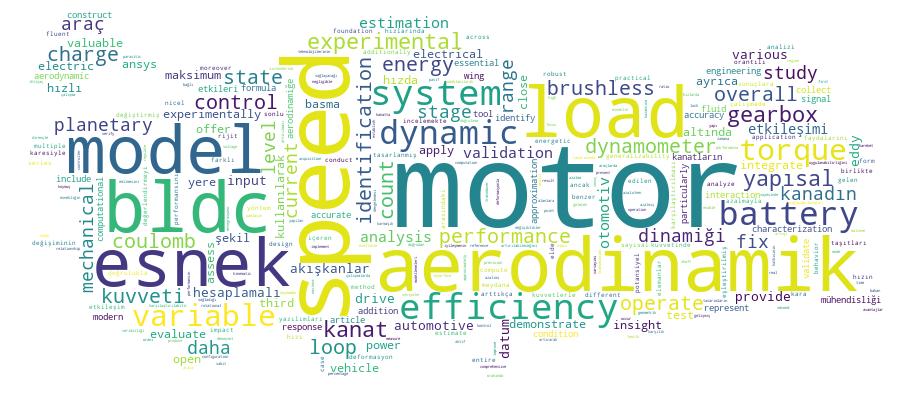
Competency Cloud

GCRIS Competency Cloud

Scholarly Output Search Results

Now showing 1 - 3 of 3
  • Article
    Experimental Investigation of Energy Efficiency, SOC Estimation, and Real-Time Speed Control of a 2.2 kW BLDC Motor with Planetary Gearbox under Variable Load Conditions
    (MDPI, 2025) Abouseda, Ayman Ibrahim; Doruk, Resat; Emin, Ali; Lopez-Guede, Jose Manuel
    This study presents a comprehensive experimental investigation of a 2.2 kW brushless DC (BLDC) motor integrated with a three-shaft planetary gearbox, focusing on overall energy efficiency, battery state of charge (SOC) estimation, and real-time speed control under variable load conditions. In the first stage, the gearbox transmission ratio was experimentally verified to establish the kinematic relationship between the BLDC motor and the eddy current dynamometer shafts. In the second stage, the motor was operated in open loop mode at fixed reference speeds while variable load torques ranging from 1 to 7 N.m were applied using an AVL dynamometer. Electrical voltage, current, and rotational speed were measured in real time through precision transducers and a data acquisition interface, enabling computation of overall efficiency and SOC via the Coulomb counting method. The open loop results demonstrated that maximum efficiency occurred in the intermediate-to-high-speed region (2000 to 2800 rpm) and at higher load torques (5 to 7 N.m) while locking the third gearbox shaft produced negligible parasitic losses. In the third stage, a proportional-integral-derivative (PID) controller was implemented in closed loop configuration to regulate motor speed under the same variable load scenarios. The closed loop operation improved the overall efficiency by approximately 8-20 percentage points within the effective operating range of 1600-2500 rpm, reduced speed droop, and ensured precise tracking with minimal overshoot and steady-state error. The proposed methodology provides an integrated experimental framework for evaluating the dynamic performance, energy efficiency, and battery utilization of BLDC motor planetary gearbox systems, offering valuable insights for electric vehicle and hybrid electric vehicle (HEV) drive applications.
  • Article
    Citation - WoS: 3
    Citation - Scopus: 4
    Modeling, Dynamic Characterization, and Performance Analysis of a 2.2 kW BLDC Motor Under Fixed Load Torque Levels and Variable Speed Inputs: An Experimental Study
    (MDPI, 2025) Abouseda, Ayman Ibrahim; Doruk, Resat; Emin, Ali; Akdeniz, Ozgur
    Accurate modeling and performance analysis of brushless DC (BLDC) motors are essential for high-efficiency control in modern drive systems. In this article, a BLDC motor was modeled using system identification techniques. In addition, experimental data were collected from the BLDC motor, including its speed response to various input signals. Using system identification tools, particularly those provided by MATLAB/Simulink R2024b, an approximation model of the BLDC motor was constructed to represent the motor's dynamic behavior. The identified model was experimentally validated using various input signals, demonstrating its accuracy and generalizability under different operating conditions. Additionally, a series of mechanical load tests was conducted using the AVL eddy-current dynamometer to evaluate performance under practical operating conditions. Fixed load torques were applied across a range of motor speeds, and multiple torque levels were tested to assess the motor's dynamic response. Electrical power, mechanical power, and efficiency of the entire system were computed for each case to assess overall system performance. Moreover, the real-time state of charge (SOC) of Lithium-ion (Li-ion) battery was estimated using the Coulomb counting method to analyze the impact of Li-ion battery energy level on the BLDC motor efficiency. The study offers valuable insights into the motor's dynamic and energetic behavior, forming a foundation for robust control design and real-time application development.
  • Master Thesis
    Formula 1'de Esnek Ön Kanatların Aerodinamiğe Etkileri
    (2025) İnal, Barkın; Emin, Ali
    Bu tez, yüksek hızlı kara taşıtları için tasarlanmış esnek bir ön kanadın aerodinamik ve yapısal performansını incelemekte ve aerodinamik yükler altında meydana gelen yapısal şekil değişiminin potansiyel faydalarını nicel olarak değerlendirmeyi amaçlamaktadır. Çalışmada, hem rijit (orijinal) hem de şekil değiştirmiş (esnek) kanat konfigürasyonlarının farklı araç hızlarında karşılaştırılması için Hesaplamalı Akışkanlar Dinamiği (CFD) ve Sonlu Elemanlar Analizi (FEA) içeren eşleştirilmiş bir sayısal yöntem uygulanmıştır. ANSYS Fluent ve ANSYS Mechanical yazılımları birlikte kullanılarak, aerodinamik kuvvetlerle yapısal deformasyon arasındaki etkileşim (akışkan–yapı etkileşimi, FSI) yüksek doğrulukla modellenmiştir. Elde edilen sonuçlara göre, araç hızı arttıkça aerodinamik sürükleme kuvveti ve yere basma kuvveti, hızın karesiyle orantılı olarak artmaktadır. Ancak, esnek kanat her hızda daha düşük sürükleme kuvveti üretirken, yere basma kuvvetinde ise benzer veya çok az azalmayla karşılaştırılabilir seviyeler korunmuştur. Özellikle 300 km/s hızda, esnek kanatta sürükleme kuvveti %12,8 oranında azalırken, kaldırma/sürükleme oranı (L/D) 5,37'den 5,95'e yükselmiştir. Ayrıca, kanadın öne bakan alanı (frontal alanı) esnek yapı sayesinde %4,8'e kadar azalmış ve bu azalma 19,1 mm'lik maksimum deformasyonla doğrudan ilişkilendirilmiştir. Bu geometrik değişiklikler, aerodinamik verimliliği artırarak yüksek hızlarda daha düşük dirençle hareket edilmesini sağlamıştır. vi Ayrıca, teorik bir analiz ile bu aerodinamik iyileşmenin araca sağlayacağı maksimum hız artışı hesaplanmıştır. Sabit motor gücü varsayımı altında yapılan güç-direnç dengelemesi ile, esnek kanadın sağladığı sürükleme azalımı yaklaşık 10,5 km/s'lik bir hız kazancına karşılık gelmektedir. Bu da pasif yapısal esneklik kullanılarak, karmaşık aktif kontrol sistemlerine ihtiyaç duymadan aerodinamik performansın artırılabileceğini göstermektedir. Sonuç olarak, bu çalışma, ön kanat tasarımında yapısal esnekliğin aerodinamik avantajlar sağlayabileceğini ortaya koymuş ve bu tür tasarımların yüksek hızlı araçlarda uygulanabilirliğini desteklemiştir. Gelecek çalışmalarda, zamana bağlı FSI simülasyonları, deneysel doğrulama, gelişmiş malzeme modellemeleri ve araç dinamiği entegrasyonu gibi alanlara odaklanılarak, esnek kanat teknolojilerinin performansa olan katkısının daha da artırılması önerilmektedir.