Belbağ, Aybegüm Güngördü

Loading...
Profile Picture
Name Variants
Aybegüm Güngördü Belbağ
Belbag, Aybegum Gungordu
Gungordu, Aybegum Gungordu
Belbag, Aybegum Belbag
Aybegum G.
Belbağ, A. G.
Güngördü, Aybegüm
Gungordu, A. B.
Gungordu Belbag, Aybegum
Job Title
Profesor Doktor
Email Address
aybegum.belbag@atilim.edu.tr
Main Affiliation
Business
Status
Current Staff
Website
Scopus Author ID
Turkish CoHE Profile ID
Google Scholar ID
WoS Researcher ID

Sustainable Development Goals

SDG data is not available
Documents

14

Citations

153

h-index

6

Documents

12

Citations

97

Scholarly Output

6

Articles

6

Views / Downloads

85/14

Supervised MSc Theses

0

Supervised PhD Theses

0

WoS Citation Count

17

Scopus Citation Count

24

Patents

0

Projects

0

WoS Citations per Publication

2.83

Scopus Citations per Publication

4.00

Open Access Source

2

Supervised Theses

0

JournalCount
International Journal of Emerging Markets1
İstanbul Gelişim Üniversitesi Sosyal Bilimler Dergisi1
Journal of Economic and Administrative Sciences1
Journal of Financial Services Marketing1
Thunderbird International Business Review1
Current Page: 1 / 2

Scopus Quartile Distribution

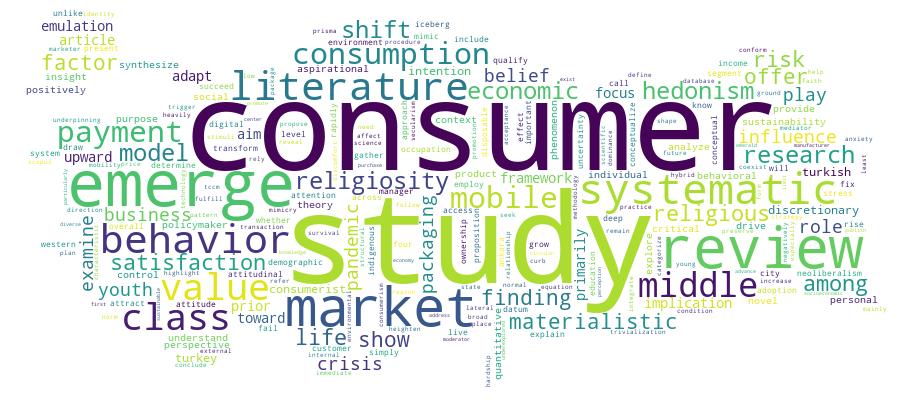
Competency Cloud

GCRIS Competency Cloud

Scholarly Output Search Results

Now showing 1 - 4 of 4
  • Article
    Living Between Belief and Consumption: Religiosity, Hedonism, and Life Satisfaction Among Turkish Youth
    (Routledge Journals, Taylor & Francis Ltd, 2025) Gungordu Belbag, Aybegum; Erbil, Cihat
    This study examines the relationships among religiosity, materialistic hedonism, control, discomfort, and life satisfaction among 256 young individuals in Turkey. Structural equation modeling shows that religiosity does not curb materialistic hedonism and positively affects control. Life satisfaction is positively influenced by control and materialistic hedonism, and negatively by discomfort. Turkish youth form hybrid identities and practices that integrate both faith and consumer desires. A few studies examine contexts like Turkey, where secularism and religiosity coexist, and religious beliefs fulfill broader social and economic functions. The co-existence of religious beliefs and consumerism -especially among middle and lower class youth- remains underexplored.
  • Article
    Citation - WoS: 17
    Citation - Scopus: 24
    The New Middle Class in Emerging Markets: How Values and Demographics Influence Discretionary Consumption
    (Wiley, 2019) Belbag, Aybegum G.; Uner, M. Mithat; Cavusgil, Erin; Cavusgi, S. Tamer; Cavusgil, S. Tamer
    The rise of new middle-class consumers in rapidly transforming emerging markets has attracted the attention of Western business executives. What they know about this growing segment of customers will determine whether they succeed or fail in these markets. The present study examines the factors that drive the discretionary consumption of this new middle class, including the effects of consumerist values, religious values, occupation, education levels, and ownership of fixed assets. The study draws its insights from data gathered from 391 new middle-class consumers in Ankara, the second-largest city in Turkey. The findings provide important implications for businesses, both indigenous and foreign. An overall implication is that managers ought to understand and qualify the new middle class in emerging markets not simply by their access to disposable income but by deeper attitudinal and behavioral characteristics.
  • Article
    Consumer Behavior and Sustainability: What Role Does Eco-Friendly Packaging Play in Emerging Markets
    (Emerald Publishing, 2025) Güngördü Belbağ, A.
    Purpose – This study aims to offer a systematic review of eco-friendly packaged products from the consumer perspective in emerging markets. Design/methodology/approach – This study analyzed 47 Web of Science and SCOPUS articles using the PRISMA and theory-context-characteristics-methodology (TCCM) framework. Findings – This systematic review shows that prior research was mainly quantitative and relied heavily on the theory of planned behavior. This study categorized the articles by personal, product, price, place, promotion and external factors. Research primarily focused on personal factors, especially values and attitudes. Place-related factors were the least studied. Few studies explored mediators and moderators of purchase intention. Originality/value – This study shifts the focus of eco-friendly packaging research toward the consumer perspective, which was underexplored in the existing literature, particularly in emerging markets. While prior studies have primarily centered on manufacturers, this review synthesizes prior research showing that consumer behavior, knowledge and perception play a critical role in advancing sustainability and circular economy goals. This systematic review is the first to address this gap in emerging markets and offers implications for policymakers and businesses aiming to promote sustainable consumption in diverse socioeconomic settings. © 2025 Emerald Publishing Limited
  • Article
    İşletmelerin Çevre Dostu Paketlemeyi Benimsemesini Etkileyen Faktörler Üzerine Nitel Bir Çalışma
    (2025) Belbağ, Sedat; Belbağ, Aybegüm Güngördü; Çetin, Muhsin Emre
    Aim: The aim of this study is to examine the factors affecting businesses' adoption of eco-friendly packaging. In this context, institutional pressures, business resources, and stakeholder effects were examined in detail. Method: In the study, qualitative research was conducted on experts from businesses implementing eco-friendly packaging practices, and thematic analysis was used. Institutional theory, resource-based theory and stakeholder theory were used as theoretical frameworks in the analysis process. Results: According to the findings, three themes stand out in the adoption of eco-friendly packaging by businesses. These themes are institutional pressures and compliance strategies, access to resources, competence and risks, stakeholder demands, and relational value creation. Coercive, normative, and imitative institutional pressures are included in institutional pressures and compliance strategies. Access to resources, competence, and risks include limited resources, strategic competencies, and risk management. Stakeholder demands and relational value creation include customer demands, social contribution, and reputation. Conclusion: Eco-friendly packaging is not only a sustainable production practice but also a means of gaining corporate legitimacy, providing market advantage, and establishing strong relationships with stakeholders. These findings reveal that the strategies towards eco-friendly packaging of SMEs, especially those in emerging markets, are based on a multidimensional basis.