Belbağ, Aybegüm Güngördü

Loading...
Profile Picture
Name Variants
Aybegüm Güngördü Belbağ
Belbag, Aybegum Gungordu
Gungordu, Aybegum Gungordu
Belbag, Aybegum Belbag
Aybegum G.
Belbağ, A. G.
Güngördü, Aybegüm
Gungordu, A. B.
Gungordu Belbag, Aybegum
Job Title
Profesor Doktor
Email Address
aybegum.belbag@atilim.edu.tr
Main Affiliation
Business
Status
Current Staff
Website
Scopus Author ID
Turkish CoHE Profile ID
Google Scholar ID
WoS Researcher ID

Sustainable Development Goals

SDG data is not available
Documents

14

Citations

145

h-index

6

Documents

12

Citations

94

Scholarly Output

5

Articles

5

Views / Downloads

77/73

Supervised MSc Theses

0

Supervised PhD Theses

0

WoS Citation Count

17

Scopus Citation Count

24

WoS h-index

1

Scopus h-index

1

Patents

0

Projects

0

WoS Citations per Publication

3.40

Scopus Citations per Publication

4.80

Open Access Source

1

Supervised Theses

0

Google Analytics Visitor Traffic

JournalCount
International Journal of Emerging Markets1
Journal of Economic and Administrative Sciences1
Journal of Financial Services Marketing1
Thunderbird International Business Review1
Turkish Studies1
Current Page: 1 / 1

Scopus Quartile Distribution

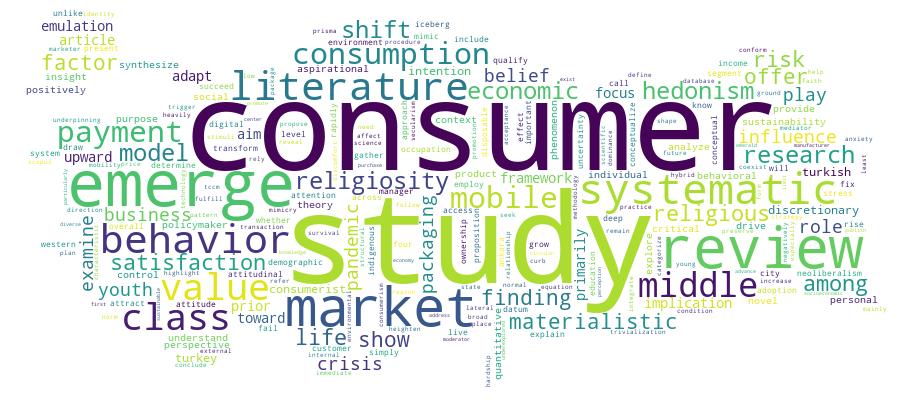
Competency Cloud

GCRIS Competency Cloud

Scholarly Output Search Results

Now showing 1 - 4 of 4
  • Article
    Mobile Payment Adoption During the COVID-19 Pandemic: A Systematic Literature Review
    (Palgrave Macmillan Ltd, 2026) Belbag, Aybegum Gungordu
    During the pandemic, the shift to non-physical transactions increased the need for mobile payments. This study aims to offer a systematic literature review on consumer behavior towards mobile payment during the pandemic, using the Theory, Context, Characteristics, and Methodology framework and following the Scientific Procedures and Reasons for Systematic Literature Reviews protocol. 47 articles from the WOS database were analyzed, revealing a dominance of quantitative studies, primarily based on the Technology Acceptance Model and UTAUT. Findings show that environmental stimuli and internal states (organism) shape behaviors and behavioral intentions (responses) towards mobile payments during the pandemic. The study concludes with future research directions grounded in the TCCM framework.
  • Article
    Living Between Belief and Consumption: Religiosity, Hedonism, and Life Satisfaction Among Turkish Youth
    (Routledge Journals, Taylor & Francis Ltd, 2025) Gungordu Belbag, Aybegum; Erbil, Cihat
    This study examines the relationships among religiosity, materialistic hedonism, control, discomfort, and life satisfaction among 256 young individuals in Turkey. Structural equation modeling shows that religiosity does not curb materialistic hedonism and positively affects control. Life satisfaction is positively influenced by control and materialistic hedonism, and negatively by discomfort. Turkish youth form hybrid identities and practices that integrate both faith and consumer desires. A few studies examine contexts like Turkey, where secularism and religiosity coexist, and religious beliefs fulfill broader social and economic functions. The co-existence of religious beliefs and consumerism -especially among middle and lower class youth- remains underexplored.
  • Article
    The "Trickle-Across" Phenomenon: Consumption-Mimicking in Emerging Markets in a Stress Environment
    (Emerald Group Publishing Ltd, 2025) Gungordu Belbag, Aybegum; Deligonul, Seyda Z.; Uner, Mehmet Mithat; Cavusgil, S. Tamer
    Purpose - This study conceptualizes a novel framework called the "trickle-across" phenomenon to understand how middle-class consumers in emerging markets adapt their consumer behavior during economic crises. Unlike the trickle-down model based on upward emulation, the study explores how risk and uncertainty drive consumers to mimic their in-group. Design/methodology/approach - The study employs a conceptual review approach, synthesizing the crisis literature on middle-class consumer behavior across emerging markets. It offers four novel propositions to explain the socio-psychological underpinnings of the shift in middle-class consumer behavior. Findings - Under normal, low-anxiety conditions, middle-class consumers seek upward mobility through aspirational consumption and class emulation, referred to as trickle-down theory. However, during crises, heightened risk anxiety triggers a shift from upward emulation to lateral mimicry, where individuals conform to the consumption norms of their immediate social cohort. Socio-cultural influences play a critical role in risk trivialization and adapting to economic hardships. Originality/value - The study proposes the trickle-across phenomenon as a defining pattern of middle-class consumer behavior in emerging markets during crises. It shifts the focus from aspirational models to cohort-based survival strategies and highlights how socio-cultural factors help middle-class consumers adapt to economic hardships and preserve identity. The framework provides new insights for marketers, policymakers, and scholars.
  • Article
    Consumer Behavior and Sustainability: What Role Does Eco-Friendly Packaging Play in Emerging Markets
    (Emerald Publishing, 2025) Güngördü Belbağ, A.
    Purpose – This study aims to offer a systematic review of eco-friendly packaged products from the consumer perspective in emerging markets. Design/methodology/approach – This study analyzed 47 Web of Science and SCOPUS articles using the PRISMA and theory-context-characteristics-methodology (TCCM) framework. Findings – This systematic review shows that prior research was mainly quantitative and relied heavily on the theory of planned behavior. This study categorized the articles by personal, product, price, place, promotion and external factors. Research primarily focused on personal factors, especially values and attitudes. Place-related factors were the least studied. Few studies explored mediators and moderators of purchase intention. Originality/value – This study shifts the focus of eco-friendly packaging research toward the consumer perspective, which was underexplored in the existing literature, particularly in emerging markets. While prior studies have primarily centered on manufacturers, this review synthesizes prior research showing that consumer behavior, knowledge and perception play a critical role in advancing sustainability and circular economy goals. This systematic review is the first to address this gap in emerging markets and offers implications for policymakers and businesses aiming to promote sustainable consumption in diverse socioeconomic settings. © 2025 Emerald Publishing Limited