
Park, Jongee
Loading...
Profile URL
Name Variants
Jongee Park
P.,Jongee
P., Jongee
J.,Park
Park J.
Park, Jongee
Park,J.
J., Park
Park,Jongee
Jongee, Park
Park, J
P.,Jongee
P., Jongee
J.,Park
Park J.
Park, Jongee
Park,J.
J., Park
Park,Jongee
Jongee, Park
Park, J
Job Title
Profesör Doktor
Email Address
jongee.park@atilim.edu.tr
Main Affiliation
Metallurgical and Materials Engineering
Status
Website
ORCID ID
Scopus Author ID
Turkish CoHE Profile ID
Google Scholar ID
WoS Researcher ID
Sustainable Development Goals
14
LIFE BELOW WATER

0
Research Products
2
ZERO HUNGER

0
Research Products
11
SUSTAINABLE CITIES AND COMMUNITIES

1
Research Products
1
NO POVERTY

0
Research Products
12
RESPONSIBLE CONSUMPTION AND PRODUCTION

0
Research Products
7
AFFORDABLE AND CLEAN ENERGY

12
Research Products
5
GENDER EQUALITY

0
Research Products
3
GOOD HEALTH AND WELL-BEING

2
Research Products
9
INDUSTRY, INNOVATION AND INFRASTRUCTURE

0
Research Products
13
CLIMATE ACTION

0
Research Products
6
CLEAN WATER AND SANITATION

0
Research Products
10
REDUCED INEQUALITIES

0
Research Products
4
QUALITY EDUCATION

0
Research Products
15
LIFE ON LAND

0
Research Products
16
PEACE, JUSTICE AND STRONG INSTITUTIONS

0
Research Products
17
PARTNERSHIPS FOR THE GOALS

0
Research Products
8
DECENT WORK AND ECONOMIC GROWTH

0
Research Products

Documents
53
Citations
927
h-index
19

Documents
50
Citations
890

Scholarly Output
57
Articles
45
Views / Downloads
21/0
Supervised MSc Theses
3
Supervised PhD Theses
0
WoS Citation Count
819
Scopus Citation Count
855
WoS h-index
19
Scopus h-index
19
Patents
0
Projects
1
WoS Citations per Publication
14.37
Scopus Citations per Publication
15.00
Open Access Source
7
Supervised Theses
3
Google Analytics Visitor Traffic
| Journal | Count |
|---|---|
| Ceramics International | 10 |
| Journal of Nanoscience and Nanotechnology | 3 |
| Applied Surface Science | 2 |
| 3rd International Conference on NANOCON -- SEP 21-23, 2011 -- Brno, CZECH REPUBLIC | 2 |
| Advanced Materials Research -- 2012 International Conference on Advances in Materials Science and Engineering, AMSE 2012 -- 9 December 2012 through 10 December 2012 -- Seoul -- 95488 | 2 |
Current Page: 1 / 7
Scopus Quartile Distribution
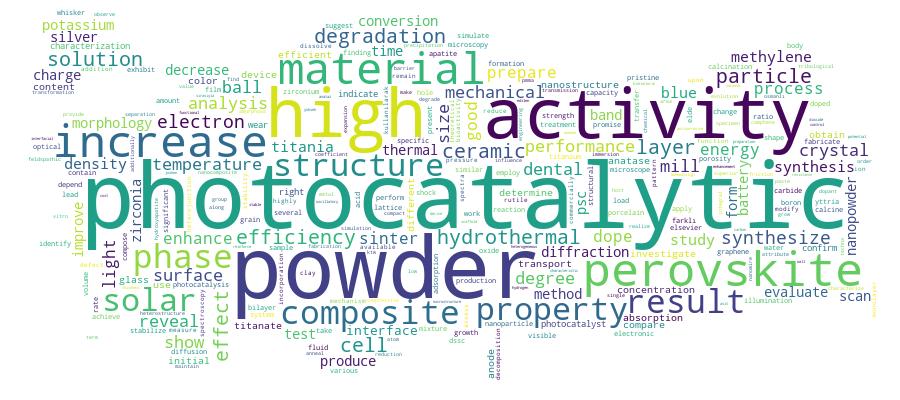
Competency Cloud
57 results
Scholarly Output Search Results
Now showing 1 - 10 of 57
Article Citation - WoS: 10Alkaline Hydrothermal Synthesis, Characterization, and Photocatalytic Activity of Tio2 Nanostructures: the Effect of Initial Tio2 Phase(Amer Scientific Publishers, 2019) Erdogan, Nursev; Park, Jongee; Choi, Woohyuk; Kim, Soo Young; Ozturk, AbdullahOne-dimensional (1D) titanate nanostructures were synthesized by hydrothermal route, using commercially available TiO2 (P25) and anatase powders as precursor materials and strong NaOH solution as catalyzer. The prepared titanates were calcined, followed by protonation to produce TiO2 nanostructures having enhanced photocatalytic and photovoltaic properties. The synthesized TiO2 1D nanostructures were characterized using field-emission scanning electron microscope, high-resolution electron microscope, X-ray diffraction analysis, and UV-Vis photospectroscopy to understand the effect of initial TiO2 phase on morphological and crystallographic features, and bandgap. Methylene blue degradation test was applied to evaluate the photoactivity of the products obtained after different stages of the process. The findings indicate that 1D TiO2 nanostructures form by different mechanisms from dissolved aggregates during hydrothermal process, depending on the crystal structure of the initial precursor used. Photocatalytic test results reveal that protonated titanates have considerable adsorption capability, while photocatalytic degradation depends on TiO2 transformation.Article Citation - WoS: 25Citation - Scopus: 26Identifying the Potentials for Charge Transport Layers Free N-P Homojunction-Based Perovskite Solar Cells(Pergamon-elsevier Science Ltd, 2022) Khan, Danish; Sajid, Sajid; Khan, Suliman; Park, Jongee; Ullah, IhsanPerovskite solar cells (PSCs) with no charge transport layers (CTLs) could be one of the major device architectures for the production of simple and low-cost devices. However, CTLs-free PSCs based on n-p homojunction have yet to show high power conversion efficiency (PCE), which is most likely due to inadequate light-and charge-management in the p-type perovskite. The device operation is examined using Solar Cell Capacitance Simulator (SCAPS)-software, and a novel n-p homojunction design is proposed to attempt efficient CTLs-free PSCs. Several aspects of p-type layer that can affect device performance, such as acceptor density, photon harvesting capability, defects density, and resistances to the transport of charge-carriers are scrutinized and adjusted. Furthermore, the effects of different work-functions of metal electrodes are examined. A suitable acceptor concentration is required for oriented charge transport. It is determined that a p-type perovskite with a thickness of 0.3 mu m is advantageous for high performance. A metal electrode with a high work-function is essential for efficient device. Consequently, a PCE of 15.60% is obtained with an optimal defect density of E15 cm(-3), indicating that n-p homojunction-based CTLs-free PSCs are promising since they simplify the device design and fabrication process while retaining an acceptable PCE.Article Citation - WoS: 31Citation - Scopus: 37Effect of Initial Water Content and Calcination Temperature on Photocatalytic Properties of Tio2 Nanopowders Synthesized by the Sol-Gel Process(Elsevier Sci Ltd, 2015) Agartan, Lutfi; Kapusuz, Derya; Park, Jongee; Ozturk, AbdullahThe effects of initial water content and calcination temperature on sol gel synthesized TiO2 powders were studied. Mother solutions had water/Ti-precursor mole ratios (R ratio) of 1, 5, 10, and 50. Dried aerogels were calcined for 3 h at temperatures of 300, 400, and 500 degrees C to obtain crystallized TiO2 nanopowders in the range of 15-30 nm. PE-scanning electron microscopy and X-ray diffraction techniques were employed to investigate the morphological and structural properties of the nanopowders synthesized. Profound effect of gel viscosity was observed on the formation mechanism and extent of crystallinity in the powders. Methylene blue degradation test results suggest, photocatalytic performance is enhanced as initial water content and calcination temperature increased. Band-gap energy of the powders ranged from 3.09 to 3.27 eV. Overall, this study shows that initial water content and calcination regime have a profound effect on the phase assembly, crystallite size, band-gap energy, and photocatalytic performance of sol gel synthesized TiO2 nanopowders. (C) 2015 Elsevier Ltd and Techna Group S.r.l. All rights reserved.Conference Object Citation - WoS: 2Citation - Scopus: 4Influence of Boron And/Or Zirconium Doping on Morphology and Optical Properties of Titania(Tanger Ltd, 2011) Kapusuz, Derya; Park, Jongee; Ozturk, Abdullah; Metallurgical and Materials EngineeringSol-gel derived B (boron) and Zr (zirconium) doped TiO2 (Titania) nanoparticles were synthesized. Microstructural, photocatalytic and crystallographic properties of the doped particles were investigated. Highest photocatalytic activity was achieved by 10 wt% Zr doping. 5 wt% doping was the optimum value for effective B doping. B ions were found to form oxygen vacancies behaving as interstitial defects whereas Zr ions substituted Ti4+ ions in the lattice.Article Citation - WoS: 23Citation - Scopus: 27Facile synthesis of CsPbBr3/PbSe composite clusters(Taylor & Francis Ltd, 2018) Thang Phan Nguyen; Ozturk, Abdullah; Park, Jongee; Sohn, Woonbae; Tae Hyung Lee; Jang, Ho Won; Kim, Soo YoungIn this work, CsPbBr3 and PbSe nanocomposites were synthesized to protect perovskite material from self-enlargement during reaction. UV absorption and photoluminescence (PL) spectra indicate that the addition of Se into CsPbBr3 quantum dots modified the electronic structure of CsPbBr3, increasing the band gap from 2.38 to 2.48 eV as the Cs:Se ratio increased to 1:3. Thus, the emission color of CsPbBr3 perovskite quantum dots was modified from green to blue by increasing the Se ratio in composites. According to X-ray diffraction patterns, the structure of CsPbBr3 quantum dots changed from cubic to orthorhombic due to the introduction of PbSe at the surface. Transmission electron microscopy and X-ray photoemission spectroscopy confirmed that the atomic distribution in CsPbBr3/PbSe composite clusters is uniform and the composite materials were well formed. The PL intensity of a CsPbBr3/PbSe sample with a 1:1 Cs: Se ratio maintained 50% of its initial intensity after keeping the sample for 81 h in air, while the PL intensity of CsPbBr3 reduced to 20% of its initial intensity. Therefore, it is considered that low amounts of Se could improve the stability of CsPbBr3 quantum dots.Article Citation - WoS: 44Citation - Scopus: 43Sol-Gel Synthesis and Photocatalytic Activity of B and Zr Co-Doped Tio2(Pergamon-elsevier Science Ltd, 2013) Kapusuz, Derya; Park, Jongee; Ozturk, AbdullahEffects of boron (B) and/or zirconium (Zr) doping on photocatalytic activity of sol-gel derived titania (TiO2) powders were investigated. A conventional, non-hydrous sol-gel technique was applied to synthesize the B, Zr doped/co-doped TiO2 powders. Doping was made at molar ratios of Ti/B=1 and Ti/Zr=10. Sol-gel derived xero-gels were calcined at 500 degrees C for 3 h. The crystal chemistry and the morphology of the undoped and B, Zr doped/co-doped TiO2 nanoparticles were investigated using X-ray diffractometer and scanning electron microscope. Nano-scale (9-46 nm) TiO2 crystallites were obtained after calcination. Doping and co-doping decreased the crystallite size. Photocatalytic activity was measured through the degradation of methylene blue (MB) under 1 h UV-irradiation using a UV-vis spectrophotometer. Results revealed that B doping into anatase caused the formation of oxygen vacancies, whereas Zr addition caused Ti substitution. Both B and Zr ions had a profound effect on the particle morphology and photocatalytic activity of TiO2. The photocatalytic activity of B and Zr doped TiO2 particles increased from 27% to 77% and 57%, respectively. The best activity (88.5%) was achieved by co-doping. (C) 2013 Elsevier Ltd. All rights reserved.Conference Object Citation - WoS: 1PRODUCTION OF SILVER LOADED PHOTOCATALYTIC TIO2 POWDERS BY BALL MILLING(Tanger Ltd, 2011) Aysin, Basak; Park, Jongee; Ozturk, AbdullahThe present study was undertaken to improve photocatalytic efficiency of TiO2 powder by silver doping and/or particle size reduction through mechanical ball milling. A planetary ball mill was employed to reduce the particle size of TiO2 powders to nanoscale and silver loading to TiO2 powders. Silver nitrate was used as silver source to obtain about 1% Ag load. Slurry taken from ball mill was separated by centrifugal separator into nano and micro sols. Separated nanosol was taken into the furnace to be dried at 103 degrees C and calcined at 400 degrees C for 1 hour to assist silver loading. X-Ray powder diffraction (XRD) was employed to identify the crystalline phases present in the powders produced. XRD results revealed that doped TiO2 powders were consisted of only anatase phase of TiO2. Changes in lattice parameters of TiO2 structure after doping were determined also by XRD. Scanning Electron Microscope (SEM) and particle size analyzer were used for examining the size reduction effect of ball milling process. Photocatalytic performance of the powders was evaluated by Methylene Orange (MO) test under UV light illumination using UV-Spectrophotometer.Article Citation - WoS: 29Citation - Scopus: 29A Newly Constructed Photoactive System, Fe(iii)-c/N-bi2< for Efficient Visible Light Photocatalysis(Elsevier Science Sa, 2018) Sudrajat, Hanggara; Park, Jongee; Hartuti, Sri; Park, Jongee; Park, Jongee; Metallurgical and Materials Engineering; Metallurgical and Materials EngineeringIn this study, two strategies are simultaneously applied for photocatalytic activity enhancement of Bi2O3. The first strategy is to increase the light absorption via simultaneous carbon and nitrogen doping. The second strategy is to increase the charge carrier separation via Fe grafting. Transmission electron microscopy observation reveals the presence of Fe nanoclusters resided on the Bi2O3 surface. Near edge Xray absorption fine structure (NEXAFS) analysis confirms the valence state of the Fe species to be +3, and their coordination to be octahedral. The C K-edge and N K-edge NEXAFS spectra furthermore confirm the incorporation of C and N species in the Bi2O3 structure. This newly constructed photocatalyst, denoted as Fe(III)-C/N-Bi2O3, shows appreciably enhanced photocatalytic performance for the decomposition of 2,4-dichlorophenol under visible light as compared to bare Bi2O3. (C) 2018 Elsevier B.V. All rights reserved.Conference Object Effect of Porosity on the Efficiency of Dssc Produced by Using Nano-Size Tio2 Powders(2014) Bilgin,N.; Park,J.; Ozturk,A.The effect of porosity on the energy conversion efficiency of dye-sensitized solar cells (DSSCs) prepared by using pastes formed by mixing 20 nm and 200 nm TiO2 particles in different ratios is investigated. XRD and SEM analysis have been done to investigate the microstructure of pastes. The energy conversion efficiency of DSSCs was determined by drawing complete current density-voltage curve. The DSSC prepared using the mixture composed of 40 wt% 20 nm and 60 wt% 200 nm TiO2 particles maintained best energy conversion efficiency of 6.74%. The energy conversion efficiency of the DSSCs prepared by using pastes based on the mixture of two different size of TiO 2 particles is much better than that of the DSSCs prepared by using pastes composed of either only 20 nm or only 200 nm of TiO2 particles. The improved energy conversion efficiency is attributed to the establishment of further porous structure that lets more dye absorption from the surface through interior which provides enhancement of light absorption and multiple scattering.Article Citation - WoS: 22Citation - Scopus: 24Mechanical and Biological Properties of Al2o3< and Tio2 Co-Doped Zirconia Ceramics(Elsevier Sci Ltd, 2017) Agac, Ozlem; Gozutok, Melike; Sasmazel, Hilal Turkoglu; Ozturk, Abdullah; Park, JongeeVarious amounts (ranging from 0 to 2 wt%) of TiO2 and Al2O3 were mono and co-doped to tetragonal zirconia ceramic containing 3 mol% yttria (3Y-TZP) by mechanical ball milling. Powders were compacted by uniaxial pressing at a pressure of 23 MPa. The compacts were pressureless sintered at 1450 degrees C for 2 h. Density, hardness, fracture toughness, and cell attachment of the co-doped 3Y-TZP ceramics were measured with respect to dopant addition to determine the effects of the kind and amount of dopants on the properties. The results show that density decreased gradually as the amount of dopant was increased. The mechanical properties showed the maximum value when 0.5 wt% TiO2 and 1.0 wt% Al2O3 were co-doped to 3Y-TZP. Crystalline phase formation and microstructural morphology were investigated by XRD and SEM analyses to explain the variations in the properties. Co-doping of TiO2 and Al2O3 to 3Y-TZP did not have an influence on the phases present, but decreased the grain size. The co-doping also affected the cell attachment and the growth on the surface of the zirconia ceramics.
