Park, Jongee

Loading...
Profile Picture
Name Variants
Jongee Park
P.,Jongee
P., Jongee
J.,Park
Park J.
Park, Jongee
Park,J.
J., Park
Park,Jongee
Jongee, Park
Park, J
Job Title
Profesör Doktor
Email Address
jongee.park@atilim.edu.tr
Main Affiliation
Metallurgical and Materials Engineering
Status
Website
Scopus Author ID
Turkish CoHE Profile ID
Google Scholar ID
WoS Researcher ID

Sustainable Development Goals

14

LIFE BELOW WATER
LIFE BELOW WATER Logo

0

Research Products

2

ZERO HUNGER
ZERO HUNGER Logo

0

Research Products

11

SUSTAINABLE CITIES AND COMMUNITIES
SUSTAINABLE CITIES AND COMMUNITIES Logo

1

Research Products

1

NO POVERTY
NO POVERTY Logo

0

Research Products

12

RESPONSIBLE CONSUMPTION AND PRODUCTION
RESPONSIBLE CONSUMPTION AND PRODUCTION Logo

0

Research Products

7

AFFORDABLE AND CLEAN ENERGY
AFFORDABLE AND CLEAN ENERGY Logo

12

Research Products

5

GENDER EQUALITY
GENDER EQUALITY Logo

0

Research Products

3

GOOD HEALTH AND WELL-BEING
GOOD HEALTH AND WELL-BEING Logo

2

Research Products

9

INDUSTRY, INNOVATION AND INFRASTRUCTURE
INDUSTRY, INNOVATION AND INFRASTRUCTURE Logo

0

Research Products

13

CLIMATE ACTION
CLIMATE ACTION Logo

0

Research Products

6

CLEAN WATER AND SANITATION
CLEAN WATER AND SANITATION Logo

0

Research Products

10

REDUCED INEQUALITIES
REDUCED INEQUALITIES Logo

0

Research Products

4

QUALITY EDUCATION
QUALITY EDUCATION Logo

0

Research Products

15

LIFE ON LAND
LIFE ON LAND Logo

0

Research Products

16

PEACE, JUSTICE AND STRONG INSTITUTIONS
PEACE, JUSTICE AND STRONG INSTITUTIONS Logo

0

Research Products

17

PARTNERSHIPS FOR THE GOALS
PARTNERSHIPS FOR THE GOALS Logo

0

Research Products

8

DECENT WORK AND ECONOMIC GROWTH
DECENT WORK AND ECONOMIC GROWTH Logo

0

Research Products
Documents

53

Citations

927

h-index

19

Documents

50

Citations

890

Scholarly Output

57

Articles

45

Views / Downloads

21/0

Supervised MSc Theses

3

Supervised PhD Theses

0

WoS Citation Count

819

Scopus Citation Count

855

WoS h-index

19

Scopus h-index

19

Patents

0

Projects

1

WoS Citations per Publication

14.37

Scopus Citations per Publication

15.00

Open Access Source

7

Supervised Theses

3

Google Analytics Visitor Traffic

JournalCount
Ceramics International10
Journal of Nanoscience and Nanotechnology3
Applied Surface Science2
3rd International Conference on NANOCON -- SEP 21-23, 2011 -- Brno, CZECH REPUBLIC2
Advanced Materials Research -- 2012 International Conference on Advances in Materials Science and Engineering, AMSE 2012 -- 9 December 2012 through 10 December 2012 -- Seoul -- 954882
Current Page: 1 / 7

Scopus Quartile Distribution

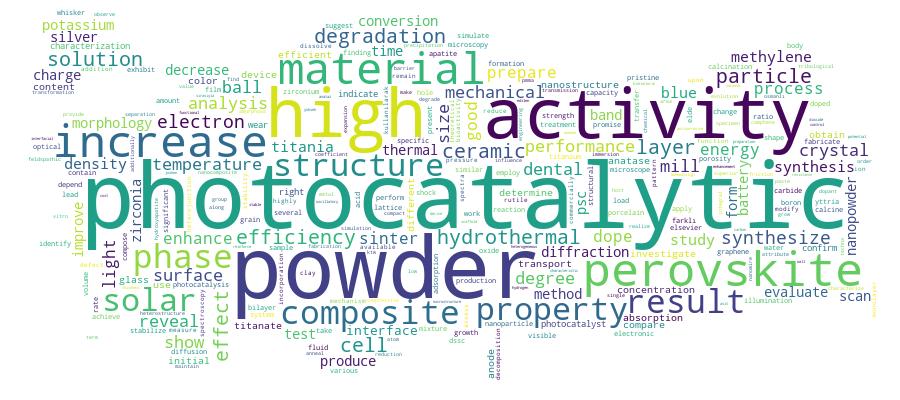
Competency Cloud

GCRIS Competency Cloud

Scholarly Output Search Results

Now showing 1 - 3 of 3
  • Article
    Citation - WoS: 10
    Citation - Scopus: 10
    Computational Insight of Lithium Adsorption and Intercalation in Bilayer Tic3
    (Pergamon-elsevier Science Ltd, 2024) Park, Jongee; Fatima, Syeda Afrinish
    Lithium-ion batteries (LIBs) have gained significant attention owing to their long lifespan. However, these batteries offer unmatched energy storage capacity and suffer from restricted lithium-ion mobility within the electrodes. Here, we employ first-principles calculation to investigate the two-dimensional TiC3 bilayer material. The results exhibit a remarkably high specific capacity of 1277 mAh/g and a low diffusion energy barrier of 0.12 eV. The TiC3 bilayer is anticipated to show high electrical conductivity, maintaining its metallicity due to strong bonding with four Li atoms. Additionally, its high thermal and dynamic stabilities are expected to significantly enhance the battery performance. Notably, the AB stacking bilayer TiC3 experiences a mere 6.01 % increase in volume, considerably smaller compared to the 28 % increase observed in the SiC bilayer. This suggests that TiC3 bilayers remain intact even at the highest concentration of lithium adsorptions. We also explored the solidelectrolyte interface (SEI) formation at the outset of battery operation using reactive force field molecular dynamics simulation. The reactive products of SEI are nicely matched with previous experimental and theoretical findings. All these intriguing properties position the TiC3 bilayer as an exceptionally promising material for use in LIBs.
  • Article
    Citation - WoS: 51
    Citation - Scopus: 52
    A Dft Study of Tic3 as Anode Material for Li-Ion Batteries
    (Elsevier, 2023) Park, Jongee; Fatima, Syeda Afrinish
    Two-dimensional monolayer titanium carbide (TiC3) was used to study as a suitable electrode material for lithium-ion batteries with first principles calculation. The monolayer TiC3 showed excellent structural stability, high mechanical stiffness and good electronic conductance behaviour. The adsorption of Li on the carbon rich composition of titanium carbide monolayer is predicted to be favourable. TiC3 structure has remained the same, preserving its metallicity after Li adsorption with attaining high electrical conductivity during lithiation/delithiation process. Especially, the theoretical specific capacity of TiC3 monolayer is high, up to 1916 mAh/g, which is five times higher than the practical graphite. The low open circuit voltage (0.26 V) and diffusion energy barrier (0.25 eV) are also beneficial for overall performance of LIBs. Importantly, during lithiation the change in area is very small and reaches only 8.1 % for full lithiation indicating that it can avoid the large volume expansion during charge/discharge cycles. Its excellent performance, including high melting temperature, dynamical and mechanical stability, can be credited to the rigidness of the TiC3. Given these advantages, that is, high specific capacity, low Li diffusion energy barrier, low open circuit voltage and high in-plane stiffness, TiC3 monolayer can be a promising anode material for lithium-ion batteries.
  • Article
    Citation - WoS: 8
    Citation - Scopus: 8
    Two-Dimensional Carbon Rich Titanium Carbide (tic3) as a High-Capacity Anode for Potassium Ion Battery
    (Elsevier, 2024) Fatima, Syeda Afrinish; Park, Jongee
    In recent years, two-dimensional (2D) materials, particularly MXenes such as titanium carbide, have gained significant interest for energy storage applications. This study explores the use of potassium-adsorbed TiC3 nanosheets as potential anode materials for potassium ion batteries (KIBs), utilizing first-principles calculations. The investigated electronic, mechanical, and thermal properties of TiC3 demonstrate its suitability as an anode material. The incorporation of potassium into the host material enhances electronic conductivity while maintaining a stable layered structure. Our findings reveal promising adsorption behavior of potassium in TiC3, leading to a high theoretical specific capacity of 958 mAh/g, coupled with a low energy barrier of 0.19 eV for potassium migration, which is indicative of superior electrochemical performance. Moreover, despite the high potassium content, the electrode material shows limited volume expansion of 11.3 %, suggesting good cyclability. Additionally, the equilibrium distance between potassium and TiC3, measured at 3.11 & ring;A, exceeds that of lithium and TiC3 (2.56 & ring;A), potentially augmenting the material's flexibility. Consequently, TiC3 emerges as a promising candidate for KIB anode materials.