Önen, Selin

Loading...
Profile Picture
Name Variants
Selin, Önen
Önen,S.
Önen, Selin
O., Selin
Selin, Onen
S.,Önen
O.,Selin
S.,Onen
Onen,S.
Ö.,Selin
Onen, Selin
S., Onen
Job Title
Araştırma Görevlisi
Email Address
selin.onen@atilim.edu.tr
Main Affiliation
Basic Sciences
Status
Former Staff
Website
ORCID ID
Scopus Author ID
Turkish CoHE Profile ID
Google Scholar ID
WoS Researcher ID

Sustainable Development Goals

NO POVERTY1
NO POVERTY
0
Research Products
ZERO HUNGER2
ZERO HUNGER
0
Research Products
GOOD HEALTH AND WELL-BEING3
GOOD HEALTH AND WELL-BEING
4
Research Products
QUALITY EDUCATION4
QUALITY EDUCATION
0
Research Products
GENDER EQUALITY5
GENDER EQUALITY
0
Research Products
CLEAN WATER AND SANITATION6
CLEAN WATER AND SANITATION
1
Research Products
AFFORDABLE AND CLEAN ENERGY7
AFFORDABLE AND CLEAN ENERGY
0
Research Products
DECENT WORK AND ECONOMIC GROWTH8
DECENT WORK AND ECONOMIC GROWTH
0
Research Products
INDUSTRY, INNOVATION AND INFRASTRUCTURE9
INDUSTRY, INNOVATION AND INFRASTRUCTURE
0
Research Products
REDUCED INEQUALITIES10
REDUCED INEQUALITIES
0
Research Products
SUSTAINABLE CITIES AND COMMUNITIES11
SUSTAINABLE CITIES AND COMMUNITIES
1
Research Products
RESPONSIBLE CONSUMPTION AND PRODUCTION12
RESPONSIBLE CONSUMPTION AND PRODUCTION
0
Research Products
CLIMATE ACTION13
CLIMATE ACTION
0
Research Products
LIFE BELOW WATER14
LIFE BELOW WATER
0
Research Products
LIFE ON LAND15
LIFE ON LAND
0
Research Products
PEACE, JUSTICE AND STRONG INSTITUTIONS16
PEACE, JUSTICE AND STRONG INSTITUTIONS
0
Research Products
PARTNERSHIPS FOR THE GOALS17
PARTNERSHIPS FOR THE GOALS
0
Research Products
This researcher does not have a Scopus ID.
This researcher does not have a WoS ID.
Scholarly Output

11

Articles

7

Views / Downloads

70/0

Supervised MSc Theses

0

Supervised PhD Theses

0

WoS Citation Count

91

Scopus Citation Count

99

Patents

0

Projects

0

WoS Citations per Publication

8.27

Scopus Citations per Publication

9.00

Open Access Source

4

Supervised Theses

0

JournalCount
Stem Cell Research & Therapy2
Advances in Experimental Medicine and Biology1
American Journal of Rhinology & Allergy1
Journal of Assisted Reproduction and Genetics1
Journal of Hazardous Materials1
Current Page: 1 / 2

Scopus Quartile Distribution

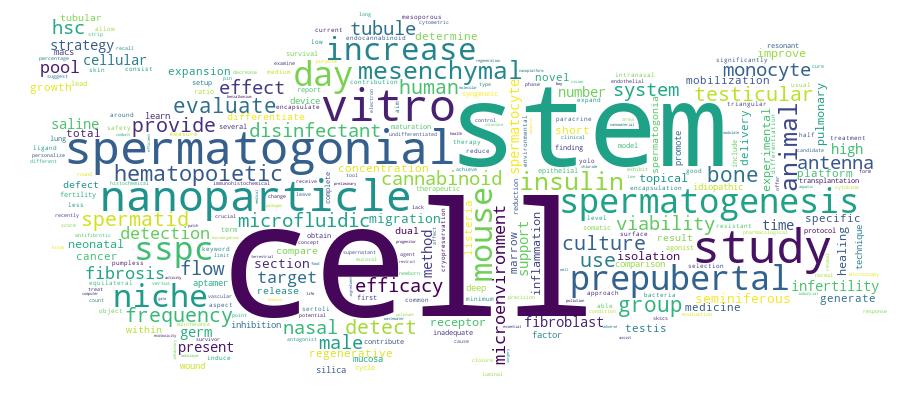
Competency Cloud

GCRIS Competency Cloud

Scholarly Output Search Results

Now showing 1 - 1 of 1
  • Article
    Citation - WoS: 1
    Citation - Scopus: 1
    Topical Intranasal Insulin Enhances Healing of Nasal Mucosa: an Experimental Animal Study
    (Sage Publications inc, 2023) Kulekci, Cagri; Ozer, Serdar; Onen, Selin; Korkusuz, Petek; Yilmaz, Taner
    Objective Aim of this study was to evaluate the effect of topical intranasal insulin on healing of nasal mucosa in a rat model. Methods Forty-eight Wistar rats, weighing between 250 and 300 g and aged 10-12 weeks were used and randomized into two equal groups. 1.9 mm curette was introduced through the left nostril and 1.9 mm mucosa from the left nasal septum was curetted. Postoperatively, animals in the control group received 1 mL of physiologic saline, 3 times a day in a nasal irrigation fashion. Animals in the experimental group received 1 mL of 5 IU/mL regular insulin in saline solution. Subjects were sacrificed after 5, 10, and 15 days and macroscopic and histomorphometric evaluations were performed. Results There were no mucosal synechiae and septal perforation macroscopically. Histological examination revealed that the defect size reduction was 21% in the saline group versus 56% in the insulin group on the fifth day (p = 0.006). There was 62% defect reduction in the saline group versus 79% in the insulin group on the 10th day (p = 0.034). On the 15th day, only 67% of saline group animals had complete defect closure, whereas 100% of animals treated with insulin had complete closure (92% vs 100% mucosal defect reduction, p = 0.036). Both edema and inflammation were less in the insulin group on 15th day (p = 0.006; p = 0.023, respectively). Conclusion The results from this study support the safety and efficacy of topical insulin on wound healing in the literature. This study could guide further experimental studies that examine human sinonasal wound healing.