Dengiz, Suat

Loading...
Name Variants
Dengiz, Suat D., Suat Suat Dengiz S. Dengiz Suat D. D., S. Dengız, Suat Dengiz, S.
Job Title
Prof. Dr.
Email Address
suat.dengiz@atilim.edu.tr
Main Affiliation
Electrical-Electronics Engineering
Status
Current Staff
Website
Scopus Author ID
Turkish CoHE Profile ID
Google Scholar ID
WoS Researcher ID

Research Topics

Physical Sciences
Physics and AstronomyEngineering
Nuclear and High Energy PhysicsAstronomy and AstrophysicsMechanical EngineeringControl and Systems Engineering
Black Holes and Theoretical Physics
Cosmology and Gravitation Theories
Advanced Differential Geometry Research
Advanced machining processes and optimization
Fault Detection and Control Systems

Sustainable Development Goals

SDG data is not available
Documents

20

Citations

170

h-index

8

Documents

17

Citations

162

Publication Collaboration

Affiliation Name Count
University of Turkish Aeronautical Association 6
Usak University 4
University of Groningen 3
Czech Academy of Sciences, Institute of Mathematics 2
Başkent University 1
1 / 2
Data obtained from OpenAlex
Scholarly Output

2

Articles

2

Views / Downloads

31/4

Supervised MSc Theses

0

Supervised PhD Theses

0

WoS Citation Count

0

Scopus Citation Count

0

Patents

0

Projects

0

WoS Citations per Publication

0.00

Scopus Citations per Publication

0.00

Open Access Source

2

Supervised Theses

0

JournalCount
Annals of Physics1
Nuclear Physics B1
Current Page: 1 / 1

Scopus Quartile Distribution

Competency Cloud

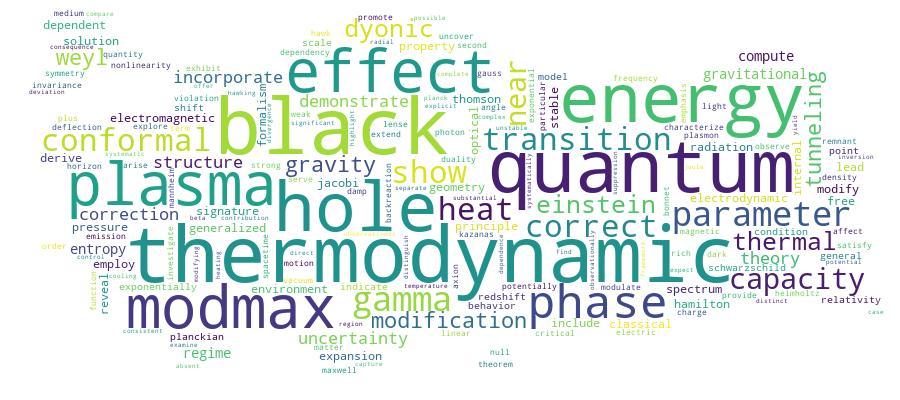
GCRIS Competency Cloud

Scholarly Output Search Results

Now showing 1 - 2 of 2
  • Article
    Quantum-Corrected Thermodynamics of Conformal Weyl Gravity Black Holes: GUP Effects and Phase Transitions
    (Academic Press Inc., 2026-07) Sakallı, İzzet; Sucu, Erdem; Dengiz, Suat
    We investigate the thermodynamic properties of black holes in Conformal Weyl Gravity (CWG) using the Mannheim-Kazanas solution, with particular emphasis on quantum corrections that become significant near the Planck scale. Our analysis employs the Hamilton-Jacobi tunneling formalism to derive the Hawking temperature, revealing explicit contributions from the conformal parameters beta, gamma, and k that lead to substantial deviations from Schwarzschild black hole behavior. We incorporate quantum gravitational effects through the Generalized Uncertainty Principle, demonstrating systematic suppression of thermal radiation in the near-Planckian regime. Using an exponentially corrected entropy model, we compute the complete spectrum of QC thermodynamic potentials, including internal energy, pressure, heat capacity, and free energies. Our heat capacity analysis shows divergence behavior that separates stable and unstable regions, indicating possible thermodynamic transitions controlled by the scale-dependent parameter gamma. The Joule-Thomson expansion analysis shows distinct cooling and heating regimes with inversion points that shift systematically with CWG parameters, capturing QC phase transitions absent in general relativity. We also examine gravitational redshift in CWG geometry, finding complex radial dependence that highlights modifications compared to the Schwarzschild case, although redshift alone cannot observationally distinguish CWG from Einstein's theory. Our results demonstrate that CWG offers a consistent framework for studying black hole thermodynamics beyond general relativity, with quantum corrections modifying phase structures in the near-Planckian regime, though these effects are not expected to yield direct observational consequences.
  • Article
    Thermal and Optical Signatures of Einstein-Dyonic ModMax Black Holes with GUP and Plasma Modifications
    (Elsevier, 2026-05) Sakallı, İzzet; Sucu, Erdem; Dengiz, Suat
    We explore the thermodynamic and optical properties of Einstein-Dyonic-ModMax (EDM) black holes (BHs) incorporating quantum gravity corrections and plasma effects. The ModMax theory promotes the classical Maxwell theory to a non-linear electrodynamics with a larger symmetry structure (electromagnetic duality plus conformal invariance), and provides dyonic BH solutions characterized by both electric and magnetic charges modulated by the nonlinearity parameter gamma. Using the Hamilton-Jacobi tunneling formalism, we derive the Hawking radiation spectrum and demonstrate how the Generalized Uncertainty Principle (GUP) modifies the thermal emission, potentially leading to stable remnants. Our analysis of gravitational lensing employs the Gauss-Bonnet theorem to compute light deflection angles in both vacuum and plasma environments, revealing strong dependencies on the ModMax parameter and plasma density. We extend this to axion-plasmon environments, uncovering frequency-dependent modifications that could serve as dark matter signatures. The photon motion analysis in plasma media shows how the exponential damping term e-gamma affects electromagnetic backreaction on spacetime geometry. We compute quantum-corrected thermodynamic quantities, including internal energy, Helmholtz free energy, pressure, and heat capacity, using exponentially modified entropy models. The heat capacity exhibits second-order phase transitions with critical points shifting as functions of gamma, indicating rich thermodynamic phase structures. The energy condition analysis shows that classical ModMax electrodynamics satisfies the null and weak energy conditions, while the observed near-horizon violations arise only after incorporating quantum-corrected entropy effects.