Çamalan, Özge

Loading...
Profile Picture
Name Variants
Ç., Özge
Camalan, Ozge
C., Ozge
Ö.,Çamalan
Özge, Çamalan
C.,Ozge
Ozge, Camalan
Camalan,O.
Çamalan, Özge
O.,Camalan
Ç.,Özge
Çamalan,Ö.
O., Camalan
Ö., Çamalan
Job Title
Araştırma Görevlisi
Email Address
ozge.camalan@atilim.edu.tr
Main Affiliation
Economics
Status
Website
ORCID ID
Scopus Author ID
Turkish CoHE Profile ID
Google Scholar ID
WoS Researcher ID

Sustainable Development Goals

NO POVERTY1
NO POVERTY
1
Research Products
ZERO HUNGER2
ZERO HUNGER
0
Research Products
GOOD HEALTH AND WELL-BEING3
GOOD HEALTH AND WELL-BEING
0
Research Products
QUALITY EDUCATION4
QUALITY EDUCATION
0
Research Products
GENDER EQUALITY5
GENDER EQUALITY
0
Research Products
CLEAN WATER AND SANITATION6
CLEAN WATER AND SANITATION
0
Research Products
AFFORDABLE AND CLEAN ENERGY7
AFFORDABLE AND CLEAN ENERGY
0
Research Products
DECENT WORK AND ECONOMIC GROWTH8
DECENT WORK AND ECONOMIC GROWTH
1
Research Products
INDUSTRY, INNOVATION AND INFRASTRUCTURE9
INDUSTRY, INNOVATION AND INFRASTRUCTURE
0
Research Products
REDUCED INEQUALITIES10
REDUCED INEQUALITIES
1
Research Products
SUSTAINABLE CITIES AND COMMUNITIES11
SUSTAINABLE CITIES AND COMMUNITIES
1
Research Products
RESPONSIBLE CONSUMPTION AND PRODUCTION12
RESPONSIBLE CONSUMPTION AND PRODUCTION
1
Research Products
CLIMATE ACTION13
CLIMATE ACTION
0
Research Products
LIFE BELOW WATER14
LIFE BELOW WATER
0
Research Products
LIFE ON LAND15
LIFE ON LAND
0
Research Products
PEACE, JUSTICE AND STRONG INSTITUTIONS16
PEACE, JUSTICE AND STRONG INSTITUTIONS
0
Research Products
PARTNERSHIPS FOR THE GOALS17
PARTNERSHIPS FOR THE GOALS
0
Research Products
This researcher does not have a Scopus ID.
This researcher does not have a WoS ID.
Scholarly Output

6

Articles

5

Views / Downloads

21/0

Supervised MSc Theses

1

Supervised PhD Theses

0

WoS Citation Count

6

Scopus Citation Count

8

Patents

0

Projects

0

WoS Citations per Publication

1.00

Scopus Citations per Publication

1.33

Open Access Source

5

Supervised Theses

1

JournalCount
Ankara Hacı Bayram Veli Üniversitesi İktisadi ve İdari Bilimler Fakültesi Dergisi (Online)1
Computational Economics1
İşletme Araştırmaları Dergisi1
Sustainability1
World Journal of Applied Economics1
Current Page: 1 / 1

Scopus Quartile Distribution

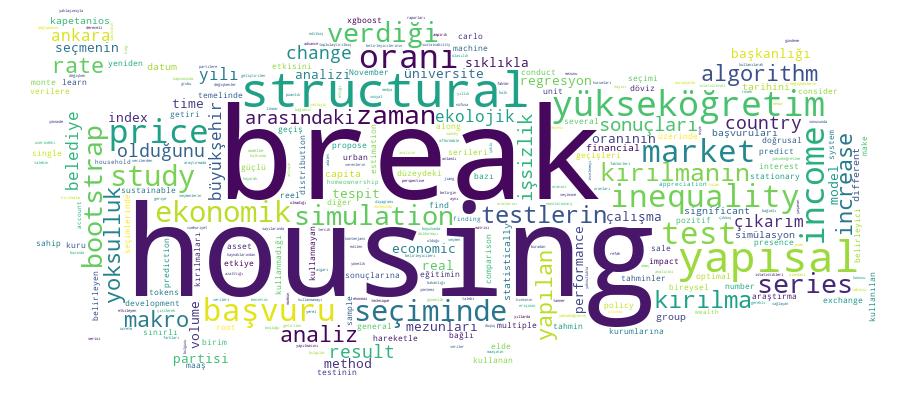
Competency Cloud

GCRIS Competency Cloud

Scholarly Output Search Results

Now showing 1 - 1 of 1
  • Article
    Citation - WoS: 3
    Citation - Scopus: 5
    The Impact of Increases in Housing Prices on Income Inequality: a Perspective on Sustainable Urban Development
    (Mdpi, 2025) Unalan, Gokhan; Camalan, Ozge; Yilmaz, Hakki Hakan
    This study examines the impact of housing price increases on income inequality using the dynamic system GMM for OECD countries (2010-2021). We test the hypothesis that housing price appreciation affects income distribution differently based on economic development levels and homeownership patterns. The analysis is conducted both for the entire sample and by dividing countries into two groups based on per capita income, Group 1 (16 countries) with below-median per capita GDP and Group 2 (17 countries) with above-median per capita GDP, to account to account for structural differences in housing markets, financial systems, and wealth accumulation mechanisms. The findings show that rising housing prices help reduce income inequality, especially in countries that are relatively low-income and where more low-income households own their homes. Specifically, our estimates indicate that a one-point increase in the housing price index leads to a statistically significant (p < 0.05) 0.21 percentage point reduction in the Gini change rate in lower-income countries. However, in higher-income countries, the effect of housing prices on inequality is statistically insignificant, suggesting that the relationship between housing markets and income inequality varies across different economic contexts. This insignificance likely stems from countervailing forces: while housing appreciation increases wealth for homeowners, higher housing costs may disproportionately burden lower-income households through rental markets in these economies. The findings highlight the importance of country-specific housing programs that consider homeownership patterns and financial market access in tackling inequality, along with comprehensive public social policies. Our study has implications for policymakers seeking to address inequality through housing market interventions, particularly during the post-2008 recovery period and into the early pandemic phase.