Argeşo, Ahmet Hakan

Loading...
Profile Picture
Name Variants
Argeso, H.
A. H. Argeşo
A.H.Argeşo
Argeşo, Ahmet Hakan
Ahmet Hakan, Argeşo
Argeso, Hakan
A., Ahmet Hakan
Argeso,A.H.
A.,Ahmet Hakan
A., Argeso
Argeso, Ahmet Hakan
Argeşo,A.H.
Argeso, H
A.,Argeşo
Ahmet Hakan, Argeso
A. H. Argeso
A.H.Argeso
Argeso, Hakan
Argeşo, A. Hakan
Argeso, H.
Job Title
Profesor Doktor
Email Address
hakan.argeso@atilim.edu.tr
Main Affiliation
Manufacturing Engineering
Status
Website
ORCID ID
Scopus Author ID
Turkish CoHE Profile ID
Google Scholar ID
WoS Researcher ID

Sustainable Development Goals

9

INDUSTRY, INNOVATION AND INFRASTRUCTURE
INDUSTRY, INNOVATION AND INFRASTRUCTURE Logo

1

Research Products
This researcher does not have a Scopus ID.
Documents

12

Citations

242

Scholarly Output

10

Articles

7

Views / Downloads

58/337

Supervised MSc Theses

2

Supervised PhD Theses

1

WoS Citation Count

101

Scopus Citation Count

90

WoS h-index

6

Scopus h-index

5

Patents

0

Projects

0

WoS Citations per Publication

10.10

Scopus Citations per Publication

9.00

Open Access Source

1

Supervised Theses

3

Google Analytics Visitor Traffic

JournalCount
Acta Mechanica1
Advances in Structural Engineering1
Computational Mechanics1
Journal of Materials Research1
Journal of Sound and Vibration1
Current Page: 1 / 2

Scopus Quartile Distribution

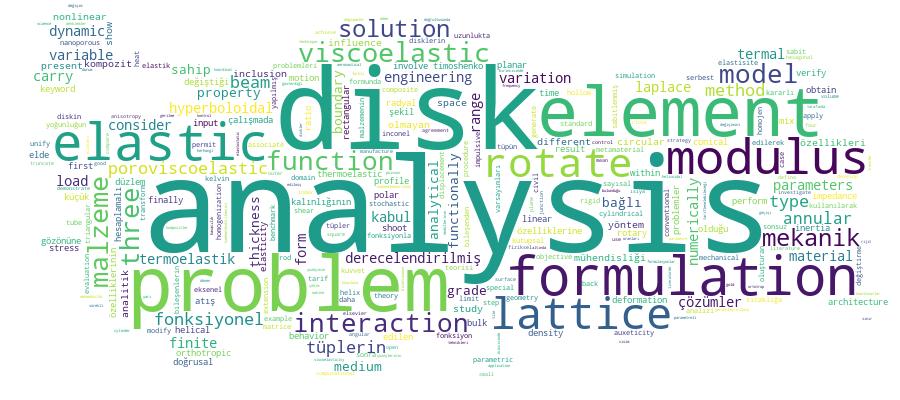
Competency Cloud

GCRIS Competency Cloud

Scholarly Output Search Results

Now showing 1 - 3 of 3
  • Article
    Citation - WoS: 12
    Skeletonization-based beam finite element models for stochastic bicontinuous materials: Application to simulations of nanoporous gold
    (Cambridge Univ Press, 2018) Soyarslan, Celal; Argeso, Hakan; Borgmann, Swantje
    An efficient representative volume element generation strategy is developed in modeling nanoporous materials. It uses periodic 3D beam finite element (FE) models derived from skeletonization of spinodal-like stochastic microstructures produced by a leveled random field. To mimic stiffening with agglomeration of the mass at junctions, an increased Young's modulus is assigned to the elements within the junction zone. The effective Young's modulus, Poisson's ratio, and universal anisotropy index are computed. A good agreement of the Young's modulus predictions with those obtained from experimental results for phase volume fractions 0.20 < phi(B) < 0.50 is observed. Moreover, the elastic anisotropy index of the generated beam networks shows sufficient proximity to isotropy. Finally, it is demonstrated that, as compared to the simulation statistics of voxel-FE models, for the beam-FE models over 500-fold computational acceleration with 250-fold less memory requirement is provided.
  • Article
    Citation - WoS: 16
    Citation - Scopus: 16
    Elastic Analysis of Variable Profile and Polar Orthotropic Fgm Rotating Disks for a Variation Function With Three Parameters
    (Springer Wien, 2017) Essa, Saad; Argeso, Hakan
    Analytical solutions are developed for the analysis of elastic polar orthotropic functionally graded annular disks rotating with constant angular velocity. The formulations are carried out by presuming a state of plane stress and small deformations. The elasticity moduli and thickness are varied radially by a nonlinear function controlled by three parameters, while the radial variation of density may be defined by any form of continuous function. Poisson's ratios are taken to be constant. Annular disks having traction-free inner and outer surfaces, and annular disks mounted on a circular rigid shaft having traction-free outer surface are studied separately. The analytical solutions are verified numerically by the use of a computational model based on the nonlinear shooting method. An analysis that inspects the effects of the degree of orthotropy is presented. Elastic limit angular velocities are determined according to Hosford's yield criteria. Stress, displacement and strain profiles are compared within the elastic range.
  • Article
    Citation - WoS: 39
    Citation - Scopus: 40
    Dynamic Analysis of Linear Viscoelastic Cylindrical and Conical Helicoidal Rods Using the Mixed Fem
    (Academic Press Ltd- Elsevier Science Ltd, 2014) Eratli, Nihal; Argeso, Hakan; Calim, Faruk F.; Temel, Beytullah; Omurtag, Mehmet H.
    The objective of this study is to investigate the influence of the rotary inertia on dynamic behavior of linear viscoelastic cylindrical and conical helixes by means of the Laplace transform-mixed finite element formulation and solution. The element matrix is based on the Timoshenko beam theory. The influence of rotary inertias is considered in the dynamic analysis, which is original in the literature. Rectangular, sine and step type of impulsive loads are applied on helices having rectangular cross-sections with various aspect ratios. The Kelvin and standard models are used for defining the linear viscoelastic material behavior; and by means of the correspondence principle (the elastic-viscoelastic analogy), the material parameters are replaced with their complex counterparts in the Laplace domain. The analysis is carried out in the Laplace domain and the results are transformed back to time space numerically by modified Durbin's algorithm. First, the solution algorithm is verified using the existing open sources in the literature and afterwards some benchmark examples such as conical viscoelastic rods are handled. (C) 2014 Elsevier Ltd. All rights reserved.