
Erden, Zühal
Loading...
Profile URL
Name Variants
E.,Zuhal
E., Zühal
E., Zuhal
Zuhal, Erden
Zühal Erden
Erden,Zuhal
E.,Zühal
Erden, Zuhal
Z., Erden
Erden Z.
Erden, Zühal
Zühal, Erden
Erden,Z.
Z.,Erden
E., Zühal
E., Zuhal
Zuhal, Erden
Zühal Erden
Erden,Zuhal
E.,Zühal
Erden, Zuhal
Z., Erden
Erden Z.
Erden, Zühal
Zühal, Erden
Erden,Z.
Z.,Erden
Job Title
Doçent Doktor
Email Address
zuhal.erden@atilim.edu.tr
Main Affiliation
Mechatronics Engineering
Status
Website
ORCID ID
Scopus Author ID
Turkish CoHE Profile ID
Google Scholar ID
WoS Researcher ID
Sustainable Development Goals
 1
1NO POVERTY
0
Research Products
 2
2ZERO HUNGER
0
Research Products
 3
3GOOD HEALTH AND WELL-BEING
0
Research Products
 4
4QUALITY EDUCATION
1
Research Products
 5
5GENDER EQUALITY
0
Research Products
 6
6CLEAN WATER AND SANITATION
0
Research Products
 7
7AFFORDABLE AND CLEAN ENERGY
0
Research Products
 8
8DECENT WORK AND ECONOMIC GROWTH
0
Research Products
 9
9INDUSTRY, INNOVATION AND INFRASTRUCTURE
5
Research Products
 10
10REDUCED INEQUALITIES
0
Research Products
 11
11SUSTAINABLE CITIES AND COMMUNITIES
0
Research Products
 12
12RESPONSIBLE CONSUMPTION AND PRODUCTION
0
Research Products
 13
13CLIMATE ACTION
0
Research Products
 14
14LIFE BELOW WATER
0
Research Products
 15
15LIFE ON LAND
0
Research Products
 16
16PEACE, JUSTICE AND STRONG INSTITUTIONS
0
Research Products
 17
17PARTNERSHIPS FOR THE GOALS
0
Research Products

This researcher does not have a Scopus ID.

This researcher does not have a WoS ID.

Scholarly Output
29
Articles
13
Views / Downloads
137/4243
Supervised MSc Theses
7
Supervised PhD Theses
1
WoS Citation Count
36
Scopus Citation Count
52
Patents
0
Projects
2
WoS Citations per Publication
1.24
Scopus Citations per Publication
1.79
Open Access Source
6
Supervised Theses
8
| Journal | Count |
|---|---|
| Makina Tasarım ve Imalat Dergisi | 2 |
| Control Engineering and Applied Informatics | 2 |
| 20th Annual International Conference on Mechatronics and Machine Vision in Practice, M2VIP 2013 -- 20th Annual International Conference on Mechatronics and Machine Vision in Practice, M2VIP 2013 -- 20 September 2013 through 20 September 2013 -- Ankara -- 102276 | 1 |
| ASME 2010 10th Biennial Conference on Engineering Systems Design and Analysis, ESDA2010 -- ASME 2010 10th Biennial Conference on Engineering Systems Design and Analysis, ESDA2010 -- 12 July 2010 through 14 July 2010 -- Istanbul -- 84828 | 1 |
| Computer Applications in Engineering Education | 1 |
Current Page: 1 / 4
Scopus Quartile Distribution
Competency Cloud
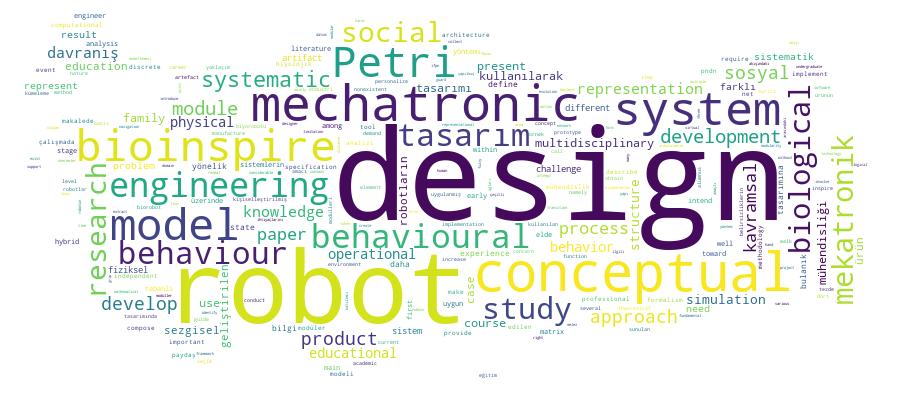
29 results
Scholarly Output Search Results
Now showing 1 - 10 of 29
Article A New Perspective To Design Education in Industrial Engineering: Product Design Projects at Freshman(2008) Erden, ZühalTasarım felsefesinin mühendislik eğitiminin ilk yıllarında verilmesi, öğrencilerin lisans programında gördükleri çeşitli kavramların/yöntemlerin mühendislik tasarımı ile ilgili problemlere nasıl çözüm getirdiğini anlamaları bakımından büyük önem taşımaktadır. Bir sistem ve insan mühendisliği olan endüstri mühendisliği, profesyonel anlamda fiziksel ürün tasarımından çok sistem tasarımına yönelik çalışmalar yapmaktadır. Bu nedenle endüstri mühendisliğinde tasarım eğitimi daha çok sistem tasarımına yönelik projeler/uygulamalar ile gerçekleştirilmektedir. Bu makalede yenilikçi bir yaklaşımla geliştirilen ve endüstri mühendisliği bölümü birinci sınıf öğrencilerinin ürün tasarımına yönelik açık uçlu projeler yaptığı tasarım dersi anlatılmakta ve bu dersin yedi yıllık uygulaması ile ilgili değerlendirmeler sunulmaktadırArticle Citation - WoS: 4Citation - Scopus: 7A Team-Oriented Course Development Experience in Distance Education for Multidisciplinary Engineering Design(Wiley, 2022) Say, Bilge; Erden, Zühal; Erden, Zuhal; Turhan, Cihan; Turhan, Cihan; Say, Bilge; Erden, Zühal; Turhan, Cihan; Say, Bilge; Energy Systems Engineering; Software Engineering; Mechatronics Engineering; Energy Systems Engineering; Mechatronics Engineering; Software EngineeringBased on the multidisciplinary needs of today's complex and innovative technology, accreditation bodies of engineering demand proof of multidisciplinary teamwork in undergraduate engineering curricula. This article reports the design and conduct of a Multidisciplinary Engineering Design (MED) course initiated as a result of accreditation process requirements. The course, which consists of multidisciplinary lectures, practice sessions, and various phases of a multidisciplinary team project, was conducted online because of the COVID-19 pandemic by a multidisciplinary team of instructors using multiple software tools to enhance collaboration. In general, the course outcomes were satisfied under the current design, and several points for further improvement and elaboration were collected via quantitative and qualitative evaluations. Accordingly, the results show that the project-based and team-based MED course, in terms of multidisciplinary course management and its outcomes, can benefit from the use of software tools in creating a multidisciplinary team in distance education by means of enhanced cooperation and motivation among the participants.Article Studying the Impact of the “undergraduate Research Projects” Course in Mechatronics Engineering on the Professional Career Development of Engineers(Rajarambapu Institute Of Technology, 2024) Erden,Z.Undergraduate research (UR) in engineering education is an important active learning strategy, and it is widely used through various implementation styles. Several studies have been conducted to assess the contribution of UR experience in the career path of alumni from an academic point of view and based on graduate studies. This paper is focused on the assessment of UR experience gained through a two-semester long “Undergraduate Research Projects” course sequence, on the professional career of mechatronics engineering alumni. The results of a survey-based investigation show that such UR experience is considered beneficial by the alumni in three main aspects: employment, entrepreneurship and the effect of the obtained knowledge and skills on the professional career. The feedback from the alumni has revealed that this experience contributes significantly to the development of their research abilities. In addition, many graduates emphasized that the UR experience is beneficial for employment as well as for their academic and professional development. The suggestions from the alumni concerning collaboration with the industry, course methodology, and selection of project topics form a basis for systematic UR model development by faculties in the future. © 2024, Rajarambapu Institute Of Technology. All rights reserved.Publication Kavramsal Tasarım Otomasyonunda Petri Net ve Melez Otomat Sentezi(2001) Erden, Zühal; Erkmen, Aydan M.; Erden, AbdülkadirBu çalışmada, mühendislik tasarımındaki kavramsal tasarım aşamasının otomasyonu için Petri Net ve Melez Otomat (Hybrid Automata) sentezine dayanan PNDN adlı bir tasarım ağı modeli geliştirilmiştir. PNDN, tasarımı yapılacak ürünün mantıksal davranışını ürünün alt işlevleri arasındaki kesin ve belirsizlik içeren bilgi akışı ile iki tarzda modellemektedir. Bilgi akışındaki belirsizliklerin modellenmesinde Sezgisel Bulanık Önermeler yaklaşımı kullanılmıştır. Genel amaçlı ve işlevsel düzeyde geliştirilen model, tümleşik bir tasarım felsefesi olan mekatronik tasarımda uygulanmıştır. Bu makalede tasarım ağının yapısı ve kesin bilgi akışı modeli anlatılmaktadır.Conference Object Citation - Scopus: 4Bioinspired Conceptual Design (bicd): Conceptual Design of a Grasshopper-Like Jumping Mechanism as a Case Study(Design Soc, 2011) Eroglu,A.K.; Erden,Z.; Erden,A.The evolution process of nature creates highly effective, power efficient, and perfectly structured biological systems. These excellent systems provide an inexhaustible source for engineers and scientists who desire to inspire ideas, processes, structures, functions, and behaviors from biological domain and implement them into engineering domain. This approach is called "Bioinspired" and challenging for engineers. However, some problems of the practical approaches are observed. One of the problems is "ad hoc" nature of the process. Each bioinspired design product has resulted in a differing design process and a generalization was not possible. Another problem rises due to the terminology difference between engineers and biologists. To overcome these problems, a need for a systematic bioinspired design (BID) process was realized in early 2000s and since then, considerable research on the BID methodology has been progressed. Within the context of BID, this paper introduces a new approach on bioinspired conceptual design (BICD) procedure for hybrid bioinspired robots which can be inspired from multiple biological systems. An illustrative case study is given in the paper.Conference Object Citation - WoS: 1Representation of the Operational Behaviour of an Educational Robot at Conceptual Design Using Petri Nets(Amer Soc Mechanical Engineers, 2010) Erden, ZuhalIncreasing demand for computational support at conceptual design makes behavioural modeling a challenging area for design research. This is mainly because a behavioural model of a nonexistent design artifact at conceptual level is the basis for behavioural simulation and resulting computational design support. Behavioural models are particularly important for top-down of multidisciplinary products such as mechatronic systems. During the conceptual design of such systems, intended "operational behaviour" of the artifact is described without any physical realization. As design stages become more concrete, operational behaviour can be refined so as to represent well defined mathematical descriptions of corresponding physical behaviours. In this study, a model for representing the intended operational behaviour of a nonexistent educational robot, namely a rabbit robot, is presented for conceptual design. The operational behaviour of the robot is defined as composed of states and state transitions independent of any physical embodiment. Discrete Event System Specification (DEVS) and Petri Net formalism are used for the model. This representational model is the first step towards the development of a virtual prototype for the operational behaviour of an educational robot.Article Citation - WoS: 13Citation - Scopus: 15Behavioural Representation and Simulation of Design Concepts for Systematic Conceptual Design of Mechatronic Systems Using Petri Nets(Taylor & Francis Ltd, 2014) Araz, Macit; Erden, ZuhalThe systematic representation of design concepts is an important requirement for computational support during the conceptual design stage within the process of product development. Behavioural simulation of design concepts is used as a systematic representation framework, and behavioural representation is based on modelling and simulating the behaviour of a design artefact at the conceptual level to perform an overall function, leading to behaviour-based conceptual design. The behaviour-based conceptual design approach is critical for mechatronic systems since they require synergistic integration starting from the initial conceptual design phase. The present study is focused on behavioural representation and simulation of design concepts via discrete event system specification formalism and Petri Nets so as to contribute to systematic conceptual design in mechatronic systems. The paper introduces a representation framework for the behaviour-based conceptual design of mechatronic systems and its implementation on five selected case studies, among laboratory-level educational robots. In addition to Petri Net modelling and computer simulations, the implementation also includes physical simulations of the intended operational behaviours for educational robots on a distributed physical structure called the desktop design model'. In this paper, implementation on one of these case studies, namely the frog robot', is presented in detail.Master Thesis Mekatronik Mühendisliği Bölüm Laboratuvarları için Rehber – Bekci Robot Sistem Tasarımı ve Prototip Geliştirilmesi(2015) Sadeghı, Amir Nobahar; Erden, Abdulkadir; Erden, ZühalBu tez çalışmasının amacı Atılım Üniversitesi Mekatronik Mühendisliği laboratuvarlarında 'Rehber-Bekçi Robot' olarak görev yapacak olan akıllı bir hareketli robotun tasarlanması, üretilmesi ve laboratuvar ortamında dolaşmasının sağlanmasıdır. Bu amacı gerçekleştirmek üzere tümleşik bir sistem tasarlanmıştır. Robotun laboratuvarlarda dolaşması için geliştirilen kontrol mimarisi konumlandırma, engelden kaçınma, yol planlaması ve verilen bir başlangıç pozisyonundan rastgele belirlenen bir başka pozisyona gidişin yönetilmesini sağlamaktadır. Bu çalışmada, robota yüklenmiş bir haritaya dayalı olmayan davranış-temelli bir navigasyon algoritması kullanılmıştır. Buna göre robot, içinde bulunduğu laboratuvar ortamının çeşitli özelliklerini, üzerindeki sensörler yardımıyla algılayarak kendi konumunu belirlemekte ve böylece laboratuvar ortamında dolaşmaktadır. Bu çalışma kapsamında robotun tasarımı, imalatı, sistem entegrasyonu gerçekleştirilmiş ve laboratuvar ortamında dolaşması test edilmiştir.Article Citation - WoS: 1Citation - Scopus: 1Development of Behavioural Modules for Mechatronic Product Families Using the 3d Design Structure Matrix Approach(Ios Press, 2019) Erden, ZuhalIncreased competition in the global market has forced companies to diversify their product ranges to meet the customers' changing needs and adopt product development strategies for "mass customization", which requires designing modular products. Product modularity is achieved via platform-based systems, in which various combinations of different modules are assembled within a common platform. In the literature, there is a considerable amount of research on modularity for mechanical products. Yet, research on modularity of smart systems, such as mechatronic products, is quite limited. Therefore, the objective of this research is to develop fundamental behavioural modules to facilitate the systematic design of platform-based mechatronic product families for mass customization. Being developed using the state-event model of mechatronic systems at an early design stage, these modules enable a behavioural adaptation of smart systems through a systematic formal structure. In this study, fundamental mechatronic behaviour modules are developed using a modified form of Design Structure Matrix (DSM) existing in the literature. DSM is adopted to mechatronic systems as a 3D matrix, which includes sensorial, motoric and cognitive behaviours. Symbolic representations of mechatronic behaviour modules are generated and used for describing robot tasks. The mechatronic behaviour modules developed in this study are implemented on a demonstrative task-based robot family model composed of guide robots for museums and shopping malls, a guard robot, a house-cleaning robot and companion robots for children, the elderly and pets.Doctoral Thesis Biyorobotlar için Biyoesinlenmiş Kavramsal Tasarım Metodolojisi(2013) Eroğlu, Aylin Konez; Erden, Abdulkadir; Erden, ZühalBu tezin ana amacı biyorobot tasarımlarına yönelik olarak Biyoesinlenmiş Kavramsal Tasarım (BİKT) metodolojisi geliştirmektir. Tez kapsamında, varolan Biyobenzetim Tasarım (BİT) yaklaşımlara ve sistematik mühendislik tasarım adımlarına dayanarak yeni bir BİKT prosedürü geliştirilmiştir. Geliştirilen prosedür, köpek biyorobotu (BioDog) üzerinde yürüme ve tırısa gitme, hamamböceği biyorobotu (BioCoc) üzerinde tırmanma, sıçrama (çekirge) biyorobotu üzerinde zıplama ve melez (köpek- ıstakoz) biyorobotu üzerinde yürüme hareketleri için uygulanmıştır. Örnek çalışmalardan elde edilen geri bildirimler kullanılarak bir BİKT süreci oluşturulmuştur. Hedeflenen BİKT metodolojisini oluşturmak için geliştirilen BİKT süreci, Klasik Ayrık Olay Sistem Spesifikasyonu (AOSS) modeli ile modellenmiştir.Önerilen BİKT metodolojisi, açık ve tam olarak tanımlanmış altı adım ile müşteri ihtiyaçlarını biyorobotun kavramsal tasarımına dönüştürmektedir. Varolan BİT'lerin eksik olan taraflarının giderilmesi amacı ile biyolojik sistem analizi ve biyobenzetim dönüşüm tasarım adımları bu tez çalışması kapsamında detaylı olarak incelenmiştir.Tez çalışmaları sırasında BİKT metodolojisinin tüm adımları tam olarak her ne kadar dört örnek çalışma üzerinde uygulanmış olsa da, on dört farklı biyolojik sistem ve yirmi dört hareket tipi içerik analizi yöntemi ve/veya gözlem yöntemi kullanılarak incelenmiştir. İçerik analizi için literatür taraması yapılmış, biyolojik sistemlerin gözlemlenmesi için ise bir deney düzeneği kurulmuştur. Deneyler sırasında biyolojik sistemlerin morfoloji, işlev ve davranışları hakkında gerekli bilgiyi edinmek için hızlı kamera kullanılmıştır. Biyobenzetim dönüşüm adımında, biyolojik sistem hakkındaki bu bilgi sistematik olarak biyorobotun kavramsal tasarımı için gerekli olan biyorobot hakkındaki bilgiye dönüştürülmektedir.

- «
- 1 (current)
- 2
- 3
- »