
Erden, Zühal
Loading...
Profile URL
Name Variants
E.,Zuhal
E., Zühal
E., Zuhal
Zuhal, Erden
Zühal Erden
Erden,Zuhal
E.,Zühal
Erden, Zuhal
Z., Erden
Erden Z.
Erden, Zühal
Zühal, Erden
Erden,Z.
Z.,Erden
E., Zühal
E., Zuhal
Zuhal, Erden
Zühal Erden
Erden,Zuhal
E.,Zühal
Erden, Zuhal
Z., Erden
Erden Z.
Erden, Zühal
Zühal, Erden
Erden,Z.
Z.,Erden
Job Title
Doçent Doktor
Email Address
zuhal.erden@atilim.edu.tr
Main Affiliation
Mechatronics Engineering
Status
Website
ORCID ID
Scopus Author ID
Turkish CoHE Profile ID
Google Scholar ID
WoS Researcher ID
Sustainable Development Goals
 1
1NO POVERTY
0
Research Products
 2
2ZERO HUNGER
0
Research Products
 3
3GOOD HEALTH AND WELL-BEING
0
Research Products
 4
4QUALITY EDUCATION
1
Research Products
 5
5GENDER EQUALITY
0
Research Products
 6
6CLEAN WATER AND SANITATION
0
Research Products
 7
7AFFORDABLE AND CLEAN ENERGY
0
Research Products
 8
8DECENT WORK AND ECONOMIC GROWTH
0
Research Products
 9
9INDUSTRY, INNOVATION AND INFRASTRUCTURE
5
Research Products
 10
10REDUCED INEQUALITIES
0
Research Products
 11
11SUSTAINABLE CITIES AND COMMUNITIES
0
Research Products
 12
12RESPONSIBLE CONSUMPTION AND PRODUCTION
0
Research Products
 13
13CLIMATE ACTION
0
Research Products
 14
14LIFE BELOW WATER
0
Research Products
 15
15LIFE ON LAND
0
Research Products
 16
16PEACE, JUSTICE AND STRONG INSTITUTIONS
0
Research Products
 17
17PARTNERSHIPS FOR THE GOALS
0
Research Products

This researcher does not have a Scopus ID.

This researcher does not have a WoS ID.

Scholarly Output
29
Articles
13
Views / Downloads
137/4243
Supervised MSc Theses
7
Supervised PhD Theses
1
WoS Citation Count
36
Scopus Citation Count
52
Patents
0
Projects
2
WoS Citations per Publication
1.24
Scopus Citations per Publication
1.79
Open Access Source
6
Supervised Theses
8
| Journal | Count |
|---|---|
| Makina Tasarım ve Imalat Dergisi | 2 |
| Control Engineering and Applied Informatics | 2 |
| 20th Annual International Conference on Mechatronics and Machine Vision in Practice, M2VIP 2013 -- 20th Annual International Conference on Mechatronics and Machine Vision in Practice, M2VIP 2013 -- 20 September 2013 through 20 September 2013 -- Ankara -- 102276 | 1 |
| ASME 2010 10th Biennial Conference on Engineering Systems Design and Analysis, ESDA2010 -- ASME 2010 10th Biennial Conference on Engineering Systems Design and Analysis, ESDA2010 -- 12 July 2010 through 14 July 2010 -- Istanbul -- 84828 | 1 |
| Computer Applications in Engineering Education | 1 |
Current Page: 1 / 4
Scopus Quartile Distribution
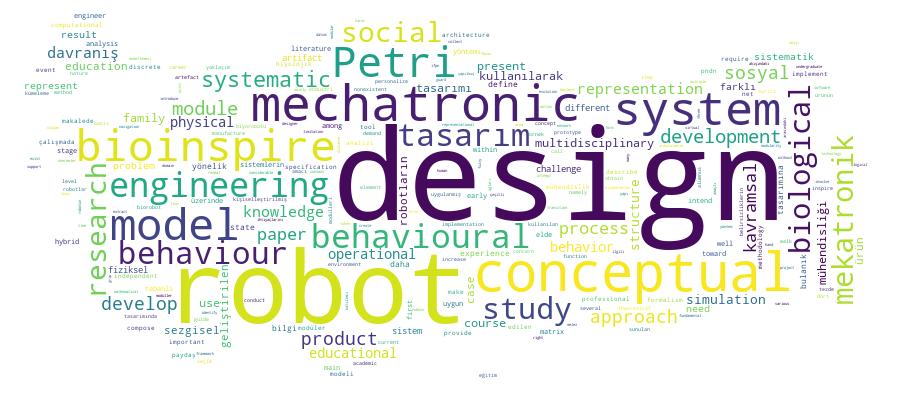
Competency Cloud
20 results
Scholarly Output Search Results
Now showing 1 - 10 of 20
Article Creative Design Engineering Education for Human-Society Integrated Intelligent Systems(Sage Publications Inc, 2026) Erden, Zuhal; Erden, AbdulkadirThe essence and vital roots of scientific activities create theoretical propositions and models that provide unique integrity of the associated concepts, definitions, approaches and methodological components. Design engineering education has made great progress to date by integrating modern methods and tools into the existing process models focused on unique curriculum programs for students' progress during various scientific and technical levels. Contemporary and integrated socio-scientific environments, however, are generally more productive and initiative for future success stories of engineering graduates with high qualifications and science/technology-motivated professional life. Today's global transition from the "industrial-digital age" to the "sustainable knowledge economy and digital society" opens a new path for design engineering education, enforcing a paradigm shift towards training creative professionals who develop and implement new knowledge in real-world social environments. This paper presents and discusses the models, methods and tools to establish a road-map into next-generation creative design engineering education paradigm.Article Citation - WoS: 5Citation - Scopus: 8Biological System Analysis in Bioinspired Conceptual Design (bicd) for Bioinspired Robots(Romanian Soc Control Tech informatics, 2011) Eroglu, Aylin Konez; Eroğlu, Aylin Konez; Erden, Zuhal; Erden, Zühal; Erden, Abdulkadir; Erden, Abdulkadir; Eroğlu, Aylin Konez; Erden, Zühal; Erden, Abdulkadir; Department of Mechatronics Engineering; Department of Mechatronics Engineering; Mechatronics Engineering; Mechatronics Engineering; Department of Mechatronics Engineering; Mechatronics EngineeringBioinspired design (BID) provides a systematic way for bioinspired applications. Although several BID approaches as well as some tools and databases are available in the literature, the studies on BID are still challenging for designers and/or engineers because of limitations of current BID approaches. There are mainly two directions related with these limitations. One of them is the representation of knowledge on biological systems and the second is the problem of transforming this knowledge into engineering domain. These limitations expose two questions; firstly, "What knowledge is required to describe biological systems?" and "How this knowledge is represented?" and secondly, "How this knowledge is transformed into the engineering domain?". This paper presents a study which aims to answer the first question about knowledge required to represent biological systems. This knowledge is obtained during "Analysis of Biological Systems" stage of a new suggested bioinspired conceptual design (BICD) procedure.Article Citation - WoS: 2Citation - Scopus: 4State-Based Conceptual Design in Mechatronics Via Petri Nets: a Case Study for an Educational Robot(Romanian Soc Control Tech informatics, 2011) Erden, Zuhal; Mechatronics EngineeringUse of state-based models to represent artifact behaviors at conceptual design is a challenging area for design research. Conceptual design of mechatronic systems needs a multi-domain approach in which the "logical behavior" of a mechatronic design artifact is described without any physical realization. This paper presents a case study on state-based representation for the intended behavior of a non-existent robot at early conceptual level. The behavior is defined through a demonstrative scenario and represented as states and state transitions independent of any physical embodiment. Discrete Event System Specification (DEVS) and Petri Net formalism are used for the model. This representational model is first step towards the development of a virtual prototype for the logical behavior of robot design.Conference Object Petri Net Modeling and Simulation of Walking Behaviour for Design of a Bioinspired Robot Dog(SciTePress, 2016) Erden,Z.; Araz,M.Research in behavior-based design faces many challenges regarding the AIDS in conceptual design of biorobots, representation of a biological system,s behavior in a well formed modeling tool and therefore providing systematic transformation of this behavior into robot design. This paper reports a research that focuses on the development of a Petri Net model to represent a biological system,s behavior. The model is based on real time data collected from an experiment in which a dog is walking on a treadmill with a speed of 1km/h. The model has the ability of simulating the real time rhythm of dog's walking behavior utilizing colors and numbers as well as the step-by-step simulation. The aim is to observe the behavior of a walking dog in time domain as an early stage of conceptual design of a bioinspired robot dog. Main challenge is to develop a methodology to guide designer towards more creative designs based on bioinspired design ideas. The presented work is an early attempt to initiate a systematic approach towards the stated goal. © Copyright 2016 by SCITEPRESS - Science and Technology Publications, Lda. All rights reserved.Article Citation - WoS: 6Citation - Scopus: 5A Petri Net Approach To Behavioural Simulation of Design Artefacts With Application To Mechatronic Design(Springer Heidelberg, 2003) Erden, Z; Erden, A; Erkmen, AMA Petri net-based design inference network (PNDN) architecture is presented in this paper. The network models the logical behaviour of any design artefact developed by designers at the conceptual design level by representing the subfunctions and their inter-relationships to perform a required overall function. The theoretical framework in developing the PNDN is based on the improved theory of Petri nets and hybrid automata. The theoretical PNDN architecture was implemented in a C++ based software called the design network simulator (DNS). The logical behaviour of a design artefact is modelled through the token flow within the PNDN. The token flow model is developed both for deterministic and nondeterministic PNDN, which involves uncertainties. In this paper we present the mathematical formalism of the deterministic token flow through the PNDN. We also provide a conceptual design example in order to explain the application of our theoretical architecture for structuring the PNDN.Article A New Perspective To Design Education in Industrial Engineering: Product Design Projects at Freshman(2008) Erden, ZühalTasarım felsefesinin mühendislik eğitiminin ilk yıllarında verilmesi, öğrencilerin lisans programında gördükleri çeşitli kavramların/yöntemlerin mühendislik tasarımı ile ilgili problemlere nasıl çözüm getirdiğini anlamaları bakımından büyük önem taşımaktadır. Bir sistem ve insan mühendisliği olan endüstri mühendisliği, profesyonel anlamda fiziksel ürün tasarımından çok sistem tasarımına yönelik çalışmalar yapmaktadır. Bu nedenle endüstri mühendisliğinde tasarım eğitimi daha çok sistem tasarımına yönelik projeler/uygulamalar ile gerçekleştirilmektedir. Bu makalede yenilikçi bir yaklaşımla geliştirilen ve endüstri mühendisliği bölümü birinci sınıf öğrencilerinin ürün tasarımına yönelik açık uçlu projeler yaptığı tasarım dersi anlatılmakta ve bu dersin yedi yıllık uygulaması ile ilgili değerlendirmeler sunulmaktadırConference Object Citation - Scopus: 1Systematic Generation of a 3d Dsm by Extracting Social Robot Behaviors From Literature(Cambridge University Press, 2019) Ozer,I.; Erden,Z.Social robots are in direct communication and interaction with people, thus it is important to design these robots for different needs of individuals or small groups. This has revealed the need to develop design methods for personalized or mass-individualized social robots, which are expected to respond to many different needs of people today and in the future. In this paper, a previously developed 3D DSM model is implemented in the systematic conceptual design of social robot families. The model is independent of any physical elements and based on behavioural elements as perception, cognition and motoric action. The data regarding 45 different social robots from 80 articles in the literature is used to identify these three behaviours of the existing social robots and the mutual relationships among these different behaviours are defined in order to develop a 3D DSM structure to be used as a basis for designing social robot families. The resulting novel 3D DSM is a general-purpose, basic model that can be used to identify behavioural modules to design social robot families. © 2019 Design Society. All rights reserved.Publication Kavramsal Tasarım Otomasyonunda Petri Net ve Melez Otomat Sentezi(2001) Erden, Zühal; Erkmen, Aydan M.; Erden, AbdülkadirBu çalışmada, mühendislik tasarımındaki kavramsal tasarım aşamasının otomasyonu için Petri Net ve Melez Otomat (Hybrid Automata) sentezine dayanan PNDN adlı bir tasarım ağı modeli geliştirilmiştir. PNDN, tasarımı yapılacak ürünün mantıksal davranışını ürünün alt işlevleri arasındaki kesin ve belirsizlik içeren bilgi akışı ile iki tarzda modellemektedir. Bilgi akışındaki belirsizliklerin modellenmesinde Sezgisel Bulanık Önermeler yaklaşımı kullanılmıştır. Genel amaçlı ve işlevsel düzeyde geliştirilen model, tümleşik bir tasarım felsefesi olan mekatronik tasarımda uygulanmıştır. Bu makalede tasarım ağının yapısı ve kesin bilgi akışı modeli anlatılmaktadır.Conference Object Citation - Scopus: 4Bioinspired Conceptual Design (bicd): Conceptual Design of a Grasshopper-Like Jumping Mechanism as a Case Study(Design Soc, 2011) Eroglu,A.K.; Erden,Z.; Erden,A.The evolution process of nature creates highly effective, power efficient, and perfectly structured biological systems. These excellent systems provide an inexhaustible source for engineers and scientists who desire to inspire ideas, processes, structures, functions, and behaviors from biological domain and implement them into engineering domain. This approach is called "Bioinspired" and challenging for engineers. However, some problems of the practical approaches are observed. One of the problems is "ad hoc" nature of the process. Each bioinspired design product has resulted in a differing design process and a generalization was not possible. Another problem rises due to the terminology difference between engineers and biologists. To overcome these problems, a need for a systematic bioinspired design (BID) process was realized in early 2000s and since then, considerable research on the BID methodology has been progressed. Within the context of BID, this paper introduces a new approach on bioinspired conceptual design (BICD) procedure for hybrid bioinspired robots which can be inspired from multiple biological systems. An illustrative case study is given in the paper.Conference Object Citation - WoS: 1Representation of the Operational Behaviour of an Educational Robot at Conceptual Design Using Petri Nets(Amer Soc Mechanical Engineers, 2010) Erden, ZuhalIncreasing demand for computational support at conceptual design makes behavioural modeling a challenging area for design research. This is mainly because a behavioural model of a nonexistent design artifact at conceptual level is the basis for behavioural simulation and resulting computational design support. Behavioural models are particularly important for top-down of multidisciplinary products such as mechatronic systems. During the conceptual design of such systems, intended "operational behaviour" of the artifact is described without any physical realization. As design stages become more concrete, operational behaviour can be refined so as to represent well defined mathematical descriptions of corresponding physical behaviours. In this study, a model for representing the intended operational behaviour of a nonexistent educational robot, namely a rabbit robot, is presented for conceptual design. The operational behaviour of the robot is defined as composed of states and state transitions independent of any physical embodiment. Discrete Event System Specification (DEVS) and Petri Net formalism are used for the model. This representational model is the first step towards the development of a virtual prototype for the operational behaviour of an educational robot.
