Erden, Zühal

Loading...
Profile Picture
Name Variants
E.,Zuhal
E., Zühal
E., Zuhal
Zuhal, Erden
Zühal Erden
Erden,Zuhal
E.,Zühal
Erden, Zuhal
Z., Erden
Erden Z.
Erden, Zühal
Zühal, Erden
Erden,Z.
Z.,Erden
Job Title
Doçent Doktor
Email Address
zuhal.erden@atilim.edu.tr
Main Affiliation
Mechatronics Engineering
Status
Website
ORCID ID
Scopus Author ID
Turkish CoHE Profile ID
Google Scholar ID
WoS Researcher ID

Sustainable Development Goals

NO POVERTY1
NO POVERTY
0
Research Products
ZERO HUNGER2
ZERO HUNGER
0
Research Products
GOOD HEALTH AND WELL-BEING3
GOOD HEALTH AND WELL-BEING
0
Research Products
QUALITY EDUCATION4
QUALITY EDUCATION
1
Research Products
GENDER EQUALITY5
GENDER EQUALITY
0
Research Products
CLEAN WATER AND SANITATION6
CLEAN WATER AND SANITATION
0
Research Products
AFFORDABLE AND CLEAN ENERGY7
AFFORDABLE AND CLEAN ENERGY
0
Research Products
DECENT WORK AND ECONOMIC GROWTH8
DECENT WORK AND ECONOMIC GROWTH
0
Research Products
INDUSTRY, INNOVATION AND INFRASTRUCTURE9
INDUSTRY, INNOVATION AND INFRASTRUCTURE
5
Research Products
REDUCED INEQUALITIES10
REDUCED INEQUALITIES
0
Research Products
SUSTAINABLE CITIES AND COMMUNITIES11
SUSTAINABLE CITIES AND COMMUNITIES
0
Research Products
RESPONSIBLE CONSUMPTION AND PRODUCTION12
RESPONSIBLE CONSUMPTION AND PRODUCTION
0
Research Products
CLIMATE ACTION13
CLIMATE ACTION
0
Research Products
LIFE BELOW WATER14
LIFE BELOW WATER
0
Research Products
LIFE ON LAND15
LIFE ON LAND
0
Research Products
PEACE, JUSTICE AND STRONG INSTITUTIONS16
PEACE, JUSTICE AND STRONG INSTITUTIONS
0
Research Products
PARTNERSHIPS FOR THE GOALS17
PARTNERSHIPS FOR THE GOALS
0
Research Products
This researcher does not have a Scopus ID.
This researcher does not have a WoS ID.
Scholarly Output

29

Articles

13

Views / Downloads

137/4243

Supervised MSc Theses

7

Supervised PhD Theses

1

WoS Citation Count

36

Scopus Citation Count

52

Patents

0

Projects

2

WoS Citations per Publication

1.24

Scopus Citations per Publication

1.79

Open Access Source

6

Supervised Theses

8

JournalCount
Makina Tasarım ve Imalat Dergisi2
Control Engineering and Applied Informatics2
20th Annual International Conference on Mechatronics and Machine Vision in Practice, M2VIP 2013 -- 20th Annual International Conference on Mechatronics and Machine Vision in Practice, M2VIP 2013 -- 20 September 2013 through 20 September 2013 -- Ankara -- 1022761
ASME 2010 10th Biennial Conference on Engineering Systems Design and Analysis, ESDA2010 -- ASME 2010 10th Biennial Conference on Engineering Systems Design and Analysis, ESDA2010 -- 12 July 2010 through 14 July 2010 -- Istanbul -- 848281
Computer Applications in Engineering Education1
Current Page: 1 / 4

Scopus Quartile Distribution

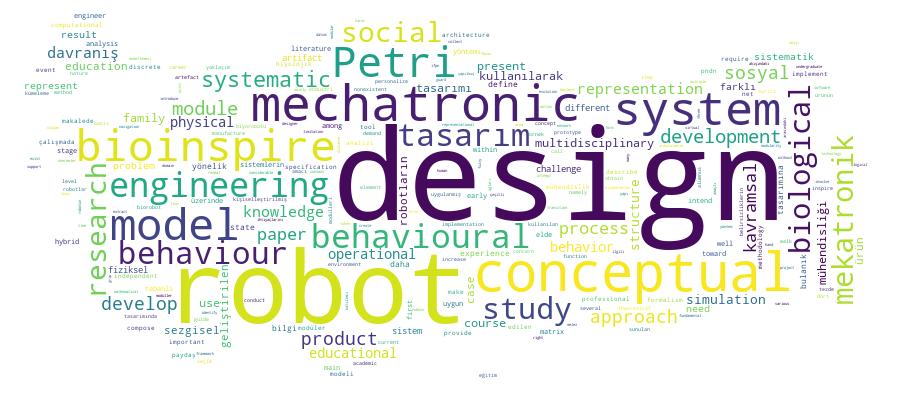
Competency Cloud

GCRIS Competency Cloud

Scholarly Output Search Results

Now showing 1 - 5 of 5
  • Article
    Citation - WoS: 5
    Citation - Scopus: 8
    Biological System Analysis in Bioinspired Conceptual Design (bicd) for Bioinspired Robots
    (Romanian Soc Control Tech informatics, 2011) Eroglu, Aylin Konez; Eroğlu, Aylin Konez; Erden, Zuhal; Erden, Zühal; Erden, Abdulkadir; Erden, Abdulkadir; Eroğlu, Aylin Konez; Erden, Zühal; Erden, Abdulkadir; Department of Mechatronics Engineering; Department of Mechatronics Engineering; Mechatronics Engineering; Mechatronics Engineering; Department of Mechatronics Engineering; Mechatronics Engineering
    Bioinspired design (BID) provides a systematic way for bioinspired applications. Although several BID approaches as well as some tools and databases are available in the literature, the studies on BID are still challenging for designers and/or engineers because of limitations of current BID approaches. There are mainly two directions related with these limitations. One of them is the representation of knowledge on biological systems and the second is the problem of transforming this knowledge into engineering domain. These limitations expose two questions; firstly, "What knowledge is required to describe biological systems?" and "How this knowledge is represented?" and secondly, "How this knowledge is transformed into the engineering domain?". This paper presents a study which aims to answer the first question about knowledge required to represent biological systems. This knowledge is obtained during "Analysis of Biological Systems" stage of a new suggested bioinspired conceptual design (BICD) procedure.
  • Article
    Creative Design Engineering Education for Human-Society Integrated Intelligent Systems
    (Sage Publications Inc, 2026) Erden, Zuhal; Erden, Abdulkadir
    The essence and vital roots of scientific activities create theoretical propositions and models that provide unique integrity of the associated concepts, definitions, approaches and methodological components. Design engineering education has made great progress to date by integrating modern methods and tools into the existing process models focused on unique curriculum programs for students' progress during various scientific and technical levels. Contemporary and integrated socio-scientific environments, however, are generally more productive and initiative for future success stories of engineering graduates with high qualifications and science/technology-motivated professional life. Today's global transition from the "industrial-digital age" to the "sustainable knowledge economy and digital society" opens a new path for design engineering education, enforcing a paradigm shift towards training creative professionals who develop and implement new knowledge in real-world social environments. This paper presents and discusses the models, methods and tools to establish a road-map into next-generation creative design engineering education paradigm.
  • Doctoral Thesis
    Biyorobotlar için Biyoesinlenmiş Kavramsal Tasarım Metodolojisi
    (2013) Eroğlu, Aylin Konez; Erden, Abdulkadir; Erden, Zühal
    Bu tezin ana amacı biyorobot tasarımlarına yönelik olarak Biyoesinlenmiş Kavramsal Tasarım (BİKT) metodolojisi geliştirmektir. Tez kapsamında, varolan Biyobenzetim Tasarım (BİT) yaklaşımlara ve sistematik mühendislik tasarım adımlarına dayanarak yeni bir BİKT prosedürü geliştirilmiştir. Geliştirilen prosedür, köpek biyorobotu (BioDog) üzerinde yürüme ve tırısa gitme, hamamböceği biyorobotu (BioCoc) üzerinde tırmanma, sıçrama (çekirge) biyorobotu üzerinde zıplama ve melez (köpek- ıstakoz) biyorobotu üzerinde yürüme hareketleri için uygulanmıştır. Örnek çalışmalardan elde edilen geri bildirimler kullanılarak bir BİKT süreci oluşturulmuştur. Hedeflenen BİKT metodolojisini oluşturmak için geliştirilen BİKT süreci, Klasik Ayrık Olay Sistem Spesifikasyonu (AOSS) modeli ile modellenmiştir.Önerilen BİKT metodolojisi, açık ve tam olarak tanımlanmış altı adım ile müşteri ihtiyaçlarını biyorobotun kavramsal tasarımına dönüştürmektedir. Varolan BİT'lerin eksik olan taraflarının giderilmesi amacı ile biyolojik sistem analizi ve biyobenzetim dönüşüm tasarım adımları bu tez çalışması kapsamında detaylı olarak incelenmiştir.Tez çalışmaları sırasında BİKT metodolojisinin tüm adımları tam olarak her ne kadar dört örnek çalışma üzerinde uygulanmış olsa da, on dört farklı biyolojik sistem ve yirmi dört hareket tipi içerik analizi yöntemi ve/veya gözlem yöntemi kullanılarak incelenmiştir. İçerik analizi için literatür taraması yapılmış, biyolojik sistemlerin gözlemlenmesi için ise bir deney düzeneği kurulmuştur. Deneyler sırasında biyolojik sistemlerin morfoloji, işlev ve davranışları hakkında gerekli bilgiyi edinmek için hızlı kamera kullanılmıştır. Biyobenzetim dönüşüm adımında, biyolojik sistem hakkındaki bu bilgi sistematik olarak biyorobotun kavramsal tasarımı için gerekli olan biyorobot hakkındaki bilgiye dönüştürülmektedir.
  • Master Thesis
    Mekatronik Mühendisliği Bölüm Laboratuvarları için Rehber – Bekci Robot Sistem Tasarımı ve Prototip Geliştirilmesi
    (2015) Sadeghı, Amir Nobahar; Erden, Abdulkadir; Erden, Zühal
    Bu tez çalışmasının amacı Atılım Üniversitesi Mekatronik Mühendisliği laboratuvarlarında 'Rehber-Bekçi Robot' olarak görev yapacak olan akıllı bir hareketli robotun tasarlanması, üretilmesi ve laboratuvar ortamında dolaşmasının sağlanmasıdır. Bu amacı gerçekleştirmek üzere tümleşik bir sistem tasarlanmıştır. Robotun laboratuvarlarda dolaşması için geliştirilen kontrol mimarisi konumlandırma, engelden kaçınma, yol planlaması ve verilen bir başlangıç pozisyonundan rastgele belirlenen bir başka pozisyona gidişin yönetilmesini sağlamaktadır. Bu çalışmada, robota yüklenmiş bir haritaya dayalı olmayan davranış-temelli bir navigasyon algoritması kullanılmıştır. Buna göre robot, içinde bulunduğu laboratuvar ortamının çeşitli özelliklerini, üzerindeki sensörler yardımıyla algılayarak kendi konumunu belirlemekte ve böylece laboratuvar ortamında dolaşmaktadır. Bu çalışma kapsamında robotun tasarımı, imalatı, sistem entegrasyonu gerçekleştirilmiş ve laboratuvar ortamında dolaşması test edilmiştir.
  • Conference Object
    Citation - WoS: 1
    BIOINSPIRED CONCEPTUAL DESIGN (BICD): CONCEPTUAL DESIGN OF A GRASSHOPPER-LIKE JUMPING MECHANISM AS A CASE STUDY
    (design Soc, 2011) Eroglu, Aylin Konez; Erden, Zuhal; Erden, Abdulkadir
    The evolution process of nature creates highly effective, power efficient, and perfectly structured biological systems. These excellent systems provide an inexhaustible source for engineers and scientists who desire to inspire ideas, processes, structures, functions, and behaviors from biological domain and implement them into engineering domain. This approach is called "Bioinspired" and challenging for engineers. However, some problems of the practical approaches are observed. One of the problems is "ad hoc" nature of the process. Each bioinspired design product has resulted in a differing design process and a generalization was not possible. Another problem rises due to the terminology difference between engineers and biologists. To overcome these problems, a need for a systematic bioinspired design (BID) process was realized in early 2000s and since then, considerable research on the BID methodology has been progressed. Within the context of BID, this paper introduces a new approach on bioinspired conceptual design (BICD) procedure for hybrid bioinspired robots which can be inspired from multiple biological systems. An illustrative case study is given in the paper.