Doğan, Deren

Loading...
Profile Picture
Name Variants
Doğan, Deren
Dogan, Deren
D.,Doğan
D., Dogan
D.,Deren
D.,Dogan
Doğan,D.
D., Deren
Deren, Dogan
Deren, Doğan
Doğan D.
D., Doğan
Dogan,D.
Job Title
Araştırma Görevlisi
Email Address
deren.dogan@atilim.edu.tr
Main Affiliation
Mechatronics Engineering
Status
Website
ORCID ID
Scopus Author ID
Turkish CoHE Profile ID
Google Scholar ID
WoS Researcher ID

Sustainable Development Goals

5

GENDER EQUALITY
GENDER EQUALITY Logo

0

Research Products

14

LIFE BELOW WATER
LIFE BELOW WATER Logo

0

Research Products

10

REDUCED INEQUALITIES
REDUCED INEQUALITIES Logo

0

Research Products

3

GOOD HEALTH AND WELL-BEING
GOOD HEALTH AND WELL-BEING Logo

0

Research Products

2

ZERO HUNGER
ZERO HUNGER Logo

0

Research Products

9

INDUSTRY, INNOVATION AND INFRASTRUCTURE
INDUSTRY, INNOVATION AND INFRASTRUCTURE Logo

0

Research Products

16

PEACE, JUSTICE AND STRONG INSTITUTIONS
PEACE, JUSTICE AND STRONG INSTITUTIONS Logo

0

Research Products

11

SUSTAINABLE CITIES AND COMMUNITIES
SUSTAINABLE CITIES AND COMMUNITIES Logo

2

Research Products

8

DECENT WORK AND ECONOMIC GROWTH
DECENT WORK AND ECONOMIC GROWTH Logo

0

Research Products

13

CLIMATE ACTION
CLIMATE ACTION Logo

0

Research Products

4

QUALITY EDUCATION
QUALITY EDUCATION Logo

0

Research Products

6

CLEAN WATER AND SANITATION
CLEAN WATER AND SANITATION Logo

0

Research Products

1

NO POVERTY
NO POVERTY Logo

0

Research Products

15

LIFE ON LAND
LIFE ON LAND Logo

0

Research Products

17

PARTNERSHIPS FOR THE GOALS
PARTNERSHIPS FOR THE GOALS Logo

0

Research Products

7

AFFORDABLE AND CLEAN ENERGY
AFFORDABLE AND CLEAN ENERGY Logo

0

Research Products

12

RESPONSIBLE CONSUMPTION AND PRODUCTION
RESPONSIBLE CONSUMPTION AND PRODUCTION Logo

0

Research Products
This researcher does not have a Scopus ID.
This researcher does not have a WoS ID.
Scholarly Output

5

Articles

2

Views / Downloads

5/0

Supervised MSc Theses

1

Supervised PhD Theses

0

WoS Citation Count

7

Scopus Citation Count

15

WoS h-index

1

Scopus h-index

2

Patents

0

Projects

0

WoS Citations per Publication

1.40

Scopus Citations per Publication

3.00

Open Access Source

2

Supervised Theses

1

Google Analytics Visitor Traffic

JournalCount
14th International Conference on Communications, COMM 2022 - Proceedings -- 14th International Conference on Communications, COMM 2022 -- 16 June 2022 through 18 June 2022 -- Bucharest -- 1808961
32nd IEEE Signal Processing and Communications Applications Conference (SIU) -- MAY 15-18, 2024 -- Tarsus Univ Campus, Mersin, TURKEY1
IEEE Access1
Sensors1
Current Page: 1 / 1

Scopus Quartile Distribution

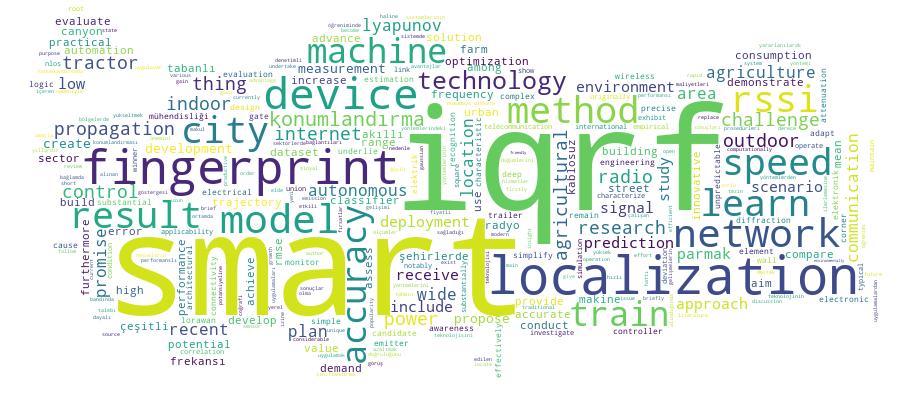
Competency Cloud

GCRIS Competency Cloud

Scholarly Output Search Results

Now showing 1 - 2 of 2
  • Article
    Citation - Scopus: 1
    From Street Canyons To Corridors: Adapting Urban Propagation Models for an Indoor IQRF Network
    (MDPI, 2025) Doyan, Talip Eren; Yalcinkaya, Bengisu; Dogan, Deren; Dalveren, Yaser; Derawi, Mohammad
    Among wireless communication technologies underlying Internet of Things (IoT)-based smart buildings, IQRF (Intelligent Connectivity Using Radio Frequency) technology is a promising candidate due to its low power consumption, cost-effectiveness, and wide coverage. However, effectively modeling the propagation characteristics of IQRF in complex indoor environments for simple and accurate network deployment remains challenging, as architectural elements like walls and corners cause substantial signal attenuation and unpredictable propagation behavior. This study investigates the applicability of a site-specific modeling approach, originally developed for urban street canyons, to characterize peer-to-peer (P2P) IQRF links operating at 868 MHz in typical indoor scenarios, including line-of-sight (LoS), one-turn, and two-turn non-line-of-sight (NLoS) configurations. The received signal powers are compared with well-known empirical models, including international telecommunication union radio communication sector (ITU-R) P.1238-9 and WINNER II, and ray-tracing simulations. The results show that while ITU-R P.1238-9 achieves lower prediction error under LoS conditions with a root mean square error (RMSE) of 5.694 dB, the site-specific approach achieves substantially higher accuracy in NLoS scenarios, maintaining RMSE values below 3.9 dB for one- and two-turn links. Furthermore, ray-tracing simulations exhibited notably larger deviations, with RMSE values ranging from 7.522 dB to 16.267 dB and lower correlation with measurements. These results demonstrate the potential of site-specific modeling to provide practical, computationally efficient, and accurate insights for IQRF network deployment planning in smart building environments.
  • Article
    Citation - WoS: 7
    Citation - Scopus: 8
    A Simplified Method Based on Rssi Fingerprinting for Iot Device Localization in Smart Cities
    (Ieee-inst Electrical Electronics Engineers inc, 2024) Dogan, Deren; Dalveren, Yaser; Kara, Ali; Derawi, Mohammad
    The Internet of Things (IoT) has significantly improved location-based services in smart cities, such as automated public transportation and traffic management. Estimating the location of connected devices is a critical problem. Low Power Wide Area Network (LPWAN) technologies are used for localization due to their low power consumption and long communication range. Recent advances in Machine Learning have made Received Signal Strength Indicator (RSSI) fingerprinting with LPWAN technologies effective. However, this requires a connection between devices and gateways or base stations, which can increase network deployment, maintenance, and installation costs. This study proposes a cost-effective RSSI fingerprinting solution using IQRF technology for IoT device localization. The region of interest is divided into grids to provide training locations, and measurements are conducted to create a training dataset containing RSSI fingerprints. Pattern matching is performed to localize the device by comparing the fingerprint of the end device with the fingerprints in the created database. To evaluate the efficiency of the proposed solution, measurements were conducted in a short-range local area ( $80\times 30$ m) at 868 MHz. In the measurements, four IQRF nodes were utilized to receive the RSSIs from a transmitting IQRF node. The performances of well-known ML classifiers on the created dataset are then comparatively assessed in terms of test accuracy, prediction speed, and training time. According to the results, the Bagged Trees classifier demonstrated the highest accuracy with 96.87%. However, with an accuracy of 95.69%, the Weighted k-NN could also be a reasonable option for real-world implementations due to its faster prediction speed (37615 obs/s) and lower training time (28.1 s). To the best of the authors' knowledge, this is the first attempt to explore the feasibility of the IQRF networks to develop a RSSI fingerprinting-based IoT device localization in the literature. The promising results suggest that the proposed method could be used as a low-cost alternative for IoT device localization in short-range location-based smart city applications.