Sönmezer, Emel

Loading...
Profile Picture
Name Variants
Emel, Sönmezer
S., Emel
Sönmezer, Emel
Emel, Sonmezer
E.,Sönmezer
Sönmezer,E.
Sonmezer,E.
E.,Sonmezer
Sonmezer, Emel
E., Sonmezer
S.,Emel
Job Title
Doçent Doktor
Email Address
emel.sonmezer@atilim.edu.tr
Main Affiliation
Department of Therapy and Rehabilitation
Status
Former Staff
Website
ORCID ID
Scopus Author ID
Turkish CoHE Profile ID
Google Scholar ID
WoS Researcher ID

Sustainable Development Goals

NO POVERTY1
NO POVERTY
0
Research Products
ZERO HUNGER2
ZERO HUNGER
0
Research Products
GOOD HEALTH AND WELL-BEING3
GOOD HEALTH AND WELL-BEING
2
Research Products
QUALITY EDUCATION4
QUALITY EDUCATION
0
Research Products
GENDER EQUALITY5
GENDER EQUALITY
1
Research Products
CLEAN WATER AND SANITATION6
CLEAN WATER AND SANITATION
0
Research Products
AFFORDABLE AND CLEAN ENERGY7
AFFORDABLE AND CLEAN ENERGY
0
Research Products
DECENT WORK AND ECONOMIC GROWTH8
DECENT WORK AND ECONOMIC GROWTH
0
Research Products
INDUSTRY, INNOVATION AND INFRASTRUCTURE9
INDUSTRY, INNOVATION AND INFRASTRUCTURE
0
Research Products
REDUCED INEQUALITIES10
REDUCED INEQUALITIES
0
Research Products
SUSTAINABLE CITIES AND COMMUNITIES11
SUSTAINABLE CITIES AND COMMUNITIES
0
Research Products
RESPONSIBLE CONSUMPTION AND PRODUCTION12
RESPONSIBLE CONSUMPTION AND PRODUCTION
0
Research Products
CLIMATE ACTION13
CLIMATE ACTION
0
Research Products
LIFE BELOW WATER14
LIFE BELOW WATER
0
Research Products
LIFE ON LAND15
LIFE ON LAND
0
Research Products
PEACE, JUSTICE AND STRONG INSTITUTIONS16
PEACE, JUSTICE AND STRONG INSTITUTIONS
0
Research Products
PARTNERSHIPS FOR THE GOALS17
PARTNERSHIPS FOR THE GOALS
0
Research Products
This researcher does not have a Scopus ID.
This researcher does not have a WoS ID.
Scholarly Output

5

Articles

2

Views / Downloads

24/78

Supervised MSc Theses

1

Supervised PhD Theses

0

WoS Citation Count

12

Scopus Citation Count

7

Patents

0

Projects

0

WoS Citations per Publication

2.40

Scopus Citations per Publication

1.40

Open Access Source

0

Supervised Theses

1

JournalCount
Insights Into Incontinence and the Pelvic Floor2
Aktuelle Rheumatologie1
Somatosensory & Motor Research1
Current Page: 1 / 1

Scopus Quartile Distribution

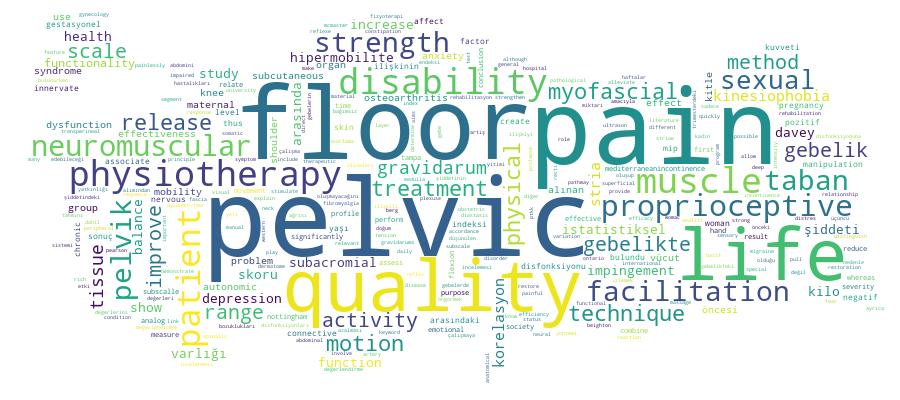
Competency Cloud

GCRIS Competency Cloud

Scholarly Output Search Results

Now showing 1 - 2 of 2
  • Book Part
    Citation - Scopus: 1
    Connective Tissue Manipulation
    (Springer International Publishing, 2022) Sönmezer,E.; Dökmeci,F.; Seval,M.M.; Çetinkaya,Ş.E.
    Connective tissue massage is based on the principle of direct manipulation of the subcutaneous fascia layers creating a response in the autonomic nervous system. There is a neural link between deep tissues and superficial tissues known as “cutaneo-visceral reflexes, " involving autonomic pathways and rich somatic sensory plexuses in the skin and subcutaneous tissues. It has been shown that there is tension in the skin and subcutaneous tissues innervated from the same level of the medulla spinalis with the organ with impaired function. These affected dermatomes are stimulated with a strong pulling motion made in a special sequence in accordance with anatomical structure. Thus, a reflex effect is created in the relevant organ innervated from the same segment as the dermatome. The most important feature that distinguishes CTM from other manual treatment methods is that it has a therapeutic effect by playing a balancing role in the autonomic nervous system. Although its efficacy in pathological problems, such as migraine, constipation, dysmenorrhea, peripheral artery disease, and painful conditions such as fibromyalgia and chronic neck pain, have been demonstrated in different studies in the literature, there have been no studies showing the effectiveness of CTM in patients with OAB. © MIPS MediterraneanIncontinence Pelvic Floor Society 2022.
  • Book Part
    Physiotherapy in Women for Pelvic Floor and Sexual Dysfunction
    (Springer International Publishing, 2022) Sönmezer,E.; Seval,M.M.; Çetinkaya,Ş.E.; Dökmeci,F.
    Physiotherapy provides the restoration of physical function and an increase in quality of life. It also allows daily life activities to be performed painlessly and independently. The aim of physiotherapy is to restore the patient’s functional efficiency as quickly as possible by improving movement functions. Physiotherapy methods are used to strengthen the pelvic floor muscles in the treatment of women with pelvic floor and sexual dysfunction. Pelvic floor physiotherapy is an evidence-based, first-line treatment for many pelvic floor problems, including incontinence, pelvic pain, pelvic organ prolapse, and sexual dysfunction. Studies have shown that pelvic floor physiotherapy programs can not only alleviate pelvic floor dysfunctions but also improve sexual function. However, other physiotherapy methods used to improve general health also increase well-being and quality of life, thus improving function reducing disability and sexual dysfunction. © MIPS MediterraneanIncontinence Pelvic Floor Society 2022.